Your cart is currently empty!
Category: The Podcast Engineering Show
Chris Curran chats with podcasters about their audio equipment, software, and workflow. Learn step-by-step how they are producing podcasts, solutions to common audio issues, and plenty of tips and tricks. By listening every week, you will gain a TON of audio production knowledge and skills that will make a HUGE difference in the quality of your sound.
-
Chris Saunders – PES 023
My guest is Chris Saunders, host of Return to Camp Blood – a Friday the 13th fan podcast. Chris has a very practical and low cost setup, and he makes the most of it! (Btw, his show is super niche; they only talk about Friday the 13th movies…lol)
He produces his show from start to finish and regularly has 2-3 other co-hosts who are all in different states. They connect via Skype and record with Pamela call recorder. He pans himself hard left and all other co-hosts hard right. They all use ATR2005’s and Chris has a Behringer XENYX X1204USB mic that he uses if his roommate or someone else is hosting with him at his house.
Then he brings the raw .WAV file into Adobe Audition, separating the stereo file into two mono tracks. He normalizes the levels for both tracks and removes background noise, and maybe adds a gate if the background noise is still an issue. He also truncates long periods of silence using a preset he made. Any period of silence more than 550 milliseconds long gets truncated to 550 ms. Then he edits and mixes down to 16 bit 44.1kHz .WAV file at -19 LUFS. Then, in another separate session in Audition, he adds intro/outro music, any other audio clips, and then exports to MP3.
Thank you for being a great guest, Chris!
-
Georg Holzmann – PES 022
My guest is Georg Holzmann, founder of Auphonic. He lives in Austria.
We went deeper than usual into audio processing including:
- Machine learning
- Compression
- Noise reduction
- Loudness levels
- Handling multiple voices
- Crossgating
We spent time going line by line through the fascinating Audio Processing Statistics that Auphonic provides after you process a piece of audio.
During the show we discussed the screenshot shown here, which contains these data:

Auphonic “Audio Processing Statistics” Screenshot - Programme Loudness
- Max Peak Level
- Loudness Range (LRA)
- Max Momentary Loudness
- Max Shortterm Loudness
- Leveler Gain mean
- Leveler Gain min
- Leveler Gain max
- SNR mean
- Background Level mean
- Signal Level mean
I also asked him about how voices with different EQ appear different in loudness, as well as if there are cases for which I should process the audio a bit first before using Auphonic.
We appreciate you hanging with us, Georg!
-
Mary Mazurek – PES 021
My guest is Mary Mazurek – audio engineer with 25 years experience, radio producer at WFMT Chicago including the “Live from WFMT” show, and instructor in the Department of Audio Arts and Acoustics at Columbia College in Chicago.
Because she’s doesn’t host her own podcast show yet (coming soon!), she joined the show from her makeshift studio in her closet including a homemade pop filter using a knitting hoop and panty hose!
We had an awesome conversation about many vital topics:
- Trying out her new microphone – Shure MV-51 USB
- EQ frequency bands and how they affect the sound
- Fletcher–Munson curves
- Compression philosophy and tips
- Microphone choice
- Microphone placement
- Proximity effect
Thank you for being a wonderful guest, Mary!
-
Max Flight – PES 020
My guest is Max Flight, host of Airplane Geeks Podcast, co-host and producer of The UAV Digest and the #PaxEx Podcast.
We talked about all phases of his podcast production. This is an overview of what Max’s engineering in his own words from an email he sent me:
I’m involved with 3 podcasts, all aviation-related:
1. Airplane Geeks: Co-founder (2008), host, and producer (since 2009).
2. The UAV Digest: A spinoff from Airplane Geeks. I co-host and produce.
3. The PaxEx Podcast: Co-host and I produce it up to the MP3, after which I hand it off.
All shows are over Skype with co-host(s) and guest. Mix-minus, 2 laptops, record into both hardware and software, soundboard on iPad. I record in my home studio, in hotel rooms, at conferences and public events (annually at the Smithsonian’s Air & Space Museum). So depending on the situation, I use the Heil PR40, Sennheiser e835, AudioTechnica ATR2100, and a Sennheiser MD 46 interview mic.
Other gear: TritonAudio FetHead, Marantz PMD620 and Zoom H4n recorders, Focusrite Scarlett Solo, a bunch of Behringer UCA-2xx audio interfaces, Sennheiser A380 and Sony MDR V6 headphones, Monster Cable 3500, Yamaha HS5 monitor. I’ve used a Presonus Tube-pre in the past, but not lately.
For software I use Audacity and Hindenburg Journalist Pro. I love Hindy. It’s really a different model for a DAW. I like to record clean at proper levels with no effects (and little to no noise floor). Each person on their own track, EQ by track, global compression, loudness at -16 LUFS.
Thank you for being a wonderful guest, Max! FYI, follow Max on Twitter @MaxFlight
-
Recap of My Q&A Session at Podcast Movement 2016 – PES 019
My pal from New Jersey, Ralph M. Rivera, hangs with me in this session. A bit of fun was had by all. He is the cofounder of Podcaster’s Toolbox, host of the Web.Search.Social podcast, and a wonderful marketing guru. He and his beautiful wife, Carol Lynn, had a booth at Podcast Movement encouraging folks to get on the “Beta train” for Podcaster’s Toolbox. You can too.
We discuss many of the questions I got from folks in my Q&A session on audio engineering at Podcast Movement 2016. Listen for all the answers and tips!
Here are some of my notes:
- What to do when you compress an already-kind-of-noisy signal and the noise becomes really loud? (try smashing it on top using high threshold with high ratio!)
- Multitrack software programs are just tools, and for podcasting it’s more important HOW you use the tool than having the most expensive, feature-rich program.
- Marc Johanssen’s Podcast Gear Group on Facebook
- Video tutorials: Dave Jackson, Carey Green,
- Fixing things…..The golden rule of audio engineering: Record it right the first time!
- How to process audio that has a lot of room reverb on it, and get rid of the reverb?
- What is EQ exactly? Frequencies, adjusting to taste…
- Gating, expanding
- Speaking directly into the mic or speaking on an angle past the mic?
- MP3 quality of final episodes. (128kbps stereo, 64kbps mono)
- Best way to make sure 3 people in the same room sound good and don’t bleed too much? (1. Everyone very close to their mic, 2. Mic’s pointed away from each other (120 degrees is optimum for 3 mic’s), Multitrack Auphonic’s crossgate feature)
- One attendee mentioned Levelator, and another attendee said it’s still around but is not being updated so it’s slowly dying kinda.
- LUFS (origin, what does it mean, levels of music, tv commercials, etc)
Listen to this entire session for all the goods, including AFTER the music fades — Ralph and I briefly discuss our wild plans for our shared double booth at Podcast Movement 2017 in Anaheim, California!
Thanks for hanging with me, Ralph!
-
Jason Bryant – PES 018
My guest is Jason Bryant, founder of Mat Talk Online and the Mat Talk Podcast Network. We had a great chat – listen to get the full effect 😉
Here’s an overview of Jason’s equipment and workflow (taken from an email he previously sent me):
I host 10 different shows (of the 14 on the network)
Using a MacBook Pro with an AT2005 microphone for my home set up. Routed through a Yamaha MG102C and a FocusRite 2i2. I use the AT2005 based on it’s sound and flexibility. I record for triple redundancy. I use Adobe Audition as my main recording option, but also record externally out of the Yamaha board into a Zoom H5 (my audio in one channel, caller’s audio in the other). I also use ECamm Call recorder as a backup. The ECamm/Skype is using the USB portion of the AT2005, while the mixer and Focusrite are using the XLR portion of it — so if any channel goes out, I don’t have to stop the interview, I can keep going with three relatively clean copies of the recording.
With the Skype setup, I’m running a mix-minus from the aux send through a Behringer U-Control, so when I play back other call audio to the guest, they can hear it, same with music, effects and drops, which I’ve got lined into the Yamaha from another MacBook Pro.
Most of my shows are hosted on Libsyn, but I have three that are hosted on Blubrry (two of them archived or retired shows).
On the road, I’ve used the H5 with the add-on so I can get 4 XLR mics (they’re either AT2100’s or AT2005). When I’m doing interviews in press conference situations, I’m using a Sennheiser MD46. It’s a dynamic mic with an elongated handle with room for a mic flag and it works well with the long time you have to hold the mic.
I also use a giant squid audio lav mics, this is the two lav mic into one 1/8 jack. I typically use this when I don’t have room for mic stands or I’m in a situation where we’re at a restaurant and mics getting in the way are a pain. I’ve used this in various environments.
I also use a Roland R-05 when my H5 is in use another way. Example: When at the NCAA Division I Wrestling Championships, I run an XLR to 1/8 inch cable to the roland, hit record and leave. That XLR is from the breakout box that typically sit in the back of press conference rooms so I can capture clean audio direct from the source rather than trying to use the onboard condenser mics.
I can essentially record from anywhere. I’ve even used Bossjock when my batteries went dead, using the AT2005 and the lighting camera connection kit.
The only set-up i haven’t yet tried is recording remotely directly with the Focusrite, which I’ll actually be trying this weekend in Oklahoma when I have numerous interviews for the National Wrestling Hall of Fame.
Thank you for being a great guest, Jason!
-
Daniel J. Lewis – PES 017
My guest is Daniel J. Lewis who is one of the four individuals on my personal “Mt. Rushmore of Podcast experts and educators.” (see his full bio and links below)
We talked in depth about his personal podcast production workflow and equipment, including his:
- Microphone choice (he recently switched over to an RE-320, which I think might be the next mic that I try)
- Behringer mixer (X1832 USB)
- MDX4600 (4-Channel Expander/Gate/Compressor/Peak Limiter with Dynamic Enhancer and Low Contour Filter)
- Zoom H4N
- Fast SD card
- Audition (DAW)
- Cool way to use Overcast
- PowerPress (including the “Feed Episode Maximizer” feature)
- Libsyn
More about Daniel:
As an award-winning podcaster, Daniel J. Lewis help others launch and improve their own podcasts for sharing their passions and finding success. Daniel creates training resources (like SEO for Podcasters) and podcasting tools (like My Podcast Reviews); he offers one-on-one consulting and a premium podcasting community (Podcasters’ Society); he is a keynote speaker on podcasting and social media; and Daniel hosts a network of award-nominated shows covering how to podcast, clean-comedy, and the #1 unofficial podcast for ABC’s hit drama Once Upon a Time. Daniel also writes about entrepreneurship and technology.
Thank you for being a great guest, Daniel!
-
Drew Smith – PES 016
My guest is Drew Smith, host of the Under Ten Fitness podcast, Radio DJ and producer, personal trainer and powerlifter.

Zoom R16 In this episode, Drew tried to stump your host by playing 3 different pre-recorded sound clips recorded with 3 different microphones, and then asking which sound clip was which mic. The 3 mic’s are a Sennheiser e835, an EV RE-20, and an EV Cobalt Co9. Play along – listen and guess for yourself! Pause the podcast right before I make my guesses.
We discussed Drew’s podcast equipment and workflow in depth, including his MXL 990 condenser microphone, PreSonus AudioBox, Adobe Audition, and more.
We also briefly discussed (and I got to check out in person!) a new piece of equipment Drew recently purchased, the Zoom R16.
Thank you for being a great guest, Drew!
-
Steve Savanyu – PES 015
My guest is Steve Savanyu, Director of Educational Services at Audio-Technica U.S. Steve has over 40 years of professional audio experience in live sound, studio and broadcast applications. He has worked on large live and broadcast events including the Presidential/Vice Presidential Debates (2008 & 2012), and the 2008 New York City Papal Visit.
Steve schooled us (in deep detail) on the technical differences between these types of microphones:
- Dynamic
- Condenser
- Ribbon
- Carbon
- Ceramic
- Crystal
We also talked about:
- Diaphragm sizes
- Pickup patterns (and how phase cancellation is manipulated)
- Mic output levels
- Preamps
- What XLR actually stands for! Do YOU know? Listen for the answer.
- Also the difference between the famed ATR2100-USB and the ATR2500-USB.
I also asked a selfish question about a super small mic that I want for a specific application. Steve suggested the BP8-96 or AT8-99.
Thank you for being a great guest, Steve!
-
Kevin Farkas – PES 014
My guest is Kevin Farkas, Founder and Executive Producer of Veteran Voices of Pittsburgh Oral History Initiative, and Founder of The Social Voice Podcast Network (TSVPN).
We discussed his podcasting equipment and workflow, including Zoom F8, RE 320, Internet Archive, digital recorders, Blubrry, Presonus V2 Tube Preamp, and more.
I also went DEEP into the weeds regarding sample rates, bit depth, precision EQ’ing, frequencies and more.
Thank you for being a great guest, Kevin!
-
Joel Boggess – PES 013
My guest is Joel Boggess, Podcast and Book Launch Expert, Host of ReLaunch. He is the author of Finding your Voice, as well as a podcast news and tech contributor for HuffPost and Success.com.
Joel is a rockstar with regards to podcast content, launches and marketing, but here we discussed Joel’s technical setup, equipment and workflow including his custom studio setup, editing, Heil microphones, Mackie mixer, Behringer Multicom PRO-XL MDX4600.
Thank you for being a great guest, Joel!
-
Carey Green – PES 012
My guest is Carey Green, founder of Podcast Fast Track, host of Podcastification, and creator of an Audacity video course.
We discussed:
- Templates
- Auphonic
- Keyboard shortcuts
- Digital Spitfish (de-esser function)
Thank you for being a great guest, Carey!
-
Dave Jackson – PES 011
My guest is Dave Jackson, Podcast Consultant and Coach, Owner of School of Podcasting, and host of many podcasts.
We discussed SO much, including:
- RE320
- dbx 286s
- Aphex 230 – channel strip
- Behringer mixer
- Zoom H5
- Adobe Audition
- Hard Limiter processing in Audition
- Dave’s awesome weekly Q&A: Ask the Podcast Coach
Listen to the full episode for all the details.
Thank you for being a great guest, Dave!
-
Justin Crossley – PES 010
My guest is Justin Crossley, founder of The Brewing Network and host of The Session.
Topics discussed:
- Arc 8 – broadcast board
- Preamp: dbx 286s
- Mac mini sends the live stream
- Nicecast
- Adobe Audition
- Writes his own XML for every episode
- dbx 266XL stereo compressor
Listen to the full episode for all the details.
Thank you for being a great guest, Justin!
-
Todd Cochrane – PES 008
My guest is Todd Cochrane, Podcast Hall of Fame Inductee, CEO of RawVoice / Blubrry, and co-host of the New Media Show.
We discussed his equipment and workflow including his:
- Blue “Mouse” microphone
- Solo 610 Tube Preamp
- Mackie mixer
- EQ insert (dbx)
- Compressor/Gate (dbx 266xl)
- Aphex Big Bottom
- Out of Mackie mixer via Firewire to PC
- Adobe Audition
- Auphonic
- In-ear Shure molded earbuds
Listen to the full episode for all the details.
Thank you for being a great guest, Todd!
-
Darrell Darnell – PES 007
My guest is Darrell Darnell, Owner of Pro Podcast Solutions and Golden Spiral Media Podcast Network.
Darrell and I discuss his podcasting equipment, workflow, shows, editing philosophy, time-saving tips and seriously lots more.
Thank you for being a great guest, Darrell!
-
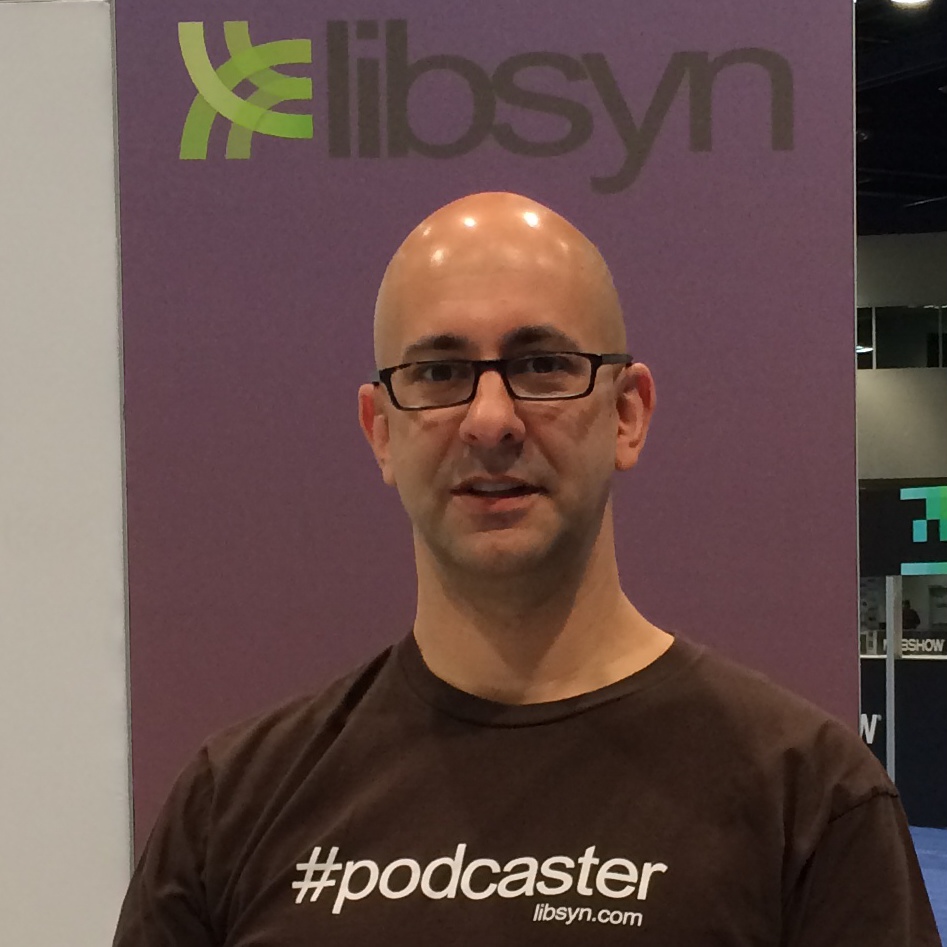
Rob Walch – PES 006
My guest is Rob Walch, VP of Podcaster Relations for Libsyn, and host and/or producer of the following podcast shows:
- Podcast 411
- The Feed
- Today in iOS
- KC Startup 411
- Even his son Porter has a podcast! Porters Podcast
- Rob also helps produce WelchCast
We spoke in detail about Rob’s technical setup for each of his shows.
Rob had some great tips for all of us:
- Record your Skype audio on a different device instead of on the same computer which you’re using to Skype. Then there’s no risk of over-taxing that computer’s CPU
- He loves his Marantz 660 digital recorder – rock solid
- Sound Soap (plugin to clean up audio) – $150, works in GarageBand
- When making Skype calls, the call will be smoother if the call is initiated from the person with the fastest internet connection
- When linking to your show’s iTunes presence, there is a way to have your show open directly in the place where your listener can click ‘Subscribe.’ *Here are the steps:
BTW- try clicking the one of the two iTunes links in this post and see where it opens 😉
Also, while recording this episode we had a disconnection/crash of CAST, which we were using to connect and record. I am digging CAST and learning how to use it…….and how NOT to use it – like closing the tab of a session and then trying to get back to that session (which you can’t)
Thank you for being a great guest and helping us so much, Rob!
-
David Hooper – PES 005
My guest is David Hooper, host of the RED Podcast, marketing guy, radio host, and author from Nashville, TN.

David’s RED Room Check out his equipment page here. It lists all the podcast equipment he uses and has nice pictures and links.
We also discussed David’s vast experience in the music business as well as his iHeart Radio Show.
Here’s some of the equipment David uses:
- Audio-Technica ATR2100-USB Cardioid Dynamic USB/XLR Microphone
- Mackie 1202VLZ4 12-Channel Compact Mixer
- Behringer Multicom PRO-XL MDX4600
- TASCAM DR-05 Portable Digital Recorder
Thank you, David!
-
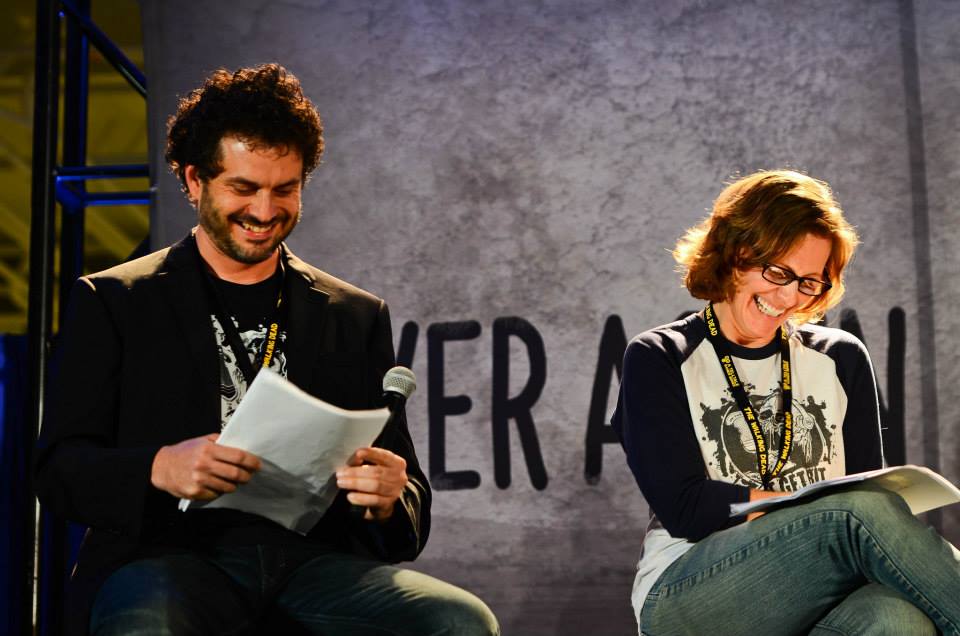
Jason Cabassi – PES 004
My guest is Jason Cabassi, host of The Walking Dead Cast and founder of Podcastica (podcast network).

Jason handles the recording, editing and publishing for the show.
We spoke about his equipment setup and workflow, etc., including:
- Jason’s microphone: Equitek E100S
- Karen’s microphone: Audio-Technica shotgun mic
- Has a 2nd Mac computer to use as a soundboard
- Downloads calls from Google Voice for use on the show
- Edits in GarageBand
- Uses FabFilter Pro de-esser and Zimple-Gate
- Uses Auphonic as a leveler
- Publishes in the AAC format which includes chapters
- Audio Hijack – lets you record audio from any source
Thank you, Jason!
