Your cart is currently empty!
Category: Daily Goody
The Daily Goody is daily tip, fact, or lesson on podcast production. You can receive it daily or a weekly roundup with our dedicated newsletter.
-
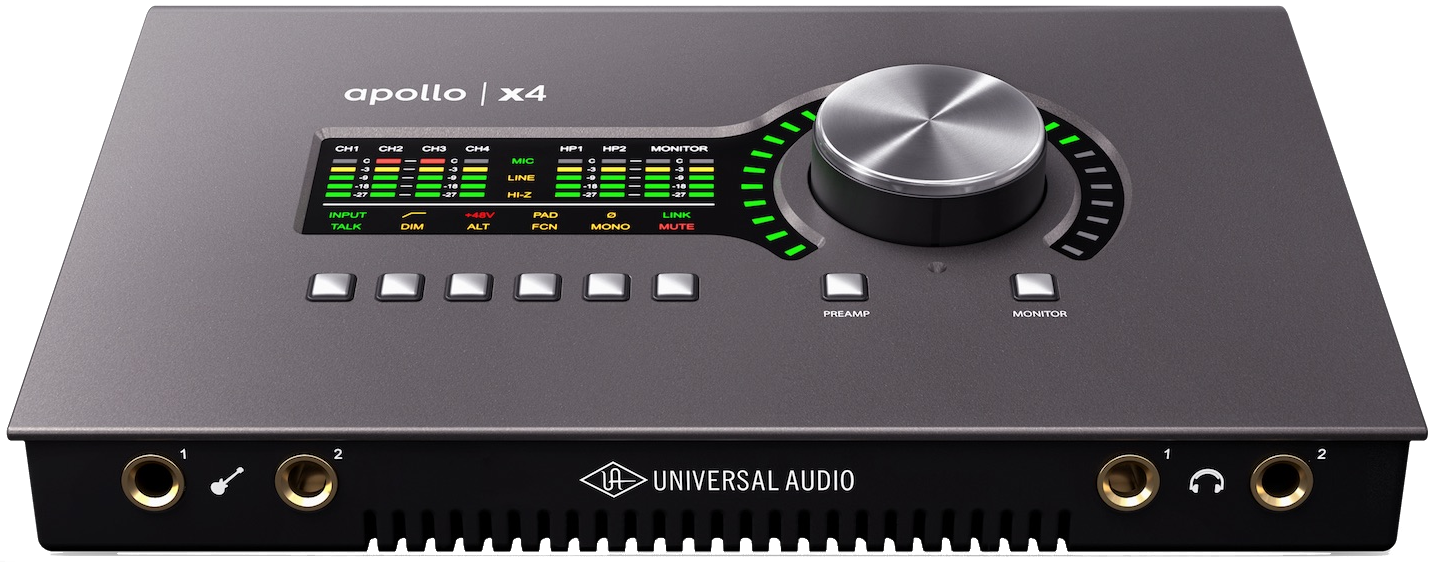
Apollo x4 Audio Interface
I recently purchased the Universal Audio Apollo x4 interface and I’m loving it! At $2,199 it’s definitely overkill for the average podcaster, but…
It can be a great solution for various podcasting situations. It has 4 XLR inputs so if you want to record 4 people sitting around a table you can, at great quality. And you’re able to use vintage preamps on everyone’s voice to make the audio sound more professional. It also has a nice big volume knob to control your headphone and speaker volume (VERY handy!). Plus there’s an entire ecosystem of EXCELLENT plugins. There are many more features which you can check out here.
Personally I’ll be using it for more than just podcasting:
- To record music and vocals, etc.
- To Livestream (It allows me to use plugins on my voice LIVE and without latency so I’m able to make my voice sound great on Livestreams!)
- To utilize Universal Audio’s microphone modeling plugins for my new Townsend Labs Sphere L22 microphone.
I’m still exploring and testing this interface so I’ll give a future update at some point 😉
What are your thoughts?
Want to receive the Daily Goody in your email, daily or weekly? Subscribe free here.
And please keep in mind, the Daily Goody is only a tiny little tip, fact or lesson everyday. Please don’t expect any of these posts to be long, earth-shattering masterpieces that instantly answer every single question you can think of and completely transform you into a world class podcast engineer. “Little by little, a little becomes a lot.”
-
Audio Production Fundamentals
There are many advanced audio tools available today, but no one can be expected to produce professional audio unless they have AT LEAST a fundamental knowledge of audio production in the areas of microphone technique, recording level, editing, sample rate, bit depth, polar patterns, signal flow, gain staging (drink Ralph!), loudness, EQ, compression, acoustic treatment, digital I/O, Fletcher Munson Curve, and the list goes on.
The good news is that these fundamentals are not difficult to learn (unless you decide to “learn” only from YouTube videos, in which case you’ll most likely frustrate the heck out of yourself and completely give up within a very short time like 99.99% of people do).
Another piece of good news is that once you learn these fundamentals properly, they will stick with you for the rest of your life and also assist you in many other areas like video production, music production, consumer audio products, – even dialing in the sound of your car stereo so it absolutely BANGS!, and much more.
Of course, if you’re NOT endeavoring to produce professional grade audio then you don’t have to concern yourself with ANY of this stuff! Just have fun podcasting.
Want to receive the Daily Goody in your email, daily or weekly? Subscribe free here.
And please keep in mind, the Daily Goody is only a tiny little tip, fact or lesson everyday. Please don’t expect any of these posts to be long, earth-shattering masterpieces that instantly answer every single question you can think of and completely transform you into a world class podcast engineer. “Little by little, a little becomes a lot.”
-
Earning Over $100k Producing Podcasts From Home
In today’s podcast industry it is VERY DOABLE to earn over $100K per year producing podcasts from home. I and others have done it / are doing it. Many of my students are on their way as we speak!
There are a few character traits that you will need to develop, though:
- Technical skills – you have to be VERY GOOD at producing podcast audio and efficiently managing clients.
- Outreach – talking with MANY potential clients each week. And when I say many, I mean MANY!
- Persistence for at least a couple years – if you persist YOU WILL NOT FAIL. (Read that again!)
- Strong will and ample confidence – if you need help in this area I suggest setting goals (properly), focusing on your MANY positive attributes as a human being, and having a small, intimate, trusted support team (and this could be just one other person).
Are you willing to put in the effort that it takes?!?! I’m here to support you the whole way 🙂
If you need any help of guidance feel free to reach out to me.
Want to receive the Daily Goody in your email, daily or weekly? Subscribe free here.
And please keep in mind, the Daily Goody is only a tiny little tip, fact or lesson everyday. Please don’t expect any of these posts to be long, earth-shattering masterpieces that instantly answer every single question you can think of and completely transform you into a world class podcast engineer. “Little by little, a little becomes a lot.”
-
Referencing Your Old Episodes to Evaluate the Sound
One insightful habit of professional chess players is that after each of their games they review the game for the purpose of learning from their mistakes and improving their play. Podcasters, editors and producers can follow a similar process with their previous episodes.
This type of evaluation can be completed within a short time and can give deep insight into what can be improved, changed or terminated in terms of audio quality, performance and much more. And you probably only have to do these types of evaluations every 6-12 months. Doing so will ensure that your overall production value continues to improve over time. And you personally will train your ears SO MUCH!
On a related note: Many folks HATE their first handful of episodes. Mostly because of their performance but also sometimes because of the audio quality.
What are your thoughts on this topic? Comment below.
Want to receive the Daily Goody in your email, daily or weekly? Subscribe free here.
And please keep in mind, the Daily Goody is only a tiny little tip, fact or lesson everyday. Please don’t expect any of these posts to be long, earth-shattering masterpieces that instantly answer every single question you can think of and completely transform you into a world class podcast engineer. “Little by little, a little becomes a lot.”
-
Reduce Editing Time With Better Recording Habits
It’s possible to cut down the time it takes you for post-production by developing a handful of good recording habits.
Here are a few examples:
- Avoid extraneous noises (putting drinks/items down on your desk/table, phone notifications, pet sounds, etc.)
- Avoid moving your mic around too much (mic bumps, rumble, etc.)
- Consciously avoid umms and lipsmacks, etc. (in the beginning you will have to watch yourself like a hawk but very soon your new habit will become second nature)
- Prepare a simple outline for each episode so you don’t fumble transitions
- Train guests a bit before pressing record (instruct them to not make any extraneous noises, to stay close to their mic, etc.)
- Record your show in one take as if it’s Live (this captures lots of authentic energy)
Do you have any additional ideas in this regard? Comment below! I know you can think of at least one additional good habit 😉
Want to receive the Daily Goody in your email, daily or weekly? Subscribe free here.
And please keep in mind, the Daily Goody is only a tiny little tip, fact or lesson everyday. Please don’t expect any of these posts to be long, earth-shattering masterpieces that instantly answer every single question you can think of and completely transform you into a world class podcast engineer. “Little by little, a little becomes a lot.”
-
Adjusting a Compressors Release Time and What Effect That Has on the Sound
The faster the release time of a compressor, the more “up front” or “in your face” the audio will sound. The slower the release time of a compressor, the more “pushed back” or “not so in your face” the audio will sound.
How would you describe the difference?
Want to receive the Daily Goody in your email, daily or weekly? Subscribe free here.
And please keep in mind, the Daily Goody is only a tiny little tip, fact or lesson everyday. Please don’t expect any of these posts to be long, earth-shattering masterpieces that instantly answer every single question you can think of and completely transform you into a world class podcast engineer. “Little by little, a little becomes a lot.”
-
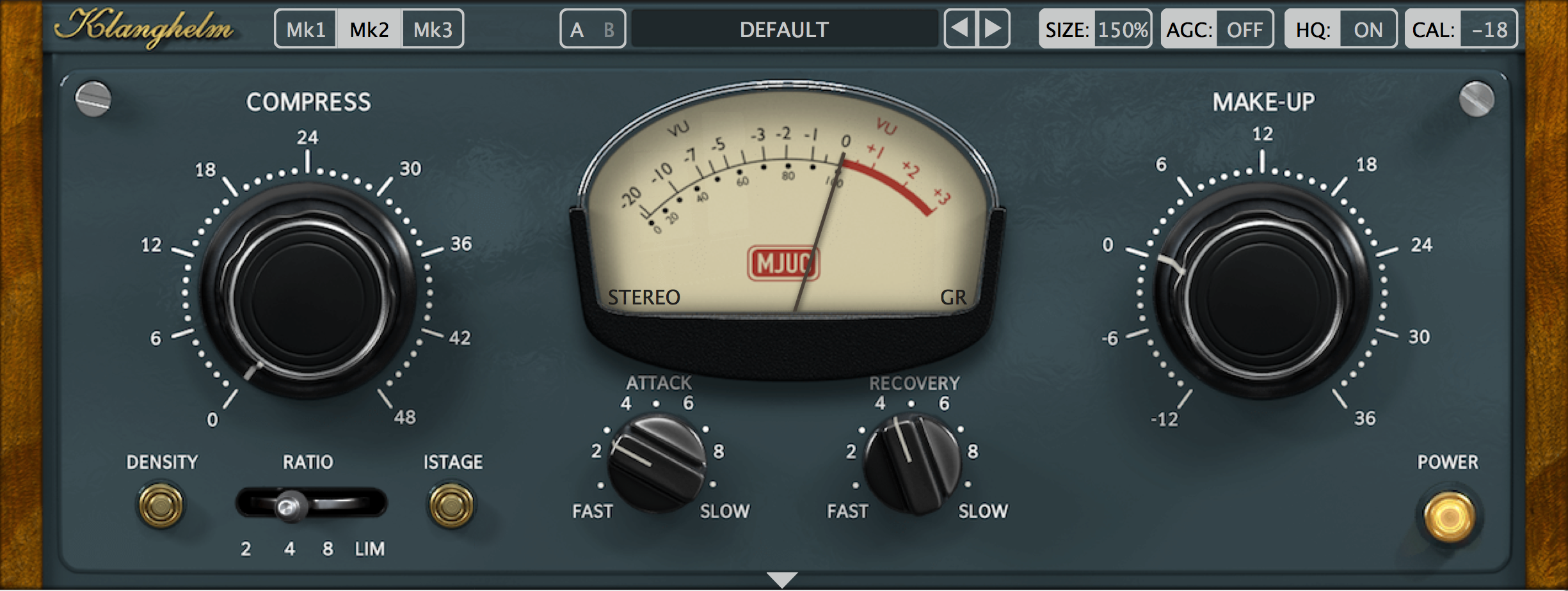
MJUC Compressor Plugin from Klanghelm
MJUC is an inexpensive compressor plugin (around $28.50) which sounds really good and lots of people love it. I bought it a couple months ago and I like it a lot.
I used this plugin on my voice in episode 220 of The Podcast Engineering Show.
And my previous guest Chris Williams uses this plugin, too.
From their website:
MJUC is the most effortful Klanghelm plugin to date. It took almost two years of extensive, dare I say “excessive”, research and development. To create MJUC I’ve researched and analyzed each and every variable-mu* implementation I could get my hands on to get the best of tube compression into a single processor. In order to do the diversity of this compression topology justice, three different models have been built. These are kind of a time travel though the history of tube compression to capture the essence of each generation. Each model has its own dedicated signal path and dedicated control set. If desired you can tweak the overall tone and saturation of each model with the unique TIMBRE and the DRIVE knob. DRIVE controls the load of the input and output transformers as well as the saturation of the tube gain stages, if applicable. The TIMBRE extends MJUC‘s use as a tone shaper.
Want to receive the Daily Goody in your email, daily or weekly? Subscribe free here.
And please keep in mind, the Daily Goody is only a tiny little tip, fact or lesson everyday. Please don’t expect any of these posts to be long, earth-shattering masterpieces that instantly answer every single question you can think of and completely transform you into a world class podcast engineer. “Little by little, a little becomes a lot.”
-
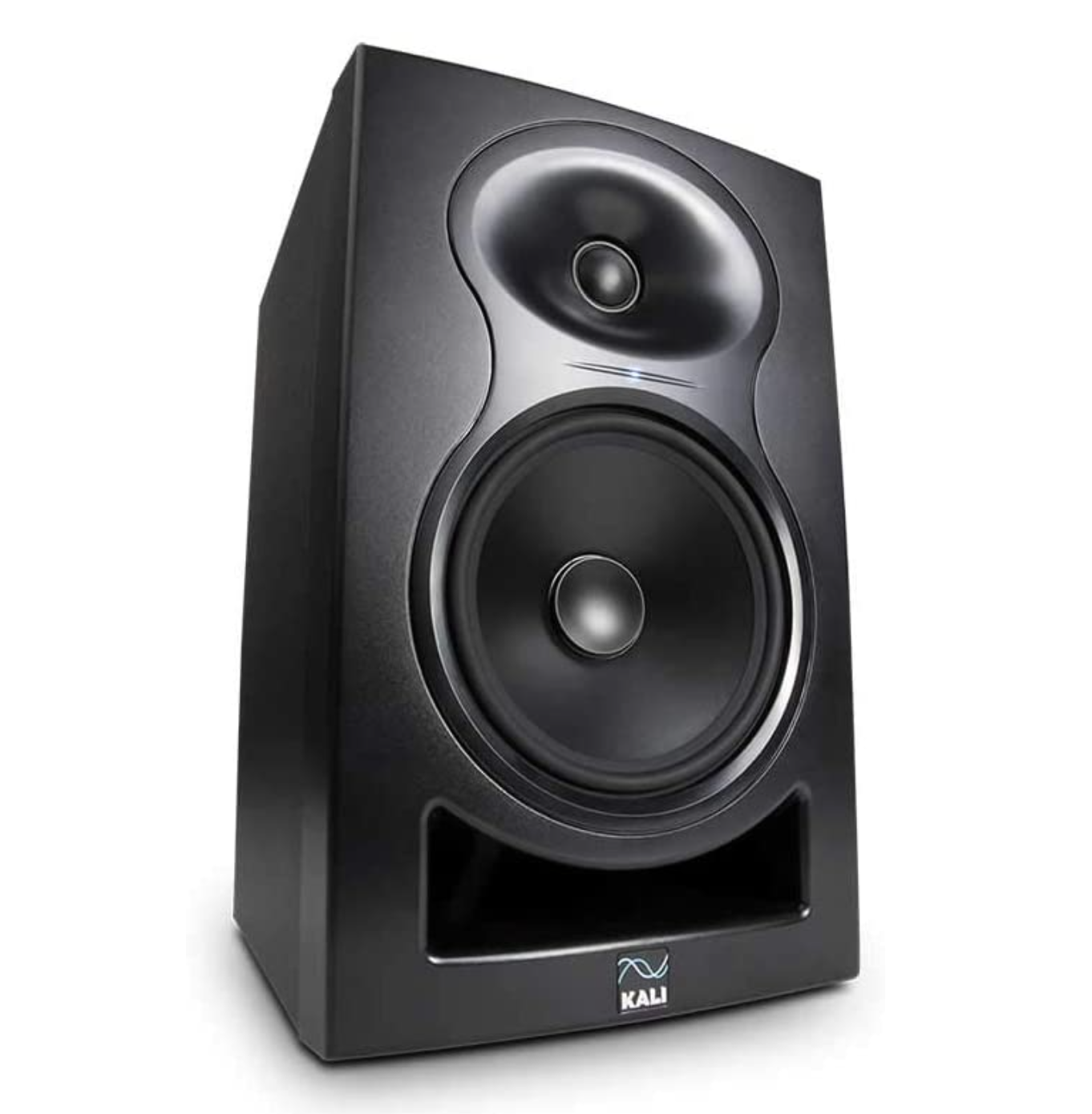
Kali Audio LP-6 Active Near-field Monitors
I recently heard a music studio owner mention that these Kali Audio LP-6 monitors were very good quality for the price. They cost around $300 / pair. NOTE: I haven’t ever heard them.
You can check out in-depth reviews by Sound on Sound and Tape Op.
FYI, back when I did a bunch of research on near-field monitors I found that the JBL LSR305 monitors (discontinued, now they offer JBL 305P MkII‘s) were also very good quality around the $300 / pair price point.
FYI 2, I own the Neumann KH 120 A monitors.
Want to receive the Daily Goody in your email, daily or weekly? Subscribe free here.
And please keep in mind, the Daily Goody is only a tiny little tip, fact or lesson everyday. Please don’t expect any of these posts to be long, earth-shattering masterpieces that instantly answer every single question you can think of and completely transform you into a world class podcast engineer. “Little by little, a little becomes a lot.”
-
Nicest Looking Website-Embeddable Podcast Players?
I’d love to hear your answer to this question in the comments!
Personally I’ve used Blubrry’s PowerPress plugin player and Libsyn’s standard and custom players. FYI, here’s where you can see how Libsyn’s custom player looks, and here’s where you can see how the basic PowerPress player looks.
Also, here’s a great article by the incomparable James Cridland of Podnews titled How to embed a podcast player into your website and it shows examples of players from Apple, Spotify, Fusebox, Listen Notes, RadioPublic, Castbox, Podfriend, and Podkite.
Want to receive the Daily Goody in your email, daily or weekly? Subscribe free here.
And please keep in mind, the Daily Goody is only a tiny little tip, fact or lesson everyday. Please don’t expect any of these posts to be long, earth-shattering masterpieces that instantly answer every single question you can think of and completely transform you into a world class podcast engineer. “Little by little, a little becomes a lot.”
-
Edit Out Awkward Silence or Not?
I only leave awkward silence in the episode if it adds to the comedic value of a joke, or if a participant is purposefully using the silence to build tension, etc.
But if it helps the pacing of the episode to remove some awkward silence I will do that. But I won’t remove too much, because if you remove too much silence you will “over-correct” and the transition may sound unnaturally abrupt, which is also not good.
Of course, every time you make an edit you should always listen back to your edit and verify that it sounds completely natural.
*How do you handle awkward silence?
Want to receive the Daily Goody in your email, daily or weekly? Subscribe free here.
And please keep in mind, the Daily Goody is only a tiny little tip, fact or lesson everyday. Please don’t expect any of these posts to be long, earth-shattering masterpieces that instantly answer every single question you can think of and completely transform you into a world class podcast engineer. “Little by little, a little becomes a lot.”
-

BB N105 Plugin (EQ and Saturation)
I purchased the BB N105 plugin hours after it was released and I tried it immediately. Love at first use 🙂 …but let me be clear – for podcast production this is not a must-have plugin.
It’s a channel strip plugin with EQ, saturation and preamp distortion. And to my ears, the saturation modeling they captured sounds AMAZING! We’ve heard many plugin creators say that their plugin “adds warmth”, but the warmth and thickness that the BB N105 adds sounds legendary (because the Neve 8078 console IS legendary).
From their website:
The BB N105 is a channel strip plugin modeled after the legendary console in Studio A at Blackbird Studio. Designed by KIT Plugins in partnership with John McBride and his team, we crafted a truly musical plugin that evokes emotion and inspires creativity just as the legendary console does for so many great artists.
The Neve 8078 console in Studio A at Blackbird is far from ordinary. After John McBride acquired the console for the studio, it underwent a massive restoration to bring it back to its former glory. The console received a series of modifications from some of the best minds in the audio industry, making it not only unique but arguably the best example of its namesake ever to exist.
We carefully examined the console’s legendary channel, from factory schematics to studying the way top producers and engineers use the console to better understand what made it so special. Our engineers carefully sampled the channel taking into account all of the factors – equalization, saturation, noise, distortion, depth and width and musicality. Our mission was to create a plugin that truly embodied the sound of recording in Studio A. To do this we sampled the channel in the console running through master bus B, and captured the samples using John’s favorite A/D converters. We truly believe we have captured the sound of this Neve 8078 in all it’s glory!
Want to receive the Daily Goody in your email, daily or weekly? Subscribe free here.
And please keep in mind, the Daily Goody is only a tiny little tip, fact or lesson everyday. Please don’t expect any of these posts to be long, earth-shattering masterpieces that instantly answer every single question you can think of and completely transform you into a world class podcast engineer. “Little by little, a little becomes a lot.”
-
Be Delicate When De-essing
If you use a de-esser too aggressively (and remove TOO much sibilance) you will destroy the clarity and naturalness of the person’s voice.
I suggest de-essing carefully and be ultra-sure not to overdo it. Simply take the edge off the sibilance instead of trying to remove too much.
Question: On a scale of 1-10 how comfortable are you using de-essers?
Want to receive the Daily Goody in your email, daily or weekly? Subscribe free here.
And please keep in mind, the Daily Goody is only a tiny little tip, fact or lesson everyday. Please don’t expect any of these posts to be long, earth-shattering masterpieces that instantly answer every single question you can think of and completely transform you into a world class podcast engineer. “Little by little, a little becomes a lot.”
-

I Held an ATR2100USB in My Hand This Whole Episode
I recorded the most recent episode of The Mystic Show immediately after livestreaming a meditation session. In the meditation room I held my ATR2100USB in my hand for my entire 13 minute monologue. Of course I was careful to hold it in the same position the entire time. You can hear the audio here on episode 195 of The Mystic Show.
What do you think of the sound?
Want to receive the Daily Goody in your email, daily or weekly? Subscribe free here.
And please keep in mind, the Daily Goody is only a tiny little tip, fact or lesson everyday. Please don’t expect any of these posts to be long, earth-shattering masterpieces that instantly answer every single question you can think of and completely transform you into a world class podcast engineer. “Little by little, a little becomes a lot.”
-

Steinberg WaveLab (Mastering Software)
Steinberg WaveLab is mastering software used mostly for music production but some podcast producers/editors are using it too!
There’s an “Elements” version available for $99 (which Jason Sheesley uses!), and the full version is available for $479.99.
Check out all the features on its webpage here 😉
Have you tried this software yet?
Want to receive the Daily Goody in your email, daily or weekly? Subscribe free here.
And please keep in mind, the Daily Goody is only a tiny little tip, fact or lesson everyday. Please don’t expect any of these posts to be long, earth-shattering masterpieces that instantly answer every single question you can think of and completely transform you into a world class podcast engineer. “Little by little, a little becomes a lot.”
-
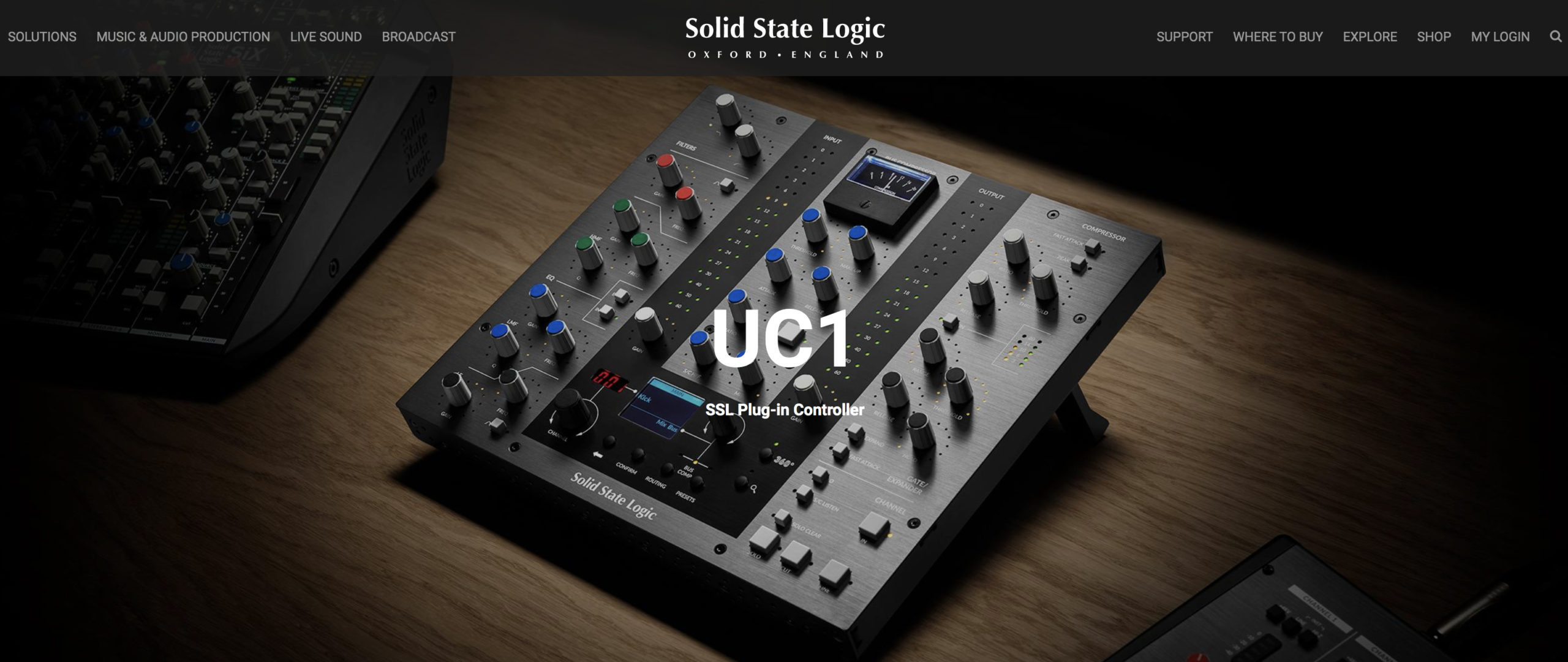
SSL UC1 Hardware Plug-in Controller
I’d love to try this SSL UC1 controller! There’s nothing like twisting physical knobs when dialing-in audio settings 😉
From their website:
SSL hardware for your SSL software
UC1 is a hardware plug-in controller like no other. Dedicated knob-per-function Channel EQ and Dynamics controls, centre section featuring full Bus Compressor controls and authentic moving-coil gain reduction meter combine to offer the most creative, intuitive, and ultimately effective way of controlling the new SSL Native Channel Strip 2 and Bus Compressor 2 plug-ins within your DAW session.
SSL production tools are the benchmark for studio ergonomics and workflow. UC1 draws on decades of analogue and digital console design to develop an intelligent and deeply integrated SSL plug-in control surface that lets you focus on your production goals and not the process.
UC1’s layout of encoders, switches and colour groupings offer professional SSL console ergonomics seamlessly integrated with our most advanced Channel Strip and Bus Compressor plug-ins to date. Multiple parameters can be controlled simultaneously and precisely, equipping you with a production tool that nurtures muscle memory, provides unmatched sonic flexibility and inspires operator confidence. To expand your hybrid workflow further, accompany with UF8 Advanced DAW Controller.
Would you like to try this?
Want to receive the Daily Goody in your email, daily or weekly? Subscribe free here.
And please keep in mind, the Daily Goody is only a tiny little tip, fact or lesson everyday. Please don’t expect any of these posts to be long, earth-shattering masterpieces that instantly answer every single question you can think of and completely transform you into a world class podcast engineer. “Little by little, a little becomes a lot.”
-
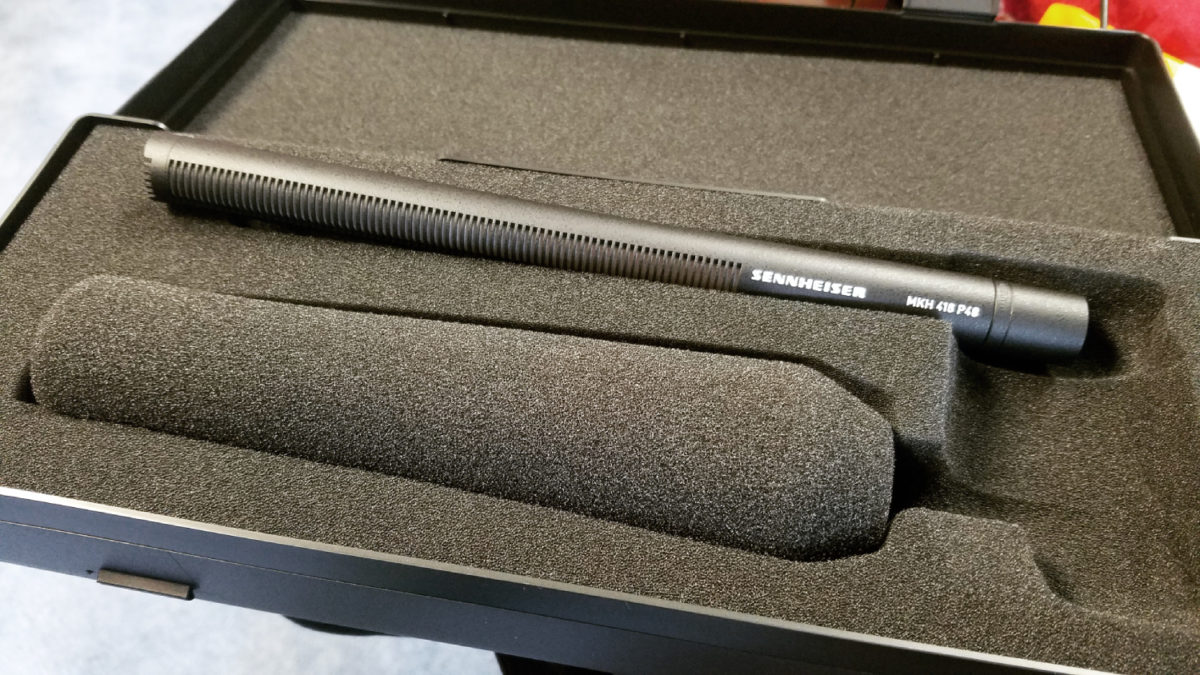
Sennheiser MKH 416 – Short Shotgun Interference Tube Microphone
I purchased my MKH 416 a couple years ago and it’s one of the best sounding microphones I’ve ever heard. You might expect it to sound great due to it’s $1,000 price tag. I compared it to my Audio-Technica AT8035, a comparable microphone which costs around $269, and the 416 BLEW AWAY the 8035! I expected the 416 to sound better but it makes the 8035 sound very lacking.
From their website:
The venerable MKH 416 is a compact pressure-gradient microphone with short interference tube, highly immune to humidity due to its RF condenser design. Featuring high directivity, low self noise, high consonant articulation and feedback rejection, the MKH 416 can handle difficult exterior filming and reporting conditions without any difficulty. Supercardioid/lobar pattern, matte black finish, supplied with the MZW415 windscreen.
- Pressure gradient receiver with short interference tube
- Hypercardioid at low and medium frequency
- Above 2kHz approaches lobar pattern
Have you tried this microphone?
Want to receive the Daily Goody in your email, daily or weekly? Subscribe free here.
And please keep in mind, the Daily Goody is only a tiny little tip, fact or lesson everyday. Please don’t expect any of these posts to be long, earth-shattering masterpieces that instantly answer every single question you can think of and completely transform you into a world class podcast engineer. “Little by little, a little becomes a lot.”
-
Perception of Space
When producing music, engineers are able create a kind-of 3D experience for listeners using a combination of panning (placing different instruments/elements in different positions across the Left-Right spectrum) and reverb (placing different instruments/elements at different distances in the Near/Far spectrum) as well as other EQ tricks, textures and movement.
Some of these same tactics can be used in podcast production to create a deeper listening experience by separating different participants in the stereo spectrum, creating immersive 3D sounding intro’s and outro’s, and incorporating other sound effects and music.
What kinds of “perception” tricks do you use in your production?
Want to receive the Daily Goody in your email, daily or weekly? Subscribe free here.
And please keep in mind, the Daily Goody is only a tiny little tip, fact or lesson everyday. Please don’t expect any of these posts to be long, earth-shattering masterpieces that instantly answer every single question you can think of and completely transform you into a world class podcast engineer. “Little by little, a little becomes a lot.”
-
Up for a “New Client Challenge”?
Would you love to sign up new podcast production/editing clients within the next month? If so, our laser focused course may be helpful to you.
It’s called Getting New Clients at Higher Rates — and as soon as you enroll you can start watching the video lessons and preparing for a new era in your podcast production business.
I believe in you — I believe that if you focus on growing your business and you put in enough intelligent focused time and effort, you can create a business for yourself that will be more profitable than you can imagine right now.
If you’re ready, let’s GO!
Want to receive the Daily Goody in your email, daily or weekly? Subscribe free here.
And please keep in mind, the Daily Goody is only a tiny little tip, fact or lesson everyday. Please don’t expect any of these posts to be long, earth-shattering masterpieces that instantly answer every single question you can think of and completely transform you into a world class podcast engineer. “Little by little, a little becomes a lot.”
-
Do You “Cheat” and Publish Your Episodes Louder Than the Unofficial Loudness Standards?? I Do.
The unofficial loudness standards for podcast episodes is -19 LUFS for mono episodes and -16 LUFS for stereo episodes.
But some folks publish their episodes a bit louder than that because of……reasons.
I publish episodes at about 0.4 LUFS louder than the unofficial standards because I use more compression than average and therefore, in general, the peaks of my audio don’t peak as high as most podcasts, and therefore I nudge my level up a bit to closer match the average peak level and momentary peak loudness of most podcasts. If I keep my audio at the unofficial standard level it can actually sound LOWER in volume than the average podcast at the same LUFS level, but of course the quieter parts of my audio are substantially louder and more audible than the quieter parts of average podcast audio.
What about you – are you determined to win the Loudness Wars with your audio?!?! hehe… I know Brad from The Cinema Guys is 😉
Want to receive the Daily Goody in your email, daily or weekly? Subscribe free here.
And please keep in mind, the Daily Goody is only a tiny little tip, fact or lesson everyday. Please don’t expect any of these posts to be long, earth-shattering masterpieces that instantly answer every single question you can think of and completely transform you into a world class podcast engineer. “Little by little, a little becomes a lot.”