Your cart is currently empty!
Category: Daily Goody
The Daily Goody is daily tip, fact, or lesson on podcast production. You can receive it daily or a weekly roundup with our dedicated newsletter.
-
Best Recording Tip for Someone Who Speaks at a Soft, Low Volume
Make sure the microphone is close to the person’s mouth! If the microphone is too far away from the person’s mouth the microphone will pick up too much room noise and not enough of the person’s voice. You want more voice to be captured and less room noise, reflections and reverb.
NOTE 1: Beware of plosives and use wind protection if you’re getting very close to any microphone.
NOTE 2: Sibilance may be accentuated when a person speaks at a very low volume because the main vocal tone of their voice will be much lower in volume compared to sibilance and mouth noises, etc.
What’s your experience with his?
Want to receive the Daily Goody in your email, daily or weekly? Subscribe free here.
And please keep in mind, the Daily Goody is only a tiny little tip, fact or lesson everyday. Please don’t expect any of these posts to be long, earth-shattering masterpieces that instantly answer every single question you can think of and completely transform you into a world class podcast engineer. “Little by little, a little becomes a lot.”
-
Should You Ask Remote Guests to Record Their Own Audio Locally?
There ARE recording services (see below) that make this question obsolete, but first…
In a way, there are two types of podcast guests and different ways to handle each one:
1. The guest who hosts his/her own podcast show. If a guest happens to host his/her own podcast, and therefor already has a decent microphone and the ability to record themselves locally, it’s usually not an inconvenience to ask them to record themselves locally and send you the file later (via Dropbox, etc.). I do this.
2. The average person who never records audio on their computer. 99% of non-podcasters do not know how to record themselves locally, and if you try to walk them through downloading and installing software, etc., you will spend lots of time feeling incredibly frustrated. I never do this.
*Thankfully there are services like Squadcast, Zencastr and Riverside – they record each of your guests locally on their computer without them knowing it! After the recording session you download everyone’s individual file. In terms of audio quality, this is by far the best way to connect and record remote guests.
Do you have any thoughts to continue this conversation in the comments below?
Want to receive the Daily Goody in your email, daily or weekly? Subscribe free here.
And please keep in mind, the Daily Goody is only a tiny little tip, fact or lesson everyday. Please don’t expect any of these posts to be long, earth-shattering masterpieces that instantly answer every single question you can think of and completely transform you into a world class podcast engineer. “Little by little, a little becomes a lot.”
-
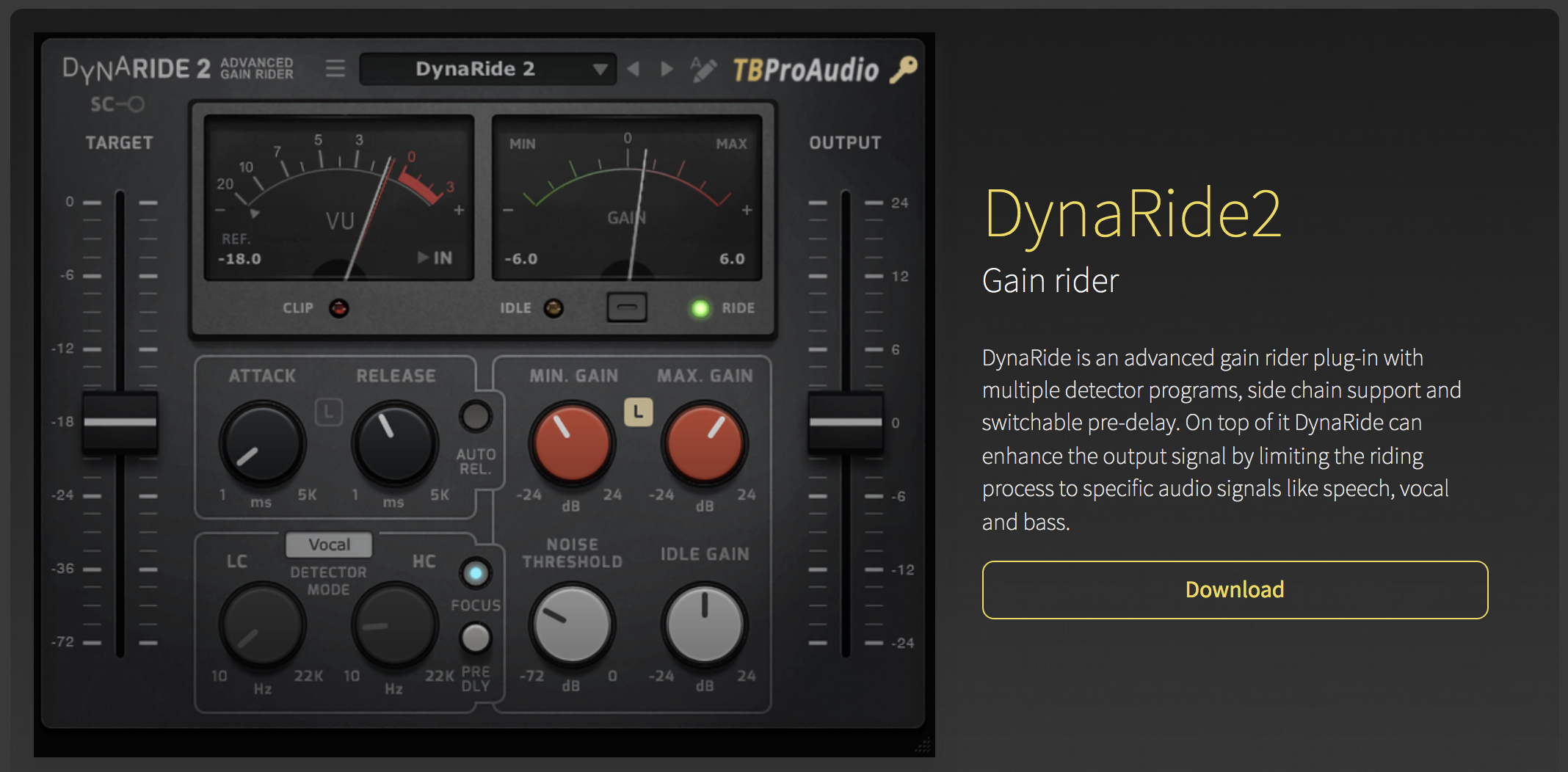
Gain Rider Plugin: DynaRide2
I have not tried this DynaRide2 plugin yet but it processes audio similarly to the popular Vocal Rider plugin from Waves, but of course it has different features.
These types of volume-riding plugins are great for podcast production because they can bring down the loud parts and bring up the low parts which creates a vastly superior listening experience for listeners.
Have you tried this plugin yet?
Want to receive the Daily Goody in your email, daily or weekly? Subscribe free here.
And please keep in mind, the Daily Goody is only a tiny little tip, fact or lesson everyday. Please don’t expect any of these posts to be long, earth-shattering masterpieces that instantly answer every single question you can think of and completely transform you into a world class podcast engineer. “Little by little, a little becomes a lot.”
-
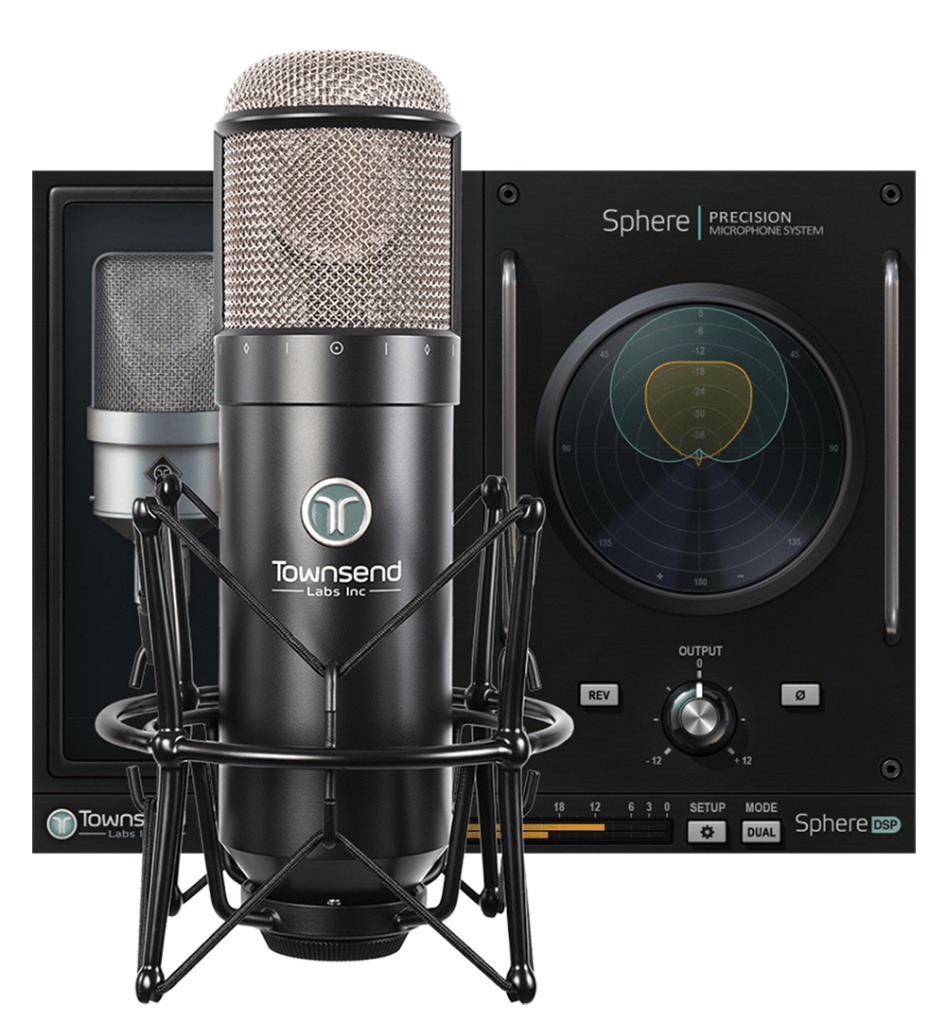
Best Sounding Microphone Emulation *For My Voice* Using My Sphere L22 Microphone
The Sphere L22 Microphone comes with many different emulations of classic microphones to choose from (The Townsend Labs Sphere Collection), and you can even change between emulation profiles AFTER RECORDING THE AUDIO! Very cool.
Recently I sound-checked my voice on every single emulation they offer to determine which one was most suitable for my own voice.
Quick Note: When you purchase the microphone you get a bunch of emulations along with it (The Townsend Labs Sphere Collection). There are two additional emulation collections which are available from Universal Audio — The Ocean Way Microphone Collection, and The Bill Putnam Mic Collection.
For my test I tried all the emulations from all three collections.
RESULTS?? *For my voice* the overall winner was the “LD-414 NYLON” emulation in the Townsend Labs Sphere Collection (which comes with the mic). Runners up were the “OW-12 #2” from the Ocean Way Collection and the BP-251E from the Bill Putnam Mic Collection.
I’ll be demonstrating the sound of these three emulations on an upcoming episode of my Podcast Engineering Show. Stay tuned.
And FYI, I was kind of expecting one of the U47 emulations to sound the best on me, but as we all know — sounding great it’s not about the mic itself, it’s about the unique marriage between the microphone and the person’s unique voice. Finding the combo that sounds best is truly a boon.
Want to receive the Daily Goody in your email, daily or weekly? Subscribe free here.
And please keep in mind, the Daily Goody is only a tiny little tip, fact or lesson everyday. Please don’t expect any of these posts to be long, earth-shattering masterpieces that instantly answer every single question you can think of and completely transform you into a world class podcast engineer. “Little by little, a little becomes a lot.”
-
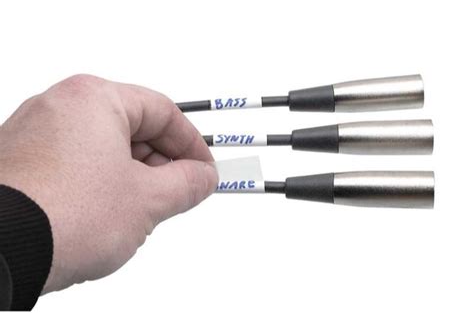
Using Cable Labels to Reduce “Spaghetti” Confusion in Your Studio
Labelling your audio/video cables can very extremely handy when you have lots of cables running everywhere.
I have used these labels in the past and they worked well for me: Hosa Technology LBL-466 – Peel and Stick Vinyl Cable Labels (60 Pieces for around $12)
Hope this helps.
Want to receive the Daily Goody in your email, daily or weekly? Subscribe free here.
And please keep in mind, the Daily Goody is only a tiny little tip, fact or lesson everyday. Please don’t expect any of these posts to be long, earth-shattering masterpieces that instantly answer every single question you can think of and completely transform you into a world class podcast engineer. “Little by little, a little becomes a lot.”
-
The “White Glove” Service: Engineering Client Recording Sessions Remotely
Podcast engineers can earn very good money by offering a type of “white glove” service: Being present in online recording sessions to help soundcheck all participants (hosts, guests), handle any technical issues that arise (not uncommon) and of course record the entire session including backups.
This way, the client doesn’t have to worry about ANYTHING except conducting a good interview. I’ve been doing this for years and CLIENTS LOVE IT.
NOTE: The engineer is not actually appearing or speaking on the podcast itself, he/she is just hanging out in the background making sure everything runs smoothly.
What do you need to run these kinds of sessions? Of course you’ll need a fast and solid internet connection, as well as availability during business hours because that’s when higher paying clients typically like to record.
Have you ever engineered a clients session Live?
FYI, in the full PES program I spend half of an entire class teaching every single aspect of running these sessions, soundchecking guests (rarely easy), coordinating bookings, the best platforms to use (Riverside, Squadcast, etc.) and much more!
Want to receive the Daily Goody in your email, daily or weekly? Subscribe free here.
And please keep in mind, the Daily Goody is only a tiny little tip, fact or lesson everyday. Please don’t expect any of these posts to be long, earth-shattering masterpieces that instantly answer every single question you can think of and completely transform you into a world class podcast engineer. “Little by little, a little becomes a lot.”
-
Loudness Range of Final Episodes – What’s Good and What’s Bad?
I speak a lot about controlling the dynamic range of podcast episodes in order to provide a good listening experience to all listeners.
Loudness Range (which is similar to dynamic range) is the average difference between the loudest parts and the quietest parts – and it’s measured in LU (Loudness Units, similar to dB).
If the loudness range of an episode is too great (like around 10-20) that means the loud parts of your episode will be EXTREMELY loud and the quiet parts will be VERY quiet and difficult for your listeners to hear if they’re listening in an environment that has ANY background noise, which is basically ALL listening environments, of course.
In my experience an ideal Loudness Range for spoken word podcasts is around 4-5 LU. To me this level sounds nicely compressed but still contains enough natural energy and life. Even 3.5 sounds good sometimes.
Auphonic and iZotope RX are two applications that I know of that can measure Loudness Range, and Auphonic can even process your audio to be whatever loudness range you want it to be!
Have you ever measured the Loudness Range of one of your final episodes? It’s eye opening for sure.
FYI, from the iZotope RX Loudness Control User Guide:
The loudness range is computed from the distribution (histogram) of Short-term loudness over time. First, signals more than 20 LU below the average Short-term loudness are thrown away. Second, 10% of quietest and 5% of loudest remaining signals are also excluded from the computation. Finally, the difference between the loudest and the quietest of the remaining signals is called the Loudness range and is measured in LU (equivalent to dB).
Want to receive the Daily Goody in your email, daily or weekly? Subscribe free here.
And please keep in mind, the Daily Goody is only a tiny little tip, fact or lesson everyday. Please don’t expect any of these posts to be long, earth-shattering masterpieces that instantly answer every single question you can think of and completely transform you into a world class podcast engineer. “Little by little, a little becomes a lot.”
-
When Editing Out Silence To Increase Pacing, Be Sure To…
It’s VERY annoying listening to a podcast episode which has been edited so tightly that there are literally no natural pauses between sentences or between the hosts questions and the guests answers. The listening experience is terrible, like listening through a fire hose instead of hearing human beings speak at a normal natural pace. For me it’s confusing and much more difficult to absorb what’s being said. It’s a big mistake to edit an episode too tightly.
Therefore…
When editing out silence to increase pacing, be sure to maintain a natural sounding gap between:
- Sentences
- Paragraphs
- Questions and answers
And natural means natural for each specific instance; the length of the silence should FEEL right and be appropriate for what’s being said, the emotions behind it, the context, etc.
It _IS_ possible to tighten up gaps of silence _AND_ maintain naturalness.
Do you agree?
Want to receive the Daily Goody in your email, daily or weekly? Subscribe free here.
And please keep in mind, the Daily Goody is only a tiny little tip, fact or lesson everyday. Please don’t expect any of these posts to be long, earth-shattering masterpieces that instantly answer every single question you can think of and completely transform you into a world class podcast engineer. “Little by little, a little becomes a lot.”
-
Expecting a Plugin Preset to Do What the Name Says
To enhance your podcast production awareness, check out the first bullet point in this article titled The Top 10 Rookie Recording Mistakes — it’s about expecting a plugin preset to do what the name says.
It reads:
“The Mistake: I recently received a project where every track had a channel strip plug-in (fig. 1) inserted to add EQ and/or dynamics. Channel strips are a great one-stop shop for quick processing, but the mistake was that the guitar track had a preset called “guitar,” the female vocal had a preset called “female vocal,” the percussion had a preset called “percussion” — you get the idea. A preset may give the sound you want, but every guitar, voice, percussion, bass, etc. is different.”
My opinion: Presets are good to start with, but 90% of the time they still require a bit of tweaking the settings to make the sound just right. Don’t be afraid to tweak settings!
What are your thoughts?
Want to receive the Daily Goody in your email, daily or weekly? Subscribe free here.
And please keep in mind, the Daily Goody is only a tiny little tip, fact or lesson everyday. Please don’t expect any of these posts to be long, earth-shattering masterpieces that instantly answer every single question you can think of and completely transform you into a world class podcast engineer. “Little by little, a little becomes a lot.”
-
VIDEO: CLA-2A Compressor/Limiter Plugin (Waves) for Podcast Production
I explain and demonstrate the CLA-2A plugin from Waves and how you can use it in podcast post-production. This a compressor/limiter plugin which tames/compresses peaks and adds a nice smooth analog sound to the audio. It is modeled from the classic LA-2A which is one of the best hardware compressors of all time and used on a zillion of your favorite records.
LINKS:
- Waves CLA-2A plugin — https://www.waves.com/plugins/cla-2a-compressor-limiter
- User Guide for the Waves CLA-2A — https://www.waves.com/1lib/pdf/plugins/cla-2a-compressor-limiter.pdf
- Universal Audio LA-2A Collection — https://www.uaudio.com/uad-plugins/compressors-limiters/teletronix-la-2a-collection.html
Want to receive the Daily Goody in your email, daily or weekly? Subscribe free here.
And please keep in mind, the Daily Goody is only a tiny little tip, fact or lesson everyday. Please don’t expect any of these posts to be long, earth-shattering masterpieces that instantly answer every single question you can think of and completely transform you into a world class podcast engineer. “Little by little, a little becomes a lot.”
-
Riverside’s Noise Suppression Feature
Someone recently asked me about using Riverside’s Noise Suppression feature when recording participants who have “noise” in their audio signal.
Riverside describes their Noise Suppression feature as: “Remove background noises such as AC fans, heaters, and other ambient sounds. This does not affect clicks, pops, and other transient sounds.”
Here’s my response to their question about using that Noise Suppression during the recording process:
I haven’t done any testing on the quality of Riverside’s Noise Suppression, but in general I would only RECORD using noise suppression/reduction if BOTH of these are true:
- I won’t have the ability in post-production to do any noise reduction (which is virtually the same as their noise “suppression”)
- The participant has significant background noise which they CANNOT turn off or remove before we start recording.
And here’s the main reason you would not want to categorically use Noise Suppression on every participant in every recording session: Noise reduction in general can do significant damage to audio if it’s not done properly and/or it’s overdone. If someone has good audio with very little background noise you would NEVER want to use noise reduction on their audio because there’s no need, and because it could degrade the audio significantly.
What has your experience been with recording using noise suppression/reduction?
Want to receive the Daily Goody in your email, daily or weekly? Subscribe free here.
And please keep in mind, the Daily Goody is only a tiny little tip, fact or lesson everyday. Please don’t expect any of these posts to be long, earth-shattering masterpieces that instantly answer every single question you can think of and completely transform you into a world class podcast engineer. “Little by little, a little becomes a lot.”
-
Please Don’t Ever Use Your Computers Built-in Microphone for Recording Podcasts
Whether you’re a podcast guest or host, I recommend NEVER using your computers built-in microphone. It’s the worst possible option because it captures TERRIBLE sounding audio quality. It’s truly rubbish.
I realize some folks don’t care about sounding good, but those people are idiots. It’s been scientifically proven that good sound subconsciously results in the listeners liking you more and respecting you more. Plus it’s a whole lot easier to listen to.
Here are simple, good alternatives:
- Use earbuds that have a mic on the cable. (Still not the best, but WAY better than your computers built-in mic)
- Use a USB microphone. (Around $150 will get you a good microphone with stand and windscreen)
- Use an XLR microphone and an audio interface. (This is a more advanced setup and not necessary for the average solo podcaster or podcast guest)
Please share this post with your friend who needs this info!
Want to receive the Daily Goody in your email, daily or weekly? Subscribe free here.
And please keep in mind, the Daily Goody is only a tiny little tip, fact or lesson everyday. Please don’t expect any of these posts to be long, earth-shattering masterpieces that instantly answer every single question you can think of and completely transform you into a world class podcast engineer. “Little by little, a little becomes a lot.”
-

Brainworx bx_console AMEK 9099
The Brainworx bx_console AMEK 9099 plugin is a high-end channel strip plugin offered by Plugin Alliance. It contains an EQ, filters, compressor, limiter, gate and more.
I recently bought this plugin when it was on sale. I haven’t used it much yet but it is certainly an amazing sounding channel strip plugin.
Here are more details:
- Legendary analog sound with an incredible feature set
Released at the turn of the millennium with the slogan “Artistry in Analogue”, the 9098i Console designed by Rupert Neve (the designer) was one of the highest achievements in analog console design. Today, it becomes Brainworx’s most fully-featured console plugin with the release of the bx_console AMEK 9099. - Musical EQs with comprehensive dynamic control
The AMEK 9099 has the kind of EQ that provides you wide, musical curves, capable of tightening up enough to give you the precision you need without ever sounding “bad.” The dynamics section goes even further than the norm, with a fully variable expander, gate, compressor, and limiter, complete with extremely flexible sidechain capabilities. - Unique features not found in other consoles
The original AMEK 9098i was dotted with features not commonly found in analog consoles of its day. The EQ shelves feature a “Sheen” and “Glow” mode for even smoother boosts and cuts, while the parametric bands include a “Notch” mode for even more precise cuts. A unique “Ambience” switch in the dynamics section lets you easily hear exactly what your compressor is doing. And, the onboard EQ can operate as a fully parametric dynamics sidechain filter for even more precise control of your compressor and limiter. - More features than any other bx_console plugin
The engineers at Brainworx improved on a good thing by adding parameters not found on the original hardware. They added on a special “Clip” function in the limiter for super fast and smooth soft clipping and created a new fully functional expander/gate with its own sidechain filter, inspired by legendary analog gear. And, for the first time ever in a bx_console plugin, there’s even an onboard Mono Maker, Stereo Width and Auto Listen control. - Powered by Tolerance Modeling Technology (TMT)
Like every plugin in the bx_console line, the AMEK 9099 takes advantage of the proprietary Brainworx TMT design, to more accurately emulate the performance and behavior of a real analog console. Modeled after Dirk Ulrich’s own favorite AMEK strips, each channel is emulated at the component level to provide subtle channel-to-channel variances for greater dimension, width and depth, just like on a real analog console. - Legal Disclaimer: The Brainworx bx_console AMEK 9099 was developed by Brainworx Audio using its own modeling techniques, and one of the products studied was the AMEK 9098i Console. Rupert Neve is a registered trademark of RND (Rupert Neve Designs), which is unaffiliated with Brainworx Audio. RND has not licensed any intellectual property for use in the bx_console AMEK 9099, nor have they endorsed or supported the bx_console AMEK 9099 in any manner.
Don’t forget you can try this plugin before you buy, or not buy 😉
Want to receive the Daily Goody in your email, daily or weekly? Subscribe free here.
And please keep in mind, the Daily Goody is only a tiny little tip, fact or lesson everyday. Please don’t expect any of these posts to be long, earth-shattering masterpieces that instantly answer every single question you can think of and completely transform you into a world class podcast engineer. “Little by little, a little becomes a lot.”
- Legendary analog sound with an incredible feature set
-
Do You Breakdown and Put Away Your Equipment After Recording, Or…?
Do you breakdown and put away your equipment every time after recording, or do you leave your equipment set up at all times?
Personally I leave my equipment set up at all times (mic, interface, monitors, headphones, lights, green screen), though I do swing my microphone to the side (on the boom arm). I also cover most of my equipment with dust covers overnight.
What do you do?
Want to receive the Daily Goody in your email, daily or weekly? Subscribe free here.
And please keep in mind, the Daily Goody is only a tiny little tip, fact or lesson everyday. Please don’t expect any of these posts to be long, earth-shattering masterpieces that instantly answer every single question you can think of and completely transform you into a world class podcast engineer. “Little by little, a little becomes a lot.”
-
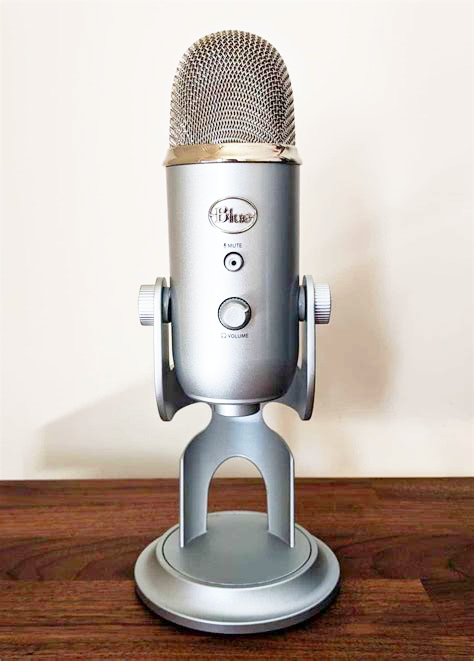
Urgent Advice for Any Podcaster Using a Blue Yeti
A listener of my show recently asked me for specific tips on how to ensure recording good sounding audio when using a Blue Yeti microphone.
My reply:
- Speak into the mic from the proper angle.
- Make sure the correct polar pattern is chosen on the mic.
- Speak as close to the mic as possible BUT MAKE SURE you use a pop filter or windscreen or both.
- Make sure there’s as little background noise as possible like fans, air conditioners, air vents, cars driving by, kids in the next room or upstairs, etc.
- If your room is reverby, dampen the reflections by using sound absorbing furniture, rugs, foam acoustic panels, etc.
- Get the mic up off the desk and onto a boom arm to avoid capturing the thuds and rumbles that are created on the table/desk.
It’s actually a very good mic _IF_ used properly.
Do you have any additional advice for Blue Yeti users? Comment below 😉
Want to receive the Daily Goody in your email, daily or weekly? Subscribe free here.
And please keep in mind, the Daily Goody is only a tiny little tip, fact or lesson everyday. Please don’t expect any of these posts to be long, earth-shattering masterpieces that instantly answer every single question you can think of and completely transform you into a world class podcast engineer. “Little by little, a little becomes a lot.”
-
Do This Before New Years Day
_IF_ you’re open to putting some effort into your own personal future success:
- Write out your 3-month goals in each and every one of these categories: 1. Family Goals, 2. Material Things goals, 3. Financial/Income/Savings goals, 4. Physical/Health/Fitness goals, 5. Career goals, 6. Hobbies/Fun goals, and 7. Spiritual goals.
- Write out your 1-year goals in each and every category above.
- Write out your 3-year goals in each and every category above.
- Write out your 10-year goals in each and every category above.
- Write down which character traits you’d like to dispense with, and which character traits you’d like to develop
- Write down every single thing in your life that you’re grateful for. Every. Single. Thing. Yes, it’ll be a long list 😉
- Contact me to tell me you’ve completed these tasks BEFORE January 1, 2022
I sincerely wish you all the best 🙂
Want to receive the Daily Goody in your email, daily or weekly? Subscribe free here.
And please keep in mind, the Daily Goody is only a tiny little tip, fact or lesson everyday. Please don’t expect any of these posts to be long, earth-shattering masterpieces that instantly answer every single question you can think of and completely transform you into a world class podcast engineer. “Little by little, a little becomes a lot.”
-
Get Fuller Sound by Manipulating Harmonics
Saturation plugins can increase harmonics and make your audio sound fuller and more professional. Different types of saturation include tape, tube, amplifier, transistor, and probably more.
Some of my favorite saturation plugins:
- Scheps Omni Channel (Waves)
- Black Box Analog Design HG-2 (Plugin Alliance)
- Saturn 2 (Fabfilter)
- True Iron (Kazrog)
- BB N105 (Kit Plugins)
I’d love to know — What other saturation plugins do you use?
Want to receive the Daily Goody in your email, daily or weekly? Subscribe free here.
And please keep in mind, the Daily Goody is only a tiny little tip, fact or lesson everyday. Please don’t expect any of these posts to be long, earth-shattering masterpieces that instantly answer every single question you can think of and completely transform you into a world class podcast engineer. “Little by little, a little becomes a lot.”
-
How Much Would You Like To Earn Producing Podcasts, $25k/year? $50k? $100k?
I can confidently tell you that if you know how to produce professional audio and you talk to enough potential clients, you can definitely build up to earning over $100k per year producing podcasts from home for clients. (full-time, of course)
But maybe you just want to work 5, 10 or 20 hours per week. Cool.
Whatever your plan, to roughly figure out your earning potential, I’d say $75 or $100 or $125 per hour is the kind of rate you could arrange, again, _IF_ you’re a pro at producing audio and talk with enough mid-large companies who have _real_ marketing budgets. NOTE: The figures above are estimates earnings per hour – I don’t advise charging per hour – charging per episode is usually much better for all parties involved.
*If you’re not a pro at producing audio and you WANT to be, check out the Podcast Engineering School’s FULL PROGRAM (next semester starts Jan. 11, 2022 – and the next semester after that will start in April 2022).
Want to receive the Daily Goody in your email, daily or weekly? Subscribe free here.
And please keep in mind, the Daily Goody is only a tiny little tip, fact or lesson everyday. Please don’t expect any of these posts to be long, earth-shattering masterpieces that instantly answer every single question you can think of and completely transform you into a world class podcast engineer. “Little by little, a little becomes a lot.”
-
Putting the Finishing Touch on Your Podcast Audio Before Publishing
Adjusting the overall loudness (LUFS level) of your final episode audio is usually the last step in podcast audio production, just before saving the final MP3 file. But before that, some podcast engineers/producers like to use a bit of compression (usually multiband) to control the dynamics a bit more and increase perceived loudness of the entire episode.
Personally I also sometimes add a bit of saturation in addition to a bit of compression.
What is your last step in your audio production?
Want to receive the Daily Goody in your email, daily or weekly? Subscribe free here.
And please keep in mind, the Daily Goody is only a tiny little tip, fact or lesson everyday. Please don’t expect any of these posts to be long, earth-shattering masterpieces that instantly answer every single question you can think of and completely transform you into a world class podcast engineer. “Little by little, a little becomes a lot.”