Your cart is currently empty!
Category: Daily Goody
The Daily Goody is daily tip, fact, or lesson on podcast production. You can receive it daily or a weekly roundup with our dedicated newsletter.
-

Shadow Hills Mastering Compressor Class A
In my opinion this is one of the best compressors in the world and I love using it! Actually it’s two separate compressors in one plugin; it contains Optical and Discrete compression sections for two-stage compression techniques.
The Shadow Hills Mastering Compressor Class A is available exclusively via Plugin Alliance.
Features:
- Exacting emulation of the original Class A limited edition of the Shadow Hills Mastering Compressor, endorsed by Shadow Hills Industries.
- Class-A discrete compressor section
- Separate Optical and Discrete compression sections for two-stage compression techniques.
- Switchable Output Transformers – Nickel, which adds a nice top – end sparkle. Iron, which adds a little character in the mid’s, and Steel which adds additional harmonic distortion.
- Brainworx Plugin Only Features added to the additional panel: Brainworx´s TMT (US Patent No. 10,725,727), Headroom, M/S Processing, Mono-Maker, Stereo Width, Parallel Mix, Sidechain Filter, External Sidechain, Scalable User Interface.
This plugin is usually quite expensive but if you ever see it on sale you may want to treat yourself 😉
Want to receive the Daily Goody in your email, daily or weekly? Subscribe free here.
And please keep in mind, the Daily Goody is only a tiny little tip, fact or lesson everyday. Please don’t expect any of these posts to be long, earth-shattering masterpieces that instantly answer every single question you can think of and completely transform you into a world class podcast engineer. “Little by little, a little becomes a lot.”
-
Be Aware: Using Echo-Cancellation Degrades Audio Quality
Many online recording services (Squadcast, Zencastr, Riverside.fm, etc.) have a feature called echo-cancellation which users should enabled if/when any participants are NOT wearing headphones. Without this kind of echo-cancellation you will hear participants voices echoing back and forth which makes a conversation virtually impossible. And unfortunately with echo-cancellation enabled there are ducking/muting issues when people talk over each other, which is very annoying and literally disrupts the conversation. But, if someone doesn’t have earbuds or headphones you are FORCED to use echo-cancellation.
In a recent episode I produced for a client I clearly noticed the audio degradation caused by the echo-cancellation. This was the first time we had to use echo-cancellation with this particular client and afterwards I noticed that the recordings sounded quite a bit worse than usual. In previous episodes (without echo-cancellation) the host sounded very clear, but in this episode (with echo-cancellation) he sounded quite midrangy, dull and not very clear in the high frequencies.
I compensated for those deficiencies in post-production but of course you can never make a bad sounding recording sound AS good as a high quality recording.
What about you — have you noticed this type of audio quality degradation?
Want to receive the Daily Goody in your email, daily or weekly? Subscribe free here.
And please keep in mind, the Daily Goody is only a tiny little tip, fact or lesson everyday. Please don’t expect any of these posts to be long, earth-shattering masterpieces that instantly answer every single question you can think of and completely transform you into a world class podcast engineer. “Little by little, a little becomes a lot.”
-
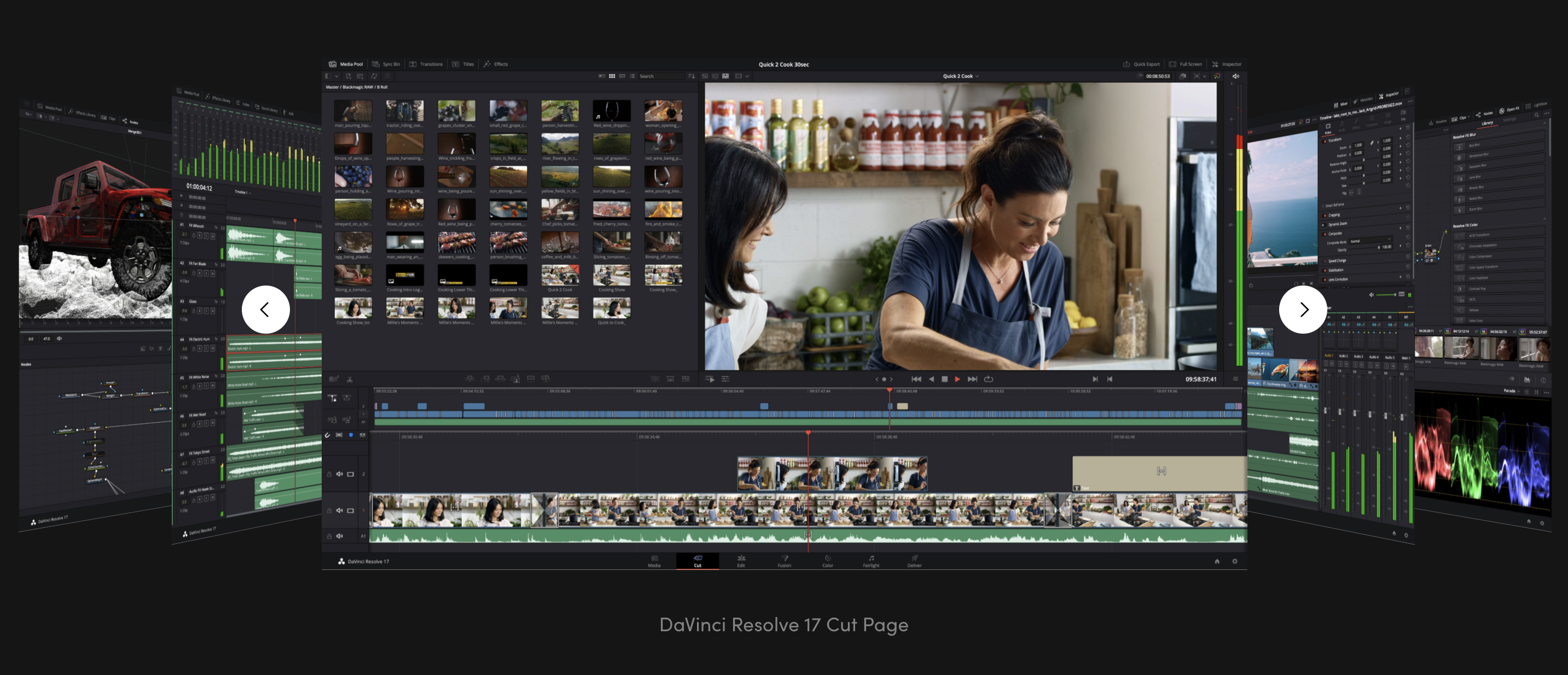
DaVinci Resolve
I have not tried it but DaVinci Resolve bills itself as “Hollywood’s #1 Post Solution.”
From their website: DaVinci Resolve is the world’s only solution that combines editing, color correction, visual effects, motion graphics and audio post production all in one software tool! Its elegant, modern interface is fast to learn and easy enough for new users, yet powerful for professionals. DaVinci Resolve lets you work faster and at a higher quality because you don’t have to learn multiple apps or switch software for different tasks. That means you can work with camera original quality images throughout the entire process. It’s like having your own post production studio in a single app! Best of all, by learning DaVinci Resolve, you’re learning how to use the exact same tools used by Hollywood professionals!
Have you tried DaVinci Resolve?
Want to receive the Daily Goody in your email, daily or weekly? Subscribe free here.
And please keep in mind, the Daily Goody is only a tiny little tip, fact or lesson everyday. Please don’t expect any of these posts to be long, earth-shattering masterpieces that instantly answer every single question you can think of and completely transform you into a world class podcast engineer. “Little by little, a little becomes a lot.”
-
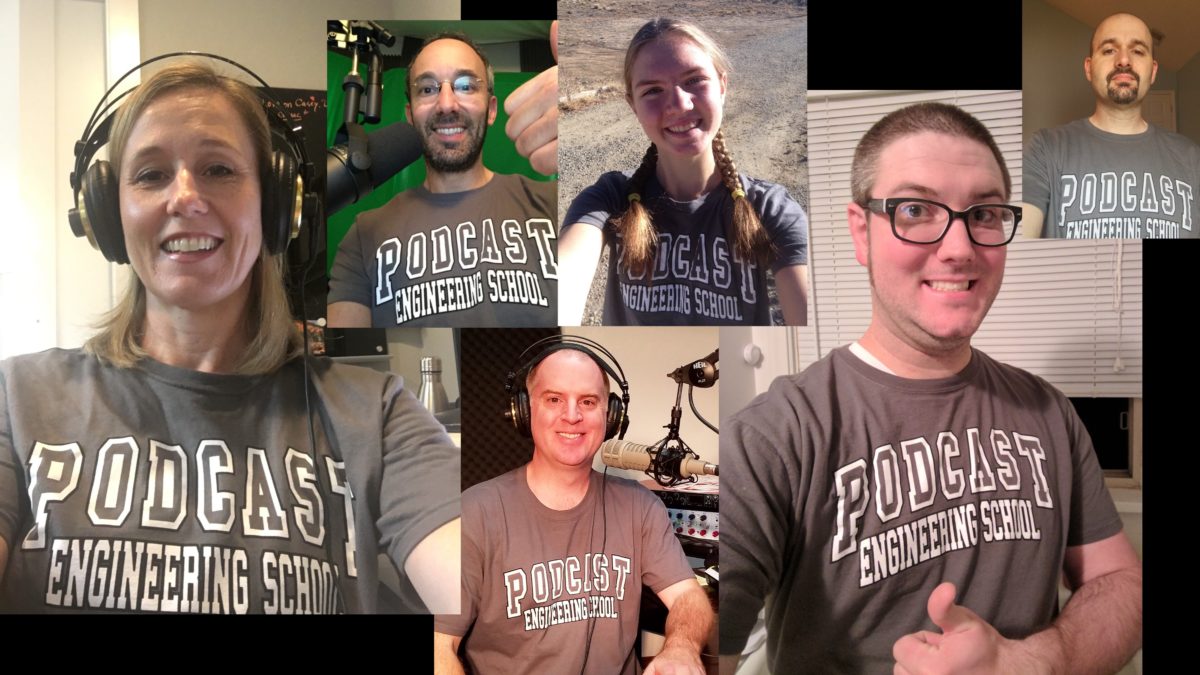
6 PES Graduates Who Are Now Rocking Their Own Podcast Production Businesses!
Attending Podcast Engineering School is life changing, no doubt. And when students apply themselves and work hard I am so proud to see each of them building a profitable home-based business where they can earn 6-figures per year and beyond!
Here are 6 PES graduates who are operating and growing their own podcast production business:
Ed Sullivan
Sonic Cupcake Podcast Production
http://www.soniccupcake.com/Bryan Entzminger
Top Tier Audio
https://TopTierAudio.com
bryan@toptieraudio.comJesse McCune
Tansy Aster Creative
https://tansyasteraudio.com/Landen Hardy
Supporter Sound Studios
landen@supportersoundstudios.com
https://supportersoundstudios.com/Michael Jerry
MiTi Productions
https://miti5audio.com/
miti.audio@protonmail.comTim Hanson
Half-Ogre Studios
https://halfogrestudios.com/Congratulations to these hardworking business owners and best of luck in the future! And please remember me when you’re rich and famous 😉
Want to receive the Daily Goody in your email, daily or weekly? Subscribe free here.
And please keep in mind, the Daily Goody is only a tiny little tip, fact or lesson everyday. Please don’t expect any of these posts to be long, earth-shattering masterpieces that instantly answer every single question you can think of and completely transform you into a world class podcast engineer. “Little by little, a little becomes a lot.”
-

Using a Dual-Stage Compressor on Your Master Buss
A Dual-Stage compressor on your Master Buss can really increase the apparent loudness of your episode and control the dynamics nicely.
A dual-stage compressor is simply two separate compressors with separate controls combined in one plugin.
There are two dual-stage compressors that I love and both use the same “formula” — an optical compressor first and then a discrete VCA-style compressor second.
They are:
- Aquamarine 4 Dual Compressor
- Shadow Hills Mastering Compressor Class A
Both of these plugins are incredible world-class compressors that sound amazing!
Do you use any compression on your master buss?
Want to receive the Daily Goody in your email, daily or weekly? Subscribe free here.
And please keep in mind, the Daily Goody is only a tiny little tip, fact or lesson everyday. Please don’t expect any of these posts to be long, earth-shattering masterpieces that instantly answer every single question you can think of and completely transform you into a world class podcast engineer. “Little by little, a little becomes a lot.”
-
What Are Some Things That You Purposefully Do NOT Edit Out of Podcast Episodes?
In the coming weeks I’ll be reporting on at least 3 situations where I do not edit out mistakes or verbal crutches or periods of silence.
But how about you? Please comment below with situations where you DON’T edit out things that other people might edit out.
Want to receive the Daily Goody in your email, daily or weekly? Subscribe free here.
And please keep in mind, the Daily Goody is only a tiny little tip, fact or lesson everyday. Please don’t expect any of these posts to be long, earth-shattering masterpieces that instantly answer every single question you can think of and completely transform you into a world class podcast engineer. “Little by little, a little becomes a lot.”
-

SoundID Reference (formerly known as Sonarworks Reference)
I’ve been using Sonarworks Reference for years to calibrate my speakers and headphones, and now they have created the next version of this software called SoundID Reference which has many cool new features! Here’s a good article on what’s new.
What’s New:
- Custom Target curve adjustments: You have full control to adjust the target curve in real-time, including the ability to limit the calibration frequency range.
- Save precious time with Translation Check: You can now access a library of 20 predefined simulations that will allow you to check your mix in different listening environments.
- Two new systemwide driver modes for Windows users: Finally, near 0 latency for Windows users.
- Updated user interface for improved user experience: Multiple improvements and new changes to simplify and streamline your workflow.
NOTE: If you are an existing user of Reference 4, you can install a free trial of SoundID Reference in parallel to Reference 4, so you can explore and try it out before you make a decision to upgrade.
How much does the upgrade cost? Upgrade for Headphones is $39 / €39, for Speakers and Headphones $89 / €89.
Will it work on Apple M1 / Big Sur? SoundID Reference is compatible with Apple Silicon computers through Rosetta Translation Environment.
What do you think?
Want to receive the Daily Goody in your email, daily or weekly? Subscribe free here.
And please keep in mind, the Daily Goody is only a tiny little tip, fact or lesson everyday. Please don’t expect any of these posts to be long, earth-shattering masterpieces that instantly answer every single question you can think of and completely transform you into a world class podcast engineer. “Little by little, a little becomes a lot.”
-

The Evolution of Riverside.fm
When it comes to recording high quality audio and video sessions/interviews conducted over the internet, Riverside has become one of the highest quality options available.
I reported on Riverside in June of 2020 and since then they have come A LONG WAY! And recently several podcast engineers that I trust have voiced their happiness with how Riverside is performing these days.
All recorded separately and locally:
- Audio recordings in .wav and .mp3 files at 44.1 kHz or 48 kHz
- Video recordings in 480p, 720p, 1080p and 2160p (4K!)
- Screen share recordings (audio and video)
And their Magic Compose feature can automatically combine all the separate recordings in post-production.
Personally I’m starting a new “reaction video” project soon and I’ll be using Riverside because I need to record audio/video of me and my remote cohost as well as record the audio/video of the video we’re reacting to. I’ll let you know how it goes 😉 …though I may not want to promote that project here because of all the idiotic social and political nonsense going on these days……hmmm….we’ll see.
Have YOU tried Riverside yet? What has your experience been?
Want to receive the Daily Goody in your email, daily or weekly? Subscribe free here.
And please keep in mind, the Daily Goody is only a tiny little tip, fact or lesson everyday. Please don’t expect any of these posts to be long, earth-shattering masterpieces that instantly answer every single question you can think of and completely transform you into a world class podcast engineer. “Little by little, a little becomes a lot.”
-
AirPods Are OK but They Don’t Give Professional Audio Quality
People who love their AirPods REALLY love their AirPods. I’ve never used them but I can certainly appreciate how handy they are.
When it comes to recording podcast episodes AirPods don’t sound very good. They are barely OK sounding and certainly don’t give professional audio quality.
Internet guests who use AirPods sound barely OK — there’s definitely a major lack of clarity due to the sample rate of the AirPods which only capture frequencies up to around 10 kHz, which means all the frequencies between 10-20 kHz are NOT captured, at all. And that affects the clarity of the sound big time.
When I do post-production on AirPods audio it’s always a huge bummer that I can’t even accentuate the high frequencies because they are literally not there. Sigh.
Have you had to do post-production on AirPods audio? What was your experience?
Want to receive the Daily Goody in your email, daily or weekly? Subscribe free here.
And please keep in mind, the Daily Goody is only a tiny little tip, fact or lesson everyday. Please don’t expect any of these posts to be long, earth-shattering masterpieces that instantly answer every single question you can think of and completely transform you into a world class podcast engineer. “Little by little, a little becomes a lot.”
-
Reaper’s Play Frequency Selection
From PES graduate Michael Jerry (Michael320):
“Did y’all know that RX allows you to play audio within a specific time and frequency selection? I didn’t. If you select the time-frequency tool then select a specific area in the audio file instead of choosing the normal play button, you select the “Play Frequency” button, it will play the audio in the frequency range selected :exploding_head:
“So if you just want to hear the “highs” “mids” or anywhere in between, it will play it. I found this to be useful for identifying specific noises, thuds or background noise that i want to remove. You can really hone in on it and hear what plugins are doing in a different way. Really cool stuff…”
Have you tried this yet?
Want to receive the Daily Goody in your email, daily or weekly? Subscribe free here.
And please keep in mind, the Daily Goody is only a tiny little tip, fact or lesson everyday. Please don’t expect any of these posts to be long, earth-shattering masterpieces that instantly answer every single question you can think of and completely transform you into a world class podcast engineer. “Little by little, a little becomes a lot.”
-
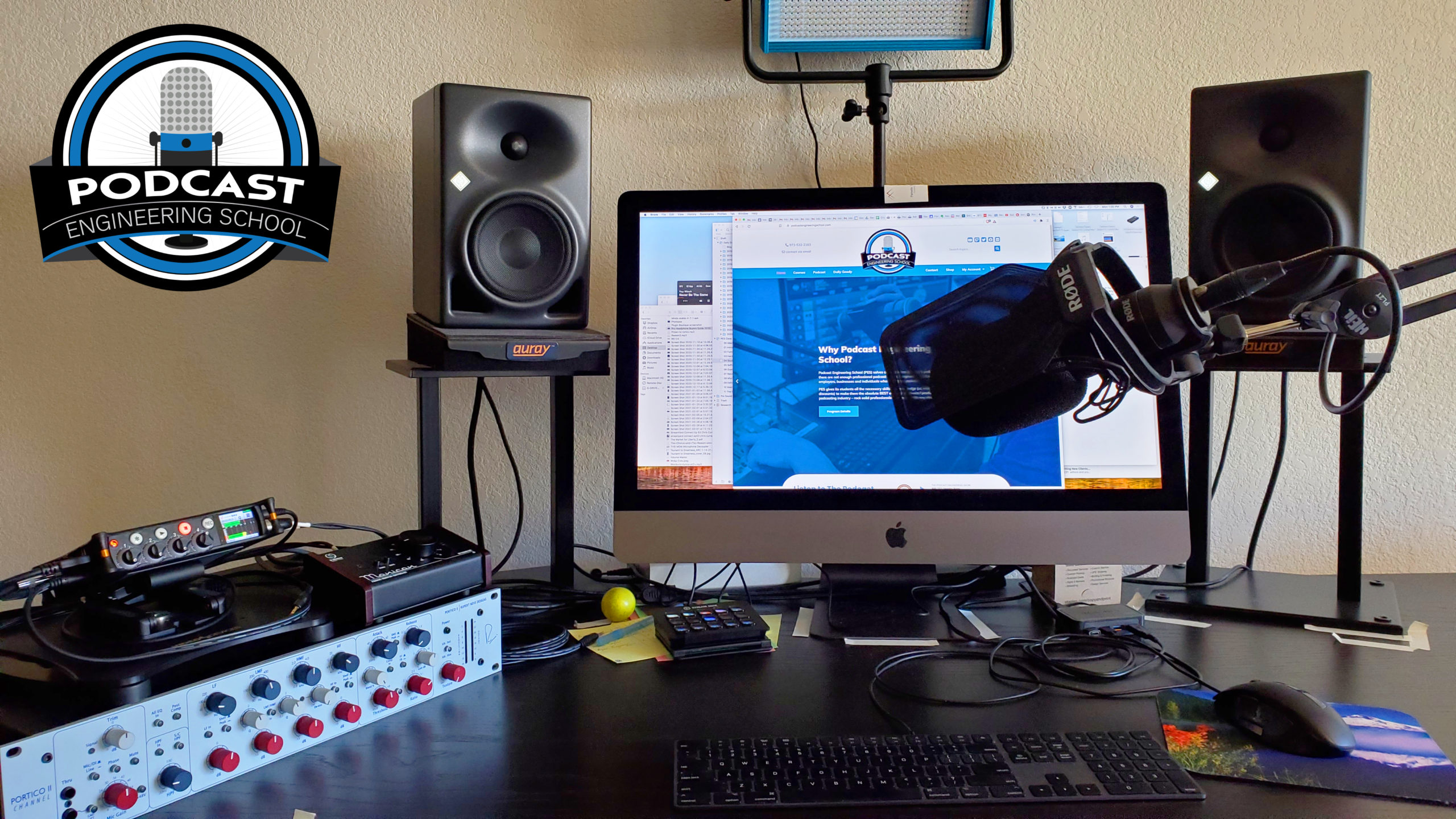
We Want to See Your Equipment Setup! Comment with a Link to a Pic
We want to see your equipment setup! Comment with a link to a pic!
My latest pic is above 🙂
Want to receive the Daily Goody in your email, daily or weekly? Subscribe free here.
And please keep in mind, the Daily Goody is only a tiny little tip, fact or lesson everyday. Please don’t expect any of these posts to be long, earth-shattering masterpieces that instantly answer every single question you can think of and completely transform you into a world class podcast engineer. “Little by little, a little becomes a lot.”
-
![Pro Headphone Buyers Guide 2020 [ebook]](https://podcastengineeringschool.com/wp-content/uploads/2021/03/Pro-Headphone-Buyers-Guide-2020.png)
Pro Headphone Buyers Guide 2020 [ebook]
Want to know the pros and cons of MANY different makes and models of headphones?
Check out the Pro Headphone Buyers Guide 2020 [ebook]
Want to receive the Daily Goody in your email, daily or weekly? Subscribe free here.
And please keep in mind, the Daily Goody is only a tiny little tip, fact or lesson everyday. Please don’t expect any of these posts to be long, earth-shattering masterpieces that instantly answer every single question you can think of and completely transform you into a world class podcast engineer. “Little by little, a little becomes a lot.”
-
PES Monthly Q&A Meeting for Students and Alumni
Students and Alumni of Podcast Engineering School are welcome to attend our monthly Q&A meeting to discuss any topics and ask any questions.
It’s a wonderful ongoing resource for students and alumni because over the years as they come across various real world situations they are able to ask me and the others about the best ways to handle various situations.
We often discuss new gear and plugins, too.
Plus it’s nice to see everyone on a regular basis.
I feel honored to be able to help my students and alumni in the long process of creating amazing careers for themselves.
#muchgratitude
Want to receive the Daily Goody in your email, daily or weekly? Subscribe free here.
And please keep in mind, the Daily Goody is only a tiny little tip, fact or lesson everyday. Please don’t expect any of these posts to be long, earth-shattering masterpieces that instantly answer every single question you can think of and completely transform you into a world class podcast engineer. “Little by little, a little becomes a lot.”
-
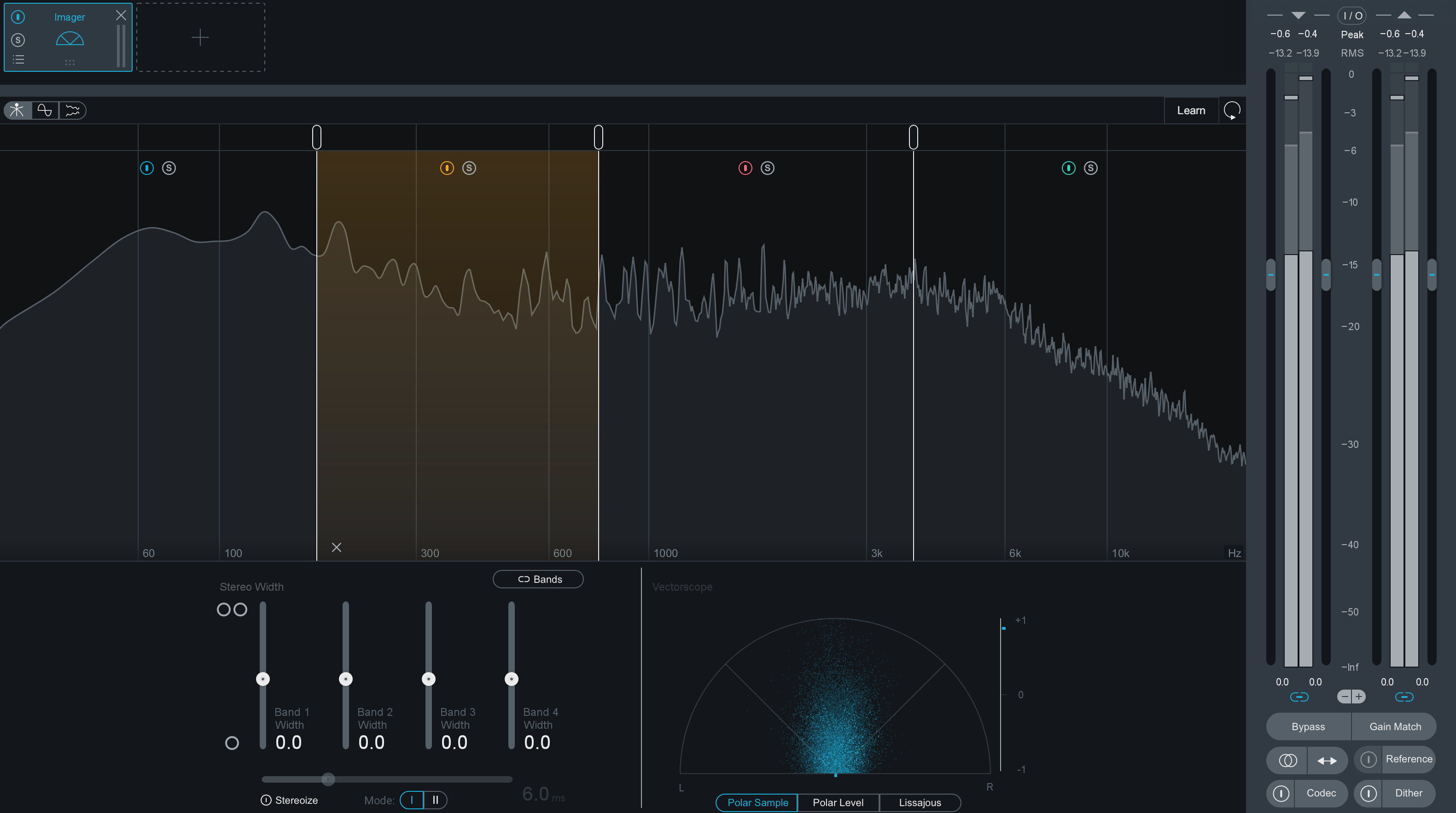
Stereo Imaging Enhancers
In podcast production it’s very rare that you would want to adjust the stereo imaging of some stereo music, but in case you ever want or need to make stereo music wider or more narrow, then you would use a stereo imaging enhancer.
Here are two:
Ozone Imager — This processor is part of Ozone mastering suite and I’ve used it before a few times. It’s a multiband stereo image enhancer and it’s pretty cool.
Waves S1 Stereo Imager — I’ve never used this one before.
Have you ever used a stereo imaging plugin before? Which one(s)?
Want to receive the Daily Goody in your email, daily or weekly? Subscribe free here.
And please keep in mind, the Daily Goody is only a tiny little tip, fact or lesson everyday. Please don’t expect any of these posts to be long, earth-shattering masterpieces that instantly answer every single question you can think of and completely transform you into a world class podcast engineer. “Little by little, a little becomes a lot.”
-
Editing Tip: Use Short Fades for Transparency, When Applicable
Sometimes when you make an audio edit, the resulting audio can sound a bit unnatural or just plain weird — which means it’s a potential distraction for the listeners.
Some edits may result in an unnaturally abrupt transition, an unnatural ending or beginning of a word, an abrupt piece of silence, or even an audible click. And sometimes these sounds are OK and can be left alone.
But if the edit sounds too weird you may want to clean it up, and one of the tools you can use is the fade. And I’m talking about really fast fades — fades that last a half of a second, or even a tenth of a second or less. Quickly fading in and/or out as needed can do a great job of smoothing over any weird noises or abrupt transitions.
Are you an editing ninja who uses fading like this? hehe
Want to receive the Daily Goody in your email, daily or weekly? Subscribe free here.
And please keep in mind, the Daily Goody is only a tiny little tip, fact or lesson everyday. Please don’t expect any of these posts to be long, earth-shattering masterpieces that instantly answer every single question you can think of and completely transform you into a world class podcast engineer. “Little by little, a little becomes a lot.”
-
Be Aware: Compression, EQ, Etc. Can Sometimes Exacerbate Sibilance
Sometimes when you use a combination of various plugins in post-production like compressors, EQ’s, saturation, etc. on a person’s voice, the plugins can accentuate sibilance. Even if there’s not an apparent issue with sibilance on the raw recording, some sibilance may appear after processing the voice with various plugins.
In cases like this you will want to use a de-esser in your plugin chain to tame that sibilance.
Do you have a de-esser on hand? Which one(s)?
Want to receive the Daily Goody in your email, daily or weekly? Subscribe free here.
And please keep in mind, the Daily Goody is only a tiny little tip, fact or lesson everyday. Please don’t expect any of these posts to be long, earth-shattering masterpieces that instantly answer every single question you can think of and completely transform you into a world class podcast engineer. “Little by little, a little becomes a lot.”
-
Voice Recorder Plugin (for WordPress)
The Voice Recorder Plugin for WordPress allows podcasters (or anyone) to accept voice-mail from your podcast listeners, fans, followers, members, or any other audience.
I haven’t tried this plugin yet.
For one website there is a one-time payment of $29. And they have additional options for using it on multiple websites, etc.
Do you use this plugin?
Want to receive the Daily Goody in your email, daily or weekly? Subscribe free here.
And please keep in mind, the Daily Goody is only a tiny little tip, fact or lesson everyday. Please don’t expect any of these posts to be long, earth-shattering masterpieces that instantly answer every single question you can think of and completely transform you into a world class podcast engineer. “Little by little, a little becomes a lot.”
-
Guests: If You Own a Decent Microphone, PLEASE USE IT!
If you are going to be a guest on a podcast and you own a decent microphone, please use it! It makes a BIG difference toward you sounding your best to the audience.
Unfortunately I’ve witnessed many guests over the years who take the lazy way out and connect with no microphone — then when I ask them if they own a decent microphone they say, “Yes, it’s right over there.” Then I have to ask them to plug it in, etc.
In some cases the reason the guest connects without their microphone is because they have no respect for the podcast they’re guesting on — but I think in most cases guests do this because they simply don’t know how important good audio is, and/or they’re running late and didn’t have time to plug in their microphone (??!!).
Have you experienced anything like this?
Want to receive the Daily Goody in your email, daily or weekly? Subscribe free here.
And please keep in mind, the Daily Goody is only a tiny little tip, fact or lesson everyday. Please don’t expect any of these posts to be long, earth-shattering masterpieces that instantly answer every single question you can think of and completely transform you into a world class podcast engineer. “Little by little, a little becomes a lot.”
-
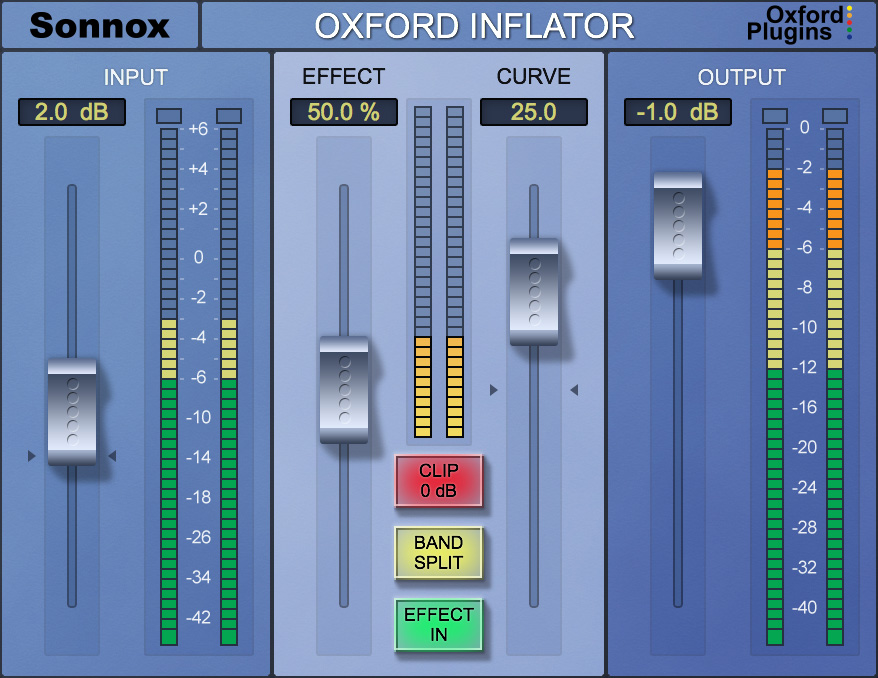
Using Oxford Inflator To Bring a Guests Voice “Closer”
This plugin is awesome as well as enigmatic. I love it and use it often. FYI, here’s a previous Daily Goody post with more details on the plugin itself.
It works great on guests whose mouth is quite far from their microphone — for instance when using a built-in laptop microphone or a desk-based USB mic like the dreaded Blue Yeti or Snowball.
It essentially makes the guest sound closer and therefor more intelligible especially in environments with loud background noise like a car, jogging, washing dishes, etc.
Have you tried this plugin?
Want to receive the Daily Goody in your email, daily or weekly? Subscribe free here.
And please keep in mind, the Daily Goody is only a tiny little tip, fact or lesson everyday. Please don’t expect any of these posts to be long, earth-shattering masterpieces that instantly answer every single question you can think of and completely transform you into a world class podcast engineer. “Little by little, a little becomes a lot.”