Your cart is currently empty!
Category: Daily Goody
The Daily Goody is daily tip, fact, or lesson on podcast production. You can receive it daily or a weekly roundup with our dedicated newsletter.
-
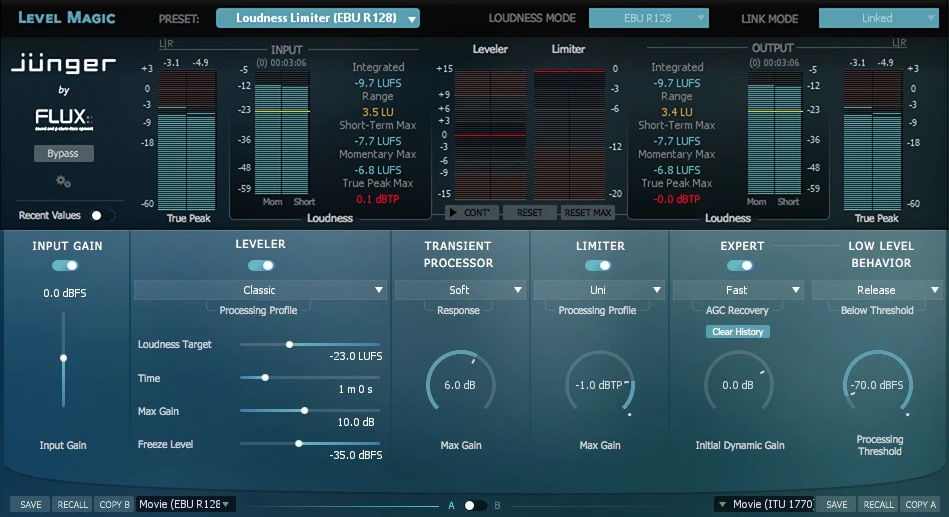
Level Magic by Flux Jünger
Level Magic is amazing leveler software! It’s a real time and offline loudness processor. You can think of it as doing a similar type of leveling that Auphonic does but WAAAAAY better quality with SOOOO many more controls. There’s a stereo version and a multichannel version, and you can try it for free.
From their website:
Level Magic is a comprehensive loudness management processor utilizing an algorithm, developed and enhanced over several years by Jünger Audio, highly adaptive to the structure of the incoming audio to meet the requirements of the broadcast and media industry, producing a result without artefacts such as pumping, breathing or distortion. Level Magic is compliant with all current worldwide loudness standards.
Features:
- True Peak level metering and limiting – ITU-R BS.1770 / EBU R128 Compliant
- Supporting up to 10 channels for Dolby Atmos and the AVID Pro Tools Dolby Atmos 7.1.2/7.0.2 Track and Bus
- Input / Output Gain (-12/+12 dB) applied to the limiter input and to the output stage of the limiter
Want to receive the Daily Goody in your email, daily or weekly? Subscribe free here.
And please keep in mind, the Daily Goody is only a tiny little tip, fact or lesson everyday. Please don’t expect any of these posts to be long, earth-shattering masterpieces that instantly answer every single question you can think of and completely transform you into a world class podcast engineer. “Little by little, a little becomes a lot.”
-
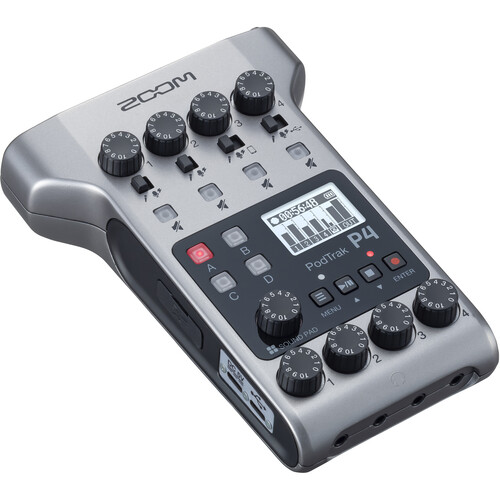
Zoom PodTrak P4
The Zoom PodTrak P4 was introduced to the world a few months ago and some folks are really liking it a lot.
From Zoom:
Purpose-built for producing polished multi-person podcasts anywhere you go, the Zoom PodTrak P4 is a cost-effective portable multitrack podcast recorder that lets you quickly record up to four mics, handle 2 echo-free remote call-ins simultaneously, trigger sound samples, and provide separate headphone feeds for all your guests, all at the same time and with refreshing simplicity.
From the intuitive, tactile controls to the plentiful battery life and powerful audio processing functions, the PodTrak P4 is well equipped to help you record or stream pristine audio for panel podcasts. Dynamic and condenser mics, customizable sound pads, call-ins via your smartphone or computer, and independent headphone outs; the PodTrak P4 can manage everything you need a podcast production station to do.
Extra touches including built-in limiters and low-cut filters for enhancing your tracks, an integrated mix-minus function to prevent echo and feedback for remote guests, and multiple powering methods make the PodTrak a truly powerful all-in-one solution for podcasting.FEATURES:
- Four High-Gain Mic Inputs
- Headphone Mixes for You and Your Guests
- Echo-Free Remote Call-Ins
- Supports BTA-2 for Wireless Remote Guests
- Assignable Sound Pads with Preset Sounds
- Instant Access to Gain and Mute for Each Input
- Record up to 10 Tracks Simultaneously
- SD Card Recording and Audio Interface Functionality
- Powered via AA Batteries, AC Adapter, or USB
- Signal Processing Adds Sonic Polish
Have you used this unit yet? How do you like it?
Want to receive the Daily Goody in your email, daily or weekly? Subscribe free here.
And please keep in mind, the Daily Goody is only a tiny little tip, fact or lesson everyday. Please don’t expect any of these posts to be long, earth-shattering masterpieces that instantly answer every single question you can think of and completely transform you into a world class podcast engineer. “Little by little, a little becomes a lot.”
-
Special: Your Blunt Pep Talk for 2021
In this special episode Steve Stewart and I discuss 5 areas of your life where immense progress is possible for you. We wish you the best possible 2021!
Steve Stewart is a podcast editor, instructor and community leader in the Podcast Editors Club (Facebook Group) and Podcast Editor Academy. Say hi to Steve 🙂
5 Areas:
- Finances
- Skills/career (education)
- Family/relationship
- Health
- Podcasting
Courses mentioned:
- Podcast Editor Academy
- Getting New Clients at Higher Rates
- Podcast Engineering School – full online program
- iZotope RX7 for Podcasts (Carrie Caulfield Arick)
- Hindenburg Journalist Quick Start (Bryan Entzminger)
You are welcome to share some of your big goals and aspirations for 2021 in the comments!
Want to receive the Daily Goody in your email, daily or weekly? Subscribe free here.
And please keep in mind, the Daily Goody is only a tiny little tip, fact or lesson everyday. Please don’t expect any of these posts to be long, earth-shattering masterpieces that instantly answer every single question you can think of and completely transform you into a world class podcast engineer. “Little by little, a little becomes a lot.”
-
Managing the Expectations of Your Clients
If you are producing audio for clients it’s vital that you carefully manage their expectations of you as well as your expectations of them.
When you and a client are crystal clear on what is expected from each other in the working relationship, there will be MUCH less confusion and uncertainty because you have a definitive framework within which you both can work confidently. And moving forward there will almost never be any surprise or shock to them or you.
Some specific areas which you will want to be clear on (among many others): Launch timing, turnaround time for producing episodes, method and timing for requesting edits, guest communications, etc.
Have you ever had trouble managing clients?
Want to receive the Daily Goody in your email, daily or weekly? Subscribe free here.
And please keep in mind, the Daily Goody is only a tiny little tip, fact or lesson everyday. Please don’t expect any of these posts to be long, earth-shattering masterpieces that instantly answer every single question you can think of and completely transform you into a world class podcast engineer. “Little by little, a little becomes a lot.”
-
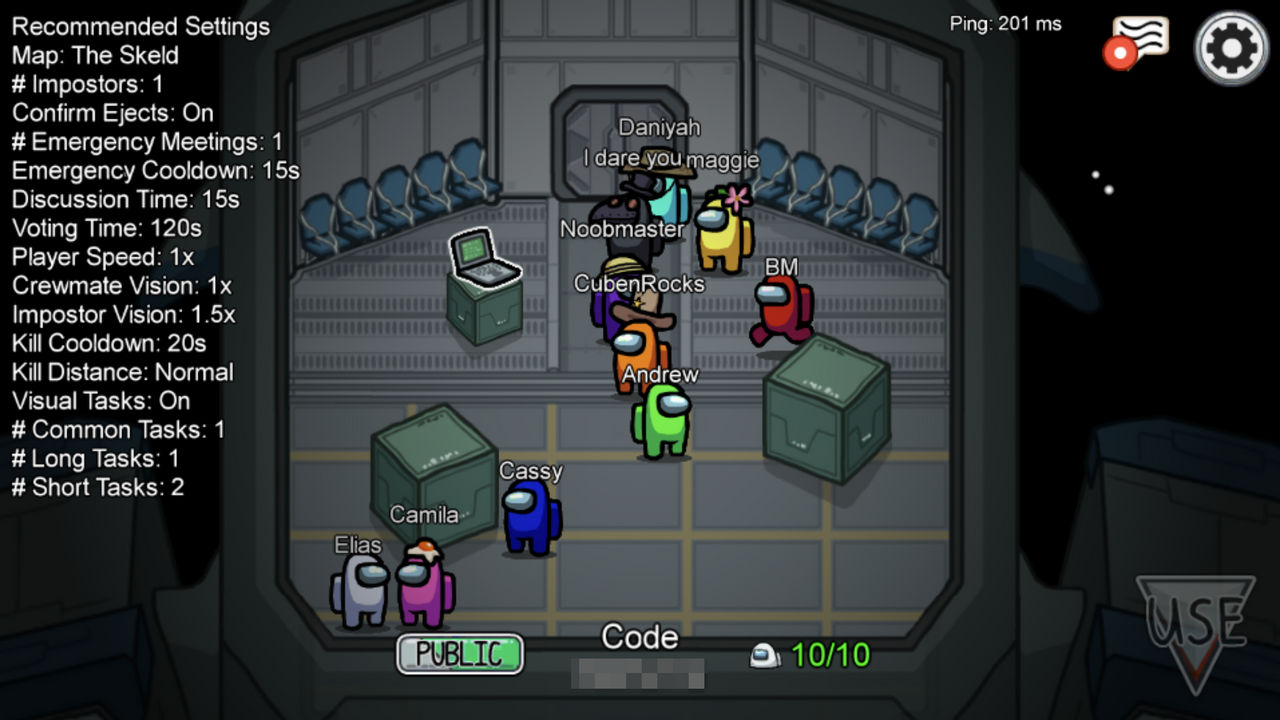
The Sound in the Game “Among Us”
Among Us is a wildly popular online game and recently I was watching a streamer play and I noticed that when the characters move on the screen they move in the stereo spectrum! For instance, when a player moves their little character to the left side of the screen, the sound of their footsteps moves to the left side of the stereo spectrum. Pretty cool.
And probably each players stereo mix is custom-generated for them depending on who is around them on-screen and and where they are in the stereo spectrum.
Have you noticed this too?
Want to receive the Daily Goody in your email, daily or weekly? Subscribe free here.
And please keep in mind, the Daily Goody is only a tiny little tip, fact or lesson everyday. Please don’t expect any of these posts to be long, earth-shattering masterpieces that instantly answer every single question you can think of and completely transform you into a world class podcast engineer. “Little by little, a little becomes a lot.”
-
Descript’s NEW Transcription Glossary
I always wondered whether Descript‘s transcription process would properly transcribe proper nouns like Audio-Technica or tricky words like fractalchris. Well…
From Descript: One of our most requested features has arrived. Now you can add proper nouns — like Descript! — and other tricky words Descript has trouble with to a transcription glossary. Once you add a word to the transcription glossary, it’ll show up across all your Projects on that Drive. To access and update the transcription glossary, click the arrow next to your Project’s name. The transcription glossary doesn’t currently work with live transcription, but you can expect that functionality next year.
I don’t use Descript, but have you tried adding any words to your transcription glossary? Does it help Descript recognize and transcribe those words?
Want to receive the Daily Goody in your email, daily or weekly? Subscribe free here.
And please keep in mind, the Daily Goody is only a tiny little tip, fact or lesson everyday. Please don’t expect any of these posts to be long, earth-shattering masterpieces that instantly answer every single question you can think of and completely transform you into a world class podcast engineer. “Little by little, a little becomes a lot.”
-
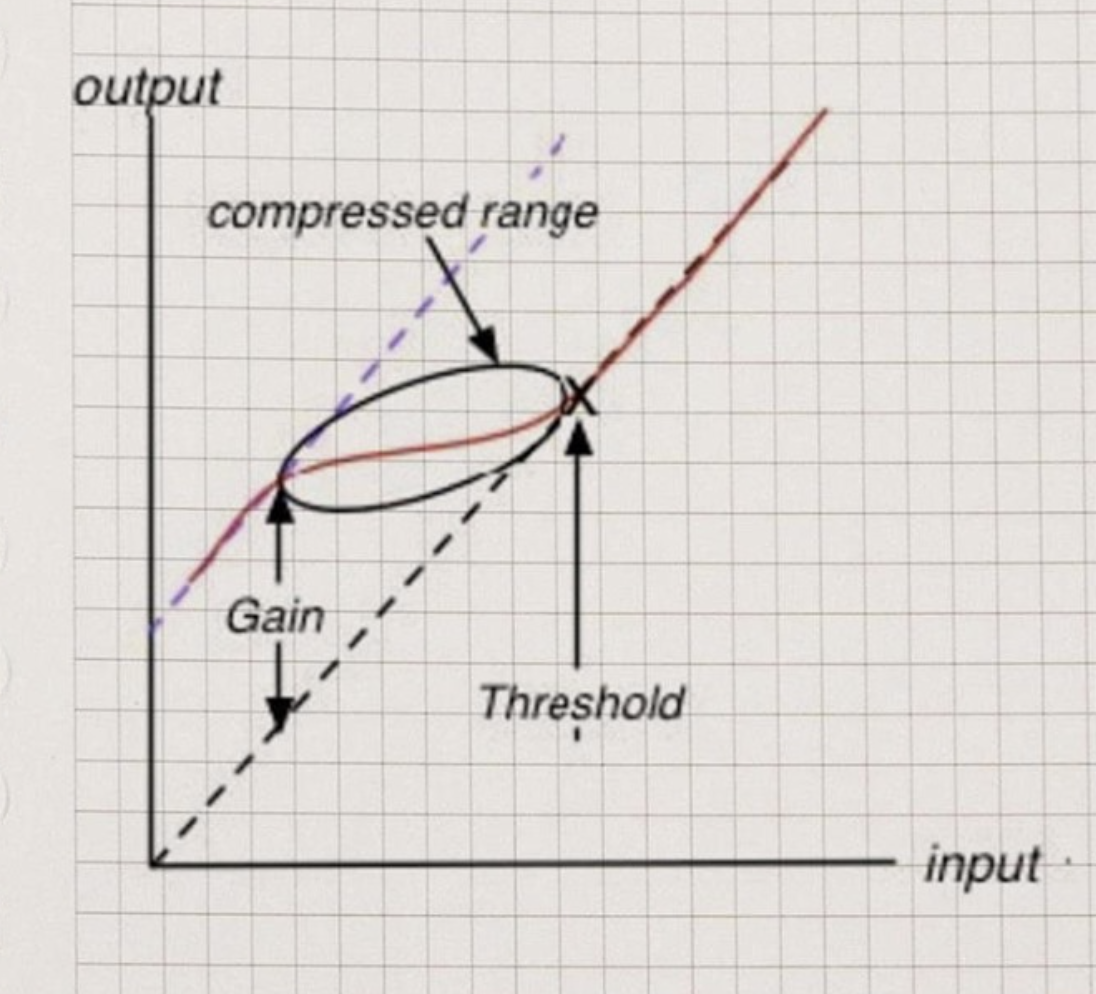
Low Level Compression
Low Level Compression, as it’s described and used in the MV2 and MaxxVolume plugins from Waves, basically brings up the volume of quieter parts of the audio. This can be very helpful when producing podcast audio where a participant get very quiet at times, for example trailing off at the end of sentences, etc. I recently purchased those two plugins but haven’t tried them yet (!!!).
Fabfilter calls their similar processing Upward Compression and they explain it in detail in this video.
And of course the Vocal Rider plugin from Waves can give similar results as well.
Some podcast episodes are unlistenable due to way too much dynamic range, and the types of plugins mentioned in this post can correct those episodes and provide a good listening experience to the listeners.
Have you used any plugins like these?
Want to receive the Daily Goody in your email, daily or weekly? Subscribe free here.
And please keep in mind, the Daily Goody is only a tiny little tip, fact or lesson everyday. Please don’t expect any of these posts to be long, earth-shattering masterpieces that instantly answer every single question you can think of and completely transform you into a world class podcast engineer. “Little by little, a little becomes a lot.”
-
Major Changes to RINGR
I’ve used Ringr in the past and it’s a good platform for recording podcast interviews over the internet. Also check out two other posts I wrote about Ringr: Ringr for Recording Guests Online, and My Frustration with Ringr.
They recently announced some major updates to their service:
- No more waiting for audio uploads. Once your call is over, it’s over. Both sides can close the app or the browser window immediately and without worry.
- RINGR now works on mobile browsers. While the RINGR Mobile app is still amazing, your guest can now use their phone or tablet without downloading it.
- Connecting is more seamless than ever. Thanks to a completely rebuilt platform, RINGR connects and syncs no matter the network, device, or operating system.
How do you get the new RINGR? If you use RINGR on your desktop or laptop, do nothing. You’re good to go. If you use the RINGR Mobile app, make sure you’ve downloaded the latest version from the App Store or Google Play.
Have you used Ringr? What was your experience?
Want to receive the Daily Goody in your email, daily or weekly? Subscribe free here.
And please keep in mind, the Daily Goody is only a tiny little tip, fact or lesson everyday. Please don’t expect any of these posts to be long, earth-shattering masterpieces that instantly answer every single question you can think of and completely transform you into a world class podcast engineer. “Little by little, a little becomes a lot.”
-
The Audio Quality of Apple AirPods’ Microphone
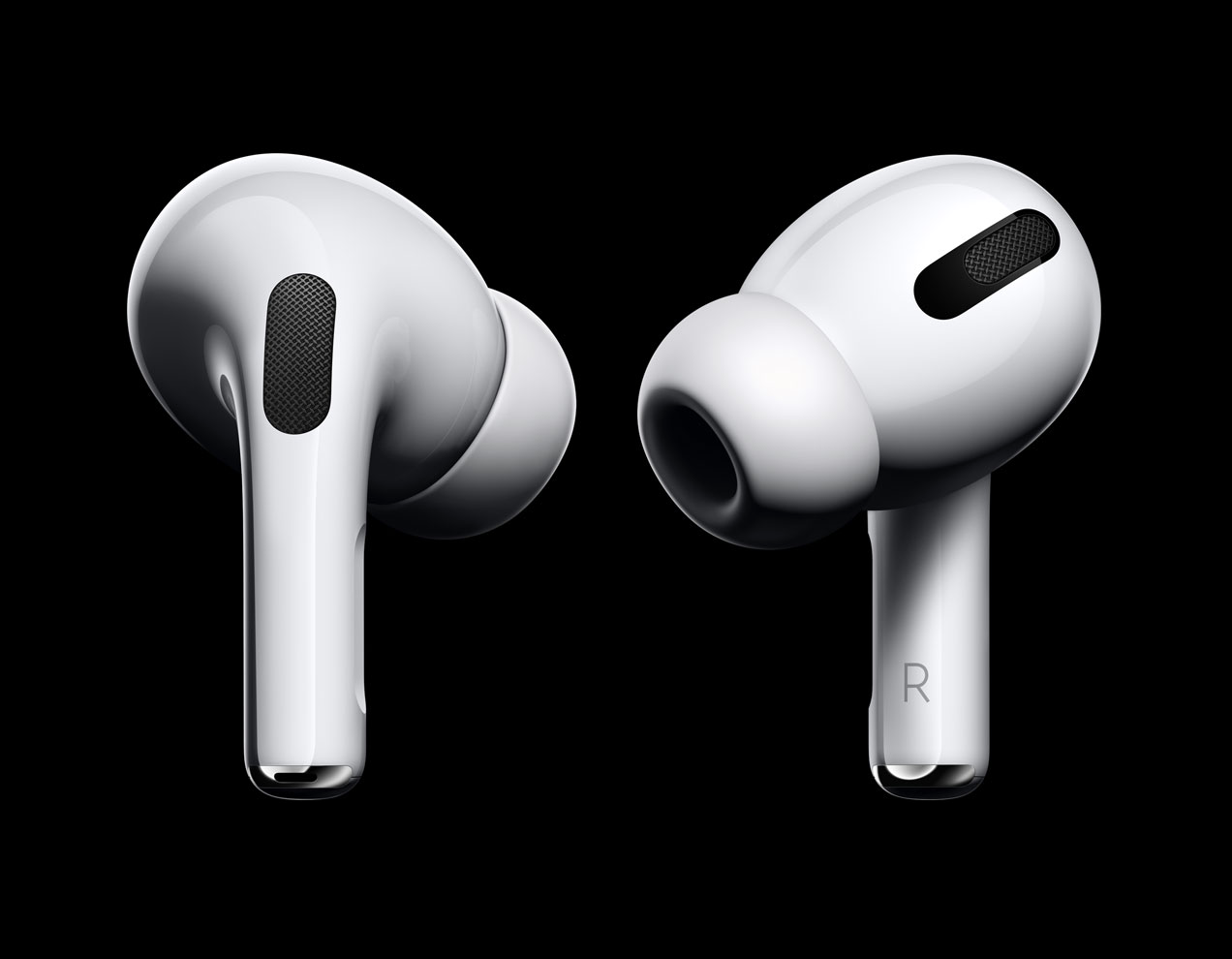
I’ve engineered many podcast recording sessions where the guest used AirPods as their microphone and monitors. I’ve also done post-production on all that recorded AirPods audio. It’s my conclusion that AirPods are wonderfully handy for phone calls and listening to music, etc., but they are not that great for recording podcast audio. Their microphone just doesn’t sound that good (in terms of professional audio quality).
I’ve had lots of trouble finding the technical specifications of the frequency response of the microphone used in various lines of AirPods. If you can find these data please share them in the comments below 😉
As I mention in my 2019 post titled AirPods and Zencastr, like Oil and Water, I believe the sample rate of some/most/all AirPods is 16kHz which is not great, not terrible. But I’d bet that it’s the Bluetooth connectivity that severely diminishes the audio quality of AirPods.
Have you had to produce AirPods audio? What was your experience?
Want to receive the Daily Goody in your email, daily or weekly? Subscribe free here.
And please keep in mind, the Daily Goody is only a tiny little tip, fact or lesson everyday. Please don’t expect any of these posts to be long, earth-shattering masterpieces that instantly answer every single question you can think of and completely transform you into a world class podcast engineer. “Little by little, a little becomes a lot.”
-
My Recent Plugin Purchases (Black Friday/Holidays)
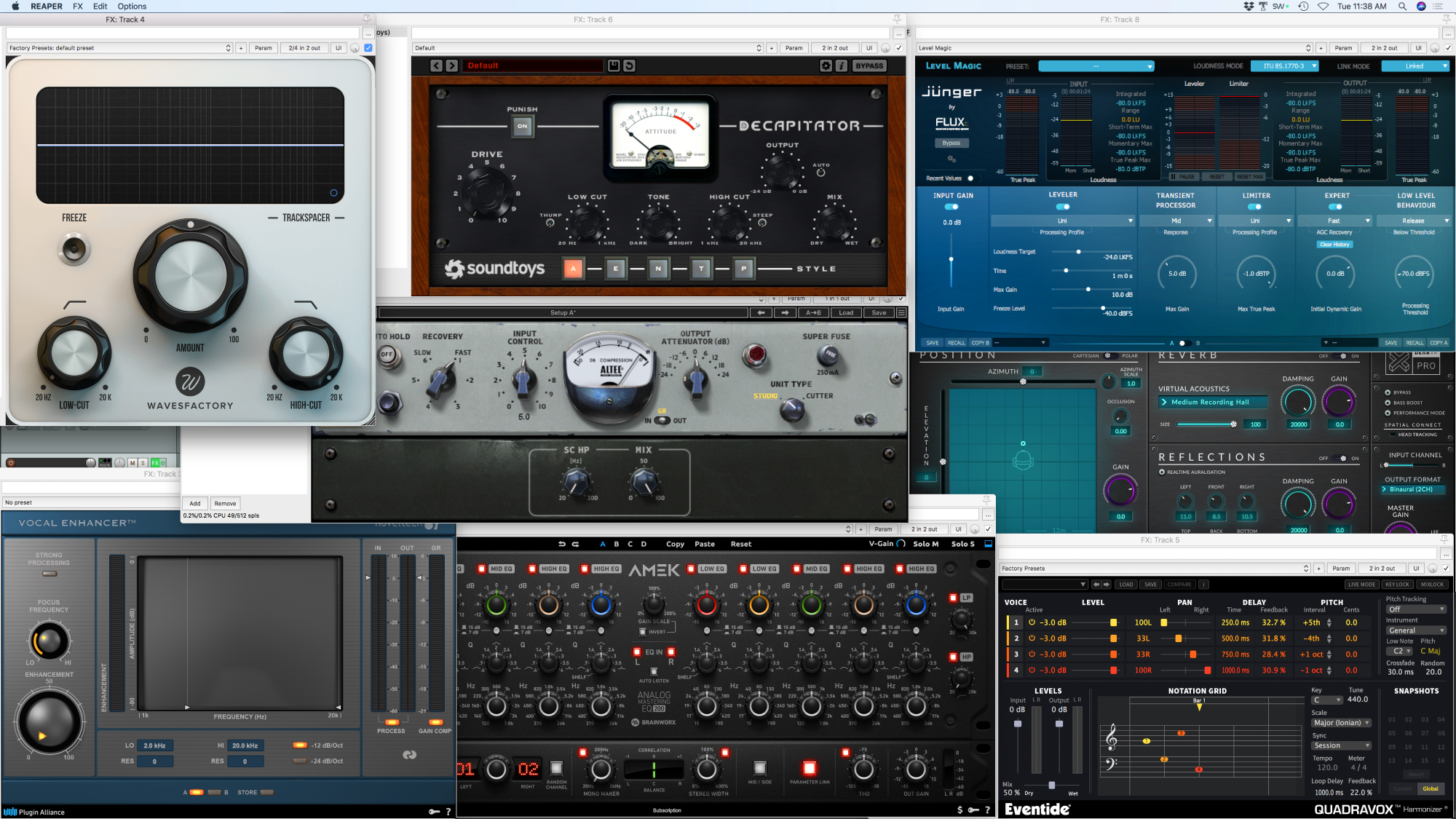
Below is a list of plugins that I recently purchased on sale around Black Friday.
Some are not often used in podcast production, but I bought them for music production. (Decapitator, Melodyne 5, Quadravox)
The 3 that I absolutely LOVE are the first 3 listed.
- TrackSpacer by Wavesfactory
- Abbey Road RS124 Vintage Tube Compressor from Waves
- AMEK EQ 200 (amazing!) and dearVR PRO from Plugin Alliance
- Vocal Enhancer by Noveltech
- Decapitator (Analog Saturator) from Soundtoys
- Melodyne 5 Essential Audio Editor by Celemony
- Quadravox Pitch Shifter by Eventide
Trackspacer acts like an intelligent frequency-specific side-chain compressor which carves a space for voices to sit nicely over music, etc.
The RS124 compressor has a really nice smooth quality to it.
The AMEK EQ 200 is an amazing EQ.
Did you recently purchase any audio plugins? Which ones?
Want to receive the Daily Goody in your email, daily or weekly? Subscribe free here.
And please keep in mind, the Daily Goody is only a tiny little tip, fact or lesson everyday. Please don’t expect any of these posts to be long, earth-shattering masterpieces that instantly answer every single question you can think of and completely transform you into a world class podcast engineer. “Little by little, a little becomes a lot.”
-
THS-MDM Microphone Decoupler
Sometimes vibrations from your desk or microphone stand can create loud disruptive jolting noises in your audio. That’s why Hook Studios created the THS-MDM Microphone Decoupler. Essentially it “disconnects” your microphone from whatever boom arm or stand you’re using as well as whatever surface it’s mounted on.
From their website:
- Our Patent Pending microphone mount mechanically decouples your microphone from direct contact between the microphone holder assembly and the microphone stand. The Hook Studios Mechanical Microphone Decoupler is easy to use and universally compatible with most OEM microphone clip holders and mounts that use standard 5/8″- 27 threads.
- This product has been thoroughly field tested by independent audio engineers over a two year period. These tests revealed a marked reduction in “metallic” strike type impact sounds, as well as a reduction in vibration, unwanted floor noise, etc. In addition, the Decoupler may be used with an existing suspension mount to reduce vibration even further.
- Critical studio listening tests using the MDM reveal increased clarity of the recorded source, especially with loud guitar cabinets. Considerable vibration of stands, hardware, etc. typically occurs in such situations, interfering with accurate harmonic overtone reproduction of the intended source. The MDM provides this decoupled suspension and vibration absorption regardless of the microphone’s direction or angle.
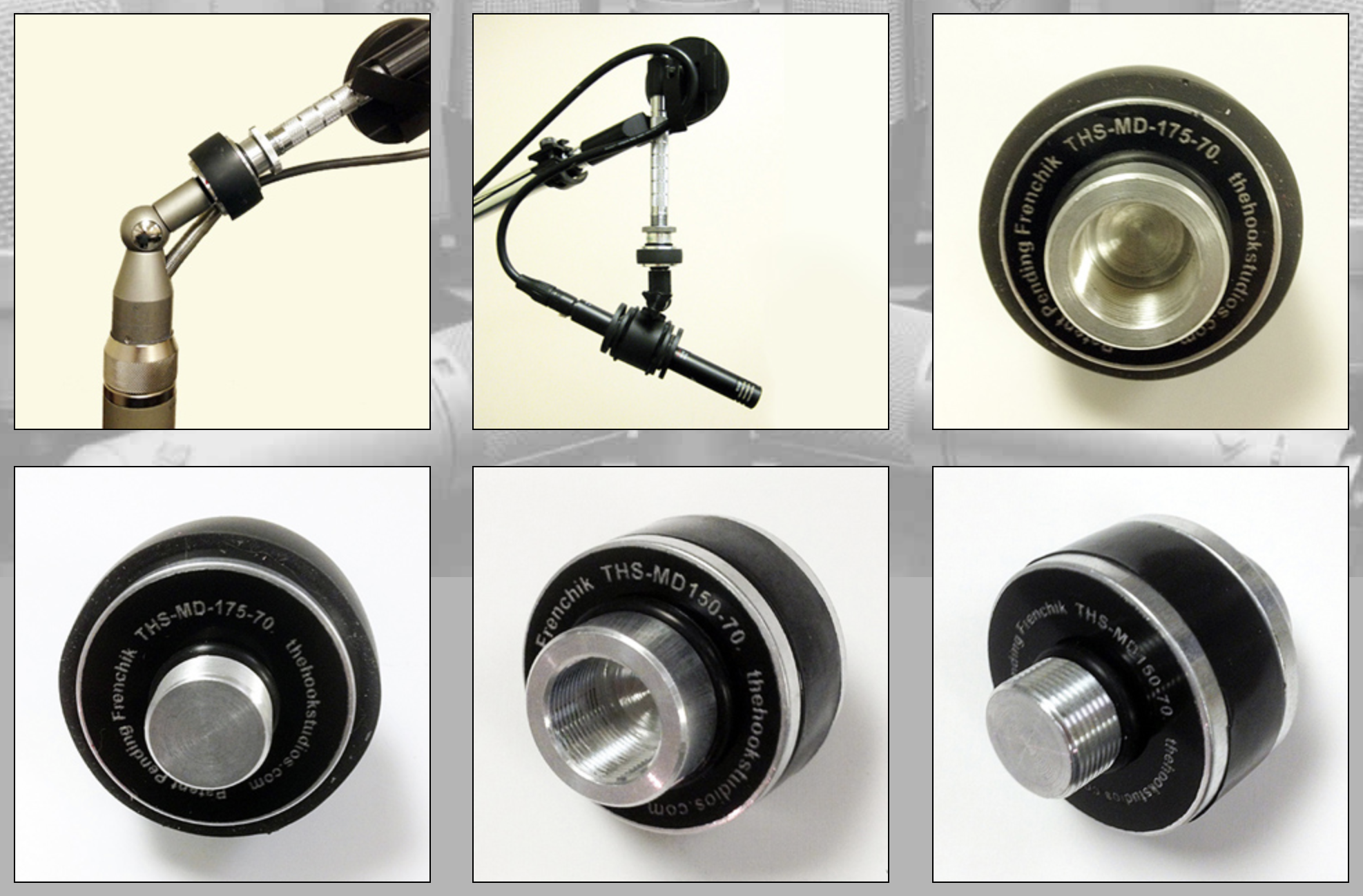
- Two product sizes are currently available; the Large Size MD-175-70 Mechanical Decoupler (diameter: 1.75″) as pictured above on an AKG C12 swivel mount, and the Standard Size MD-150-70 Mechanical Decoupler (diameter: 1.50″), as pictured above with a black AKG 460 mic & 3rd party isolation mount.
- The picture above also shows bottom and top views of the respective models.
Want to receive the Daily Goody in your email, daily or weekly? Subscribe free here.
And please keep in mind, the Daily Goody is only a tiny little tip, fact or lesson everyday. Please don’t expect any of these posts to be long, earth-shattering masterpieces that instantly answer every single question you can think of and completely transform you into a world class podcast engineer. “Little by little, a little becomes a lot.”
-
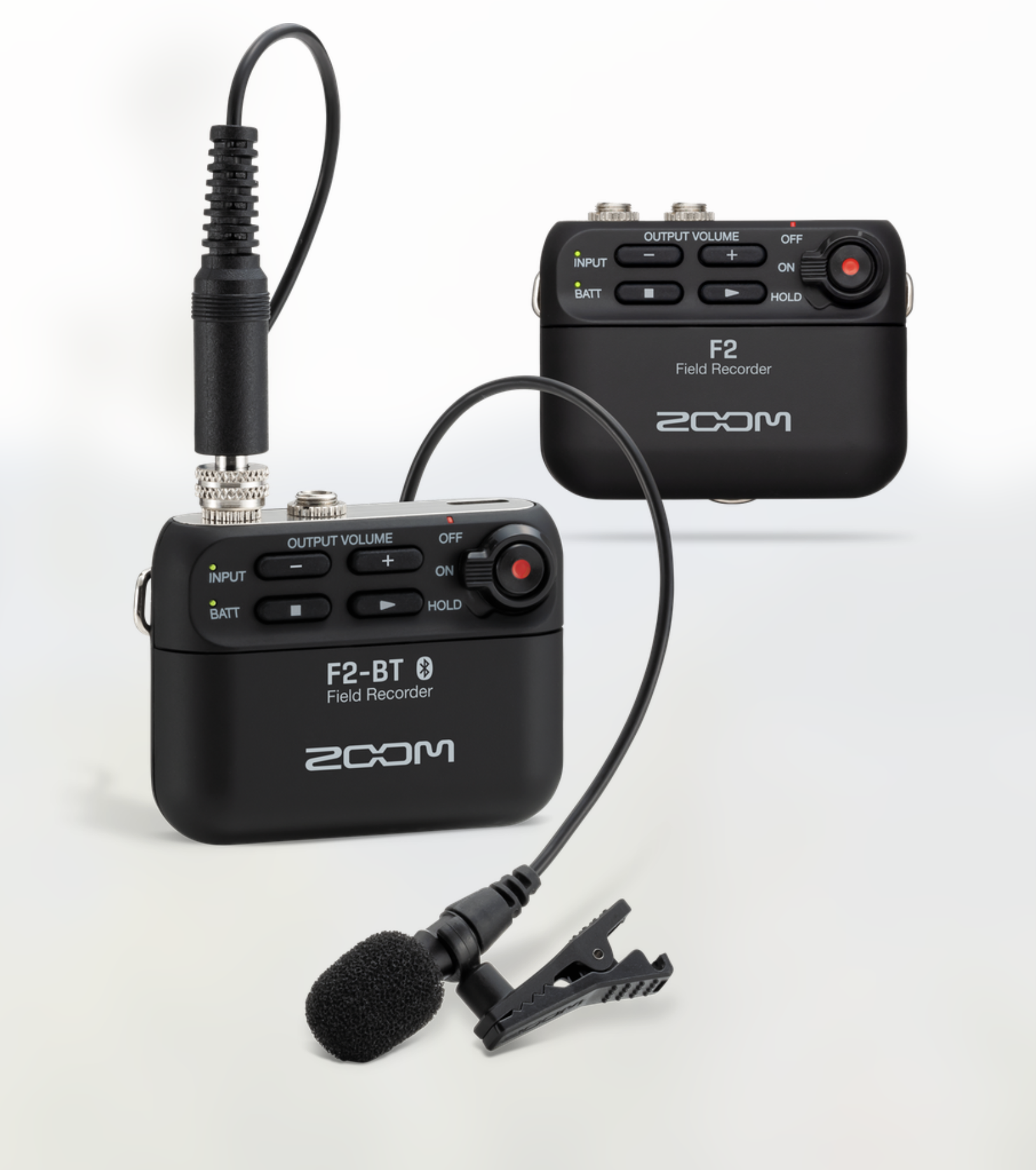
Zoom F2 Field Recorder
This little recorder, the Zoom F2, comes with a lavalier microphone and can record in 32-bit resolution. It looks like it would be extremely handy for on-the-go recording.
Zoom says: “32-Bit Float Technology in our smallest, lightest recorder ever. The F2 is a 32-bit/44.1kHz or 48kHz Field Recorder with LMF-2 Lavalier Microphone, Automatic Gain Adjustment, Included Software, and Accessories — $149. Also available with Bluetooth Control for $199.”
Have you tried this recorder yet? I have not.
Want to receive the Daily Goody in your email, daily or weekly? Subscribe free here.
And please keep in mind, the Daily Goody is only a tiny little tip, fact or lesson everyday. Please don’t expect any of these posts to be long, earth-shattering masterpieces that instantly answer every single question you can think of and completely transform you into a world class podcast engineer. “Little by little, a little becomes a lot.”
-
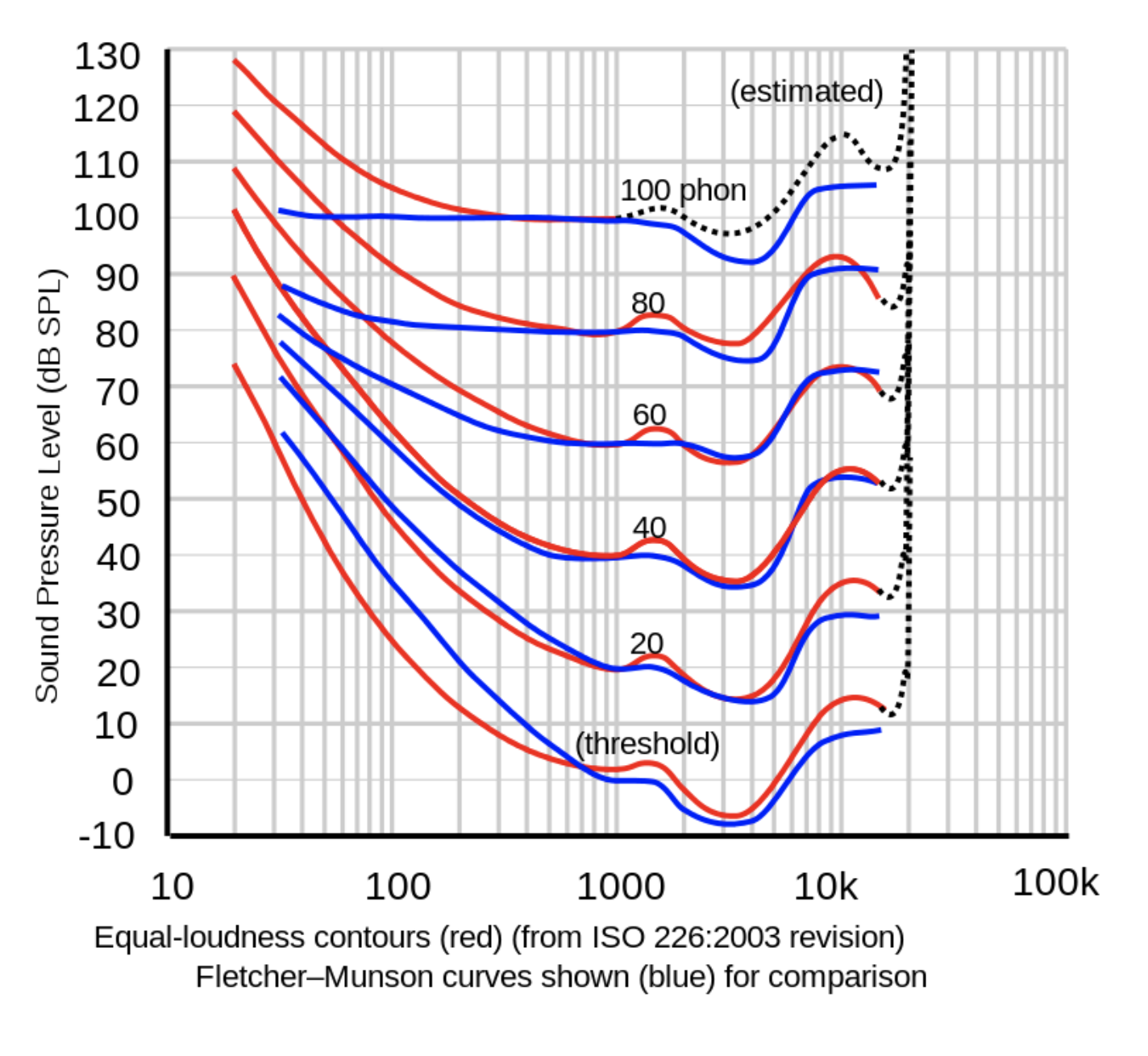
Fletcher-Munson Curves
Your ears are amazing instruments. And at different volumes you actually hear slightly different frequency curves. A song’s frequency curve will sound different if you play it at a low volume as opposed to a high volume. Ever notice that when you monitor audio at a very low volume it sounds less clear with less high frequency clarity?
“The Fletcher–Munson curves are one of many sets of equal-loudness contours for the human ear, determined experimentally by Harvey Fletcher and Wilden A. Munson, and reported in a 1933 paper entitled “Loudness, its definition, measurement and calculation” in the Journal of the Acoustical Society of America.” ~from Wikipedia.
Find lots more info HERE.
Want to receive the Daily Goody in your email, daily or weekly? Subscribe free here.
And please keep in mind, the Daily Goody is only a tiny little tip, fact or lesson everyday. Please don’t expect any of these posts to be long, earth-shattering masterpieces that instantly answer every single question you can think of and completely transform you into a world class podcast engineer. “Little by little, a little becomes a lot.”
-
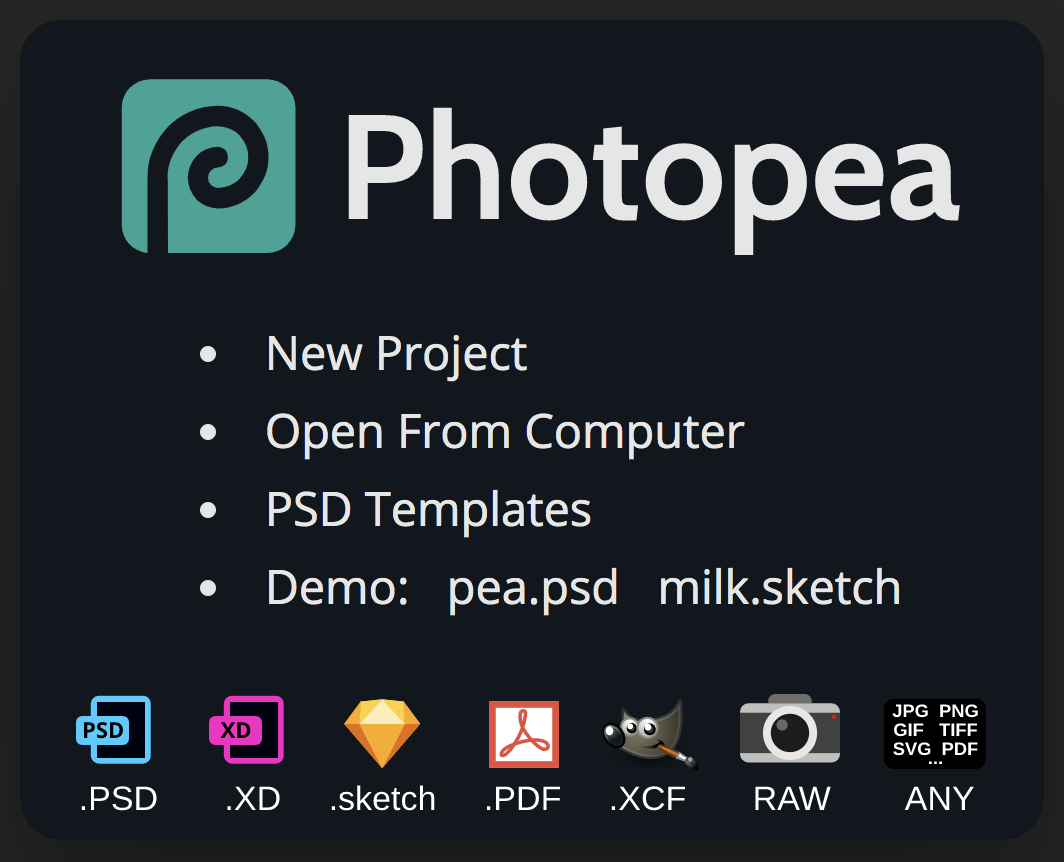
Using Photopea.com To Create Episode Artwork for Free
When I started podcasting I had to figure out how to create and edit promo images because I didn’t own Photoshop or a similar app.
I found this free website Photopea.com which has so many cool features and it’s easy for a photo-novice like me to create episode artwork and promo images and a lot more! After I create something I can save it in whatever format I need — .jpg or .png or even a .psd (Photoshop) document, and many more.
I use Photopea.com almost every day and I love it.
How do you create your promo images?
Want to receive the Daily Goody in your email, daily or weekly? Subscribe free here.
And please keep in mind, the Daily Goody is only a tiny little tip, fact or lesson everyday. Please don’t expect any of these posts to be long, earth-shattering masterpieces that instantly answer every single question you can think of and completely transform you into a world class podcast engineer. “Little by little, a little becomes a lot.”
-
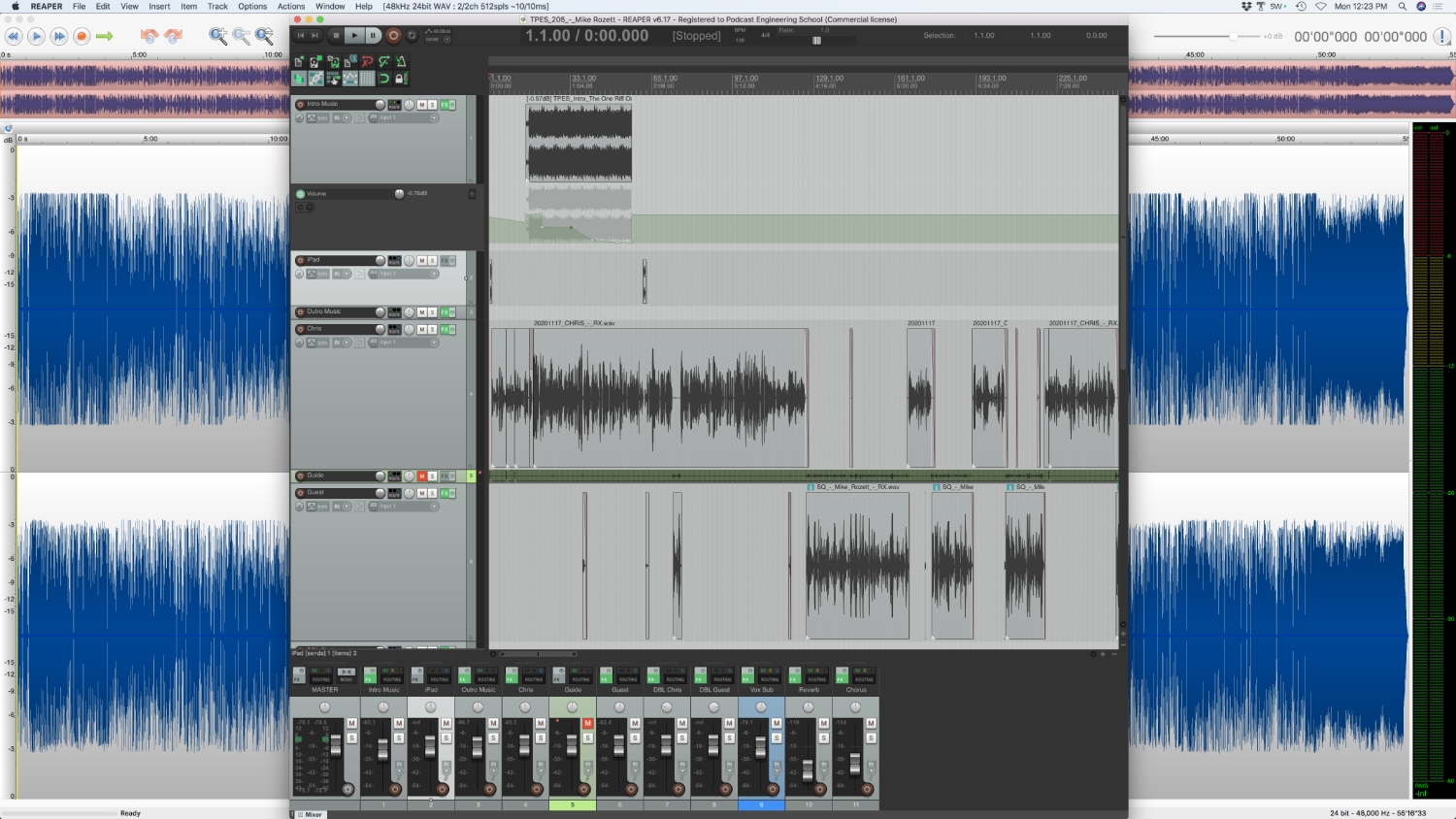
Where Do You Edit – in the Multitrack Session, or the Mixdown File, or Both?
This questions has no wrong answers because you should work however you like to work.
I used to do most of my editing on my mixed down file (using TwistedWave), after doing only a few edits in the multitrack session (mainly just separating sections where participants step on each other, etc.).
But over the past 6 months I’m doing more than half of my editing in the multitrack session (using Reaper), and then I make some finer edits (mouthclicks, timing, top and tail, etc.) on the mixed down file (using TwistedWave).
Fine-tune editing has always been much easier for me to do in a mono/stereo editor instead of a DAW.
How about you?
Want to receive the Daily Goody in your email, daily or weekly? Subscribe free here.
And please keep in mind, the Daily Goody is only a tiny little tip, fact or lesson everyday. Please don’t expect any of these posts to be long, earth-shattering masterpieces that instantly answer every single question you can think of and completely transform you into a world class podcast engineer. “Little by little, a little becomes a lot.”
-
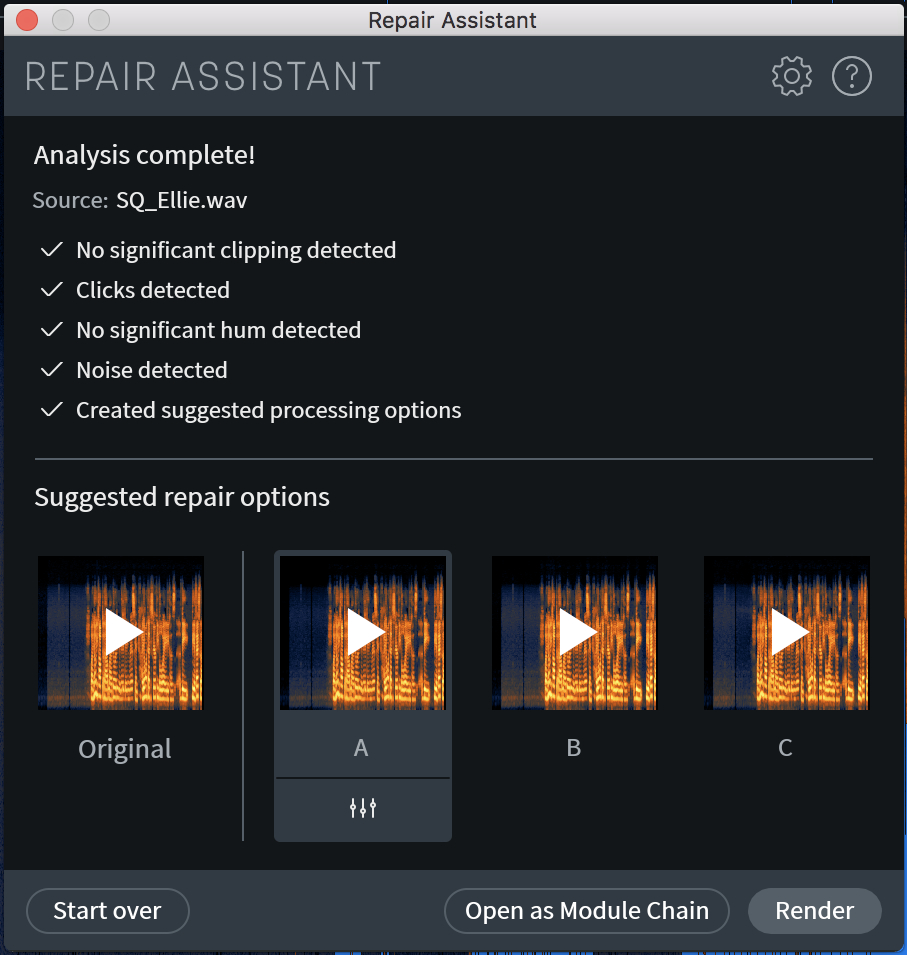
Repair Assistant in iZotope RX
In iZotope RX, I usually evaluate and repair all audio by hand. But I was recently enlightened that the Repair Assistant functionality in RX is very helpful to him and many others.
Repair Assistant evaluates your audio and suggests specific fixes depending on what is wrong with your particular audio file including things like mouth-clicks, clipping, clicks, hum, noise, etc. Then it gives you 3 differently processed samples to listen to and choose from. If one of them sound good, you just click render and your track sounds great.
So just now I tried it quickly and I agree that it can be handy for many users to help them evaluate their audio and get suggestions for various fixes.
Have you tried Repair Assistant?
*Also check out my recent episode speaking with Mike Rozett, Principal Product Manager of Repair and Edit Software at iZotope 😉
Want to receive the Daily Goody in your email, daily or weekly? Subscribe free here.
And please keep in mind, the Daily Goody is only a tiny little tip, fact or lesson everyday. Please don’t expect any of these posts to be long, earth-shattering masterpieces that instantly answer every single question you can think of and completely transform you into a world class podcast engineer. “Little by little, a little becomes a lot.”
-
Recordings Riddled With Random Clicks?
Recently Marcus de Paula posted this:
I had a colleague record some interviews for me awhile back and his recordings were riddled with random clicks.
The cause was dropped samples due to his laptop not being able to keep up for 3 reasons:
- Adobe Audition (his DAW) was set to a different sample rate than his audio interface, so it was transcoding the sample rate in real time.
- His buffer size was set way too low in Audition. You shouldn’t need to worry about latency while recording, so there’s no need to keep your buffer size too low.
- He had a bunch of other apps open while recording including Adobe Illustrator and Chrome with a ton of browser windows open.
Have you ever had to adjust these setting on your computer?
Want to receive the Daily Goody in your email, daily or weekly? Subscribe free here.
And please keep in mind, the Daily Goody is only a tiny little tip, fact or lesson everyday. Please don’t expect any of these posts to be long, earth-shattering masterpieces that instantly answer every single question you can think of and completely transform you into a world class podcast engineer. “Little by little, a little becomes a lot.”
-
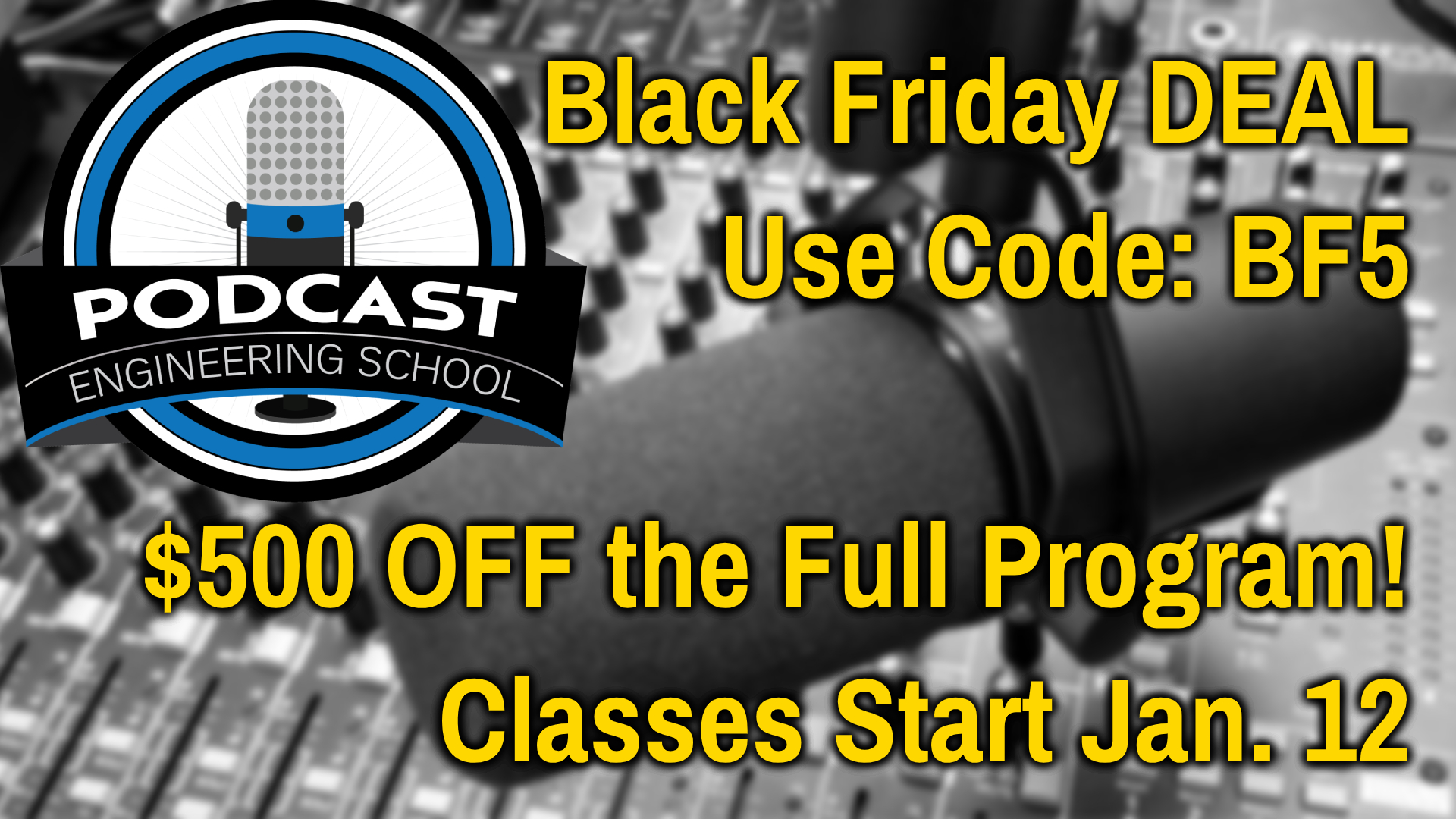
Black Friday DEAL: $500 off Podcast Engineering School’s Full Program
Use code BF5 when checking out to get $500 off Podcast Engineering School’s full program which begins on January 12, 2021!
If you know someone. who’s been considering PES feel free to let them know about this rare deal.
Want to receive the Daily Goody in your email, daily or weekly? Subscribe free here.
And please keep in mind, the Daily Goody is only a tiny little tip, fact or lesson everyday. Please don’t expect any of these posts to be long, earth-shattering masterpieces that instantly answer every single question you can think of and completely transform you into a world class podcast engineer. “Little by little, a little becomes a lot.”
-
The World Thanks You for Caring About Audio Quality!
Thank you for caring about audio quality! Because of you, MANY people’s lives and listening experiences are enhanced immensely because of your attention to audio quality. Without you they would have to suffer listening to horrible audio. Keep up the great work!
Are there any specific podcast editors, engineers and producers who you would like to appreciate in the comments below?
Want to receive the Daily Goody in your email, daily or weekly? Subscribe free here.
And please keep in mind, the Daily Goody is only a tiny little tip, fact or lesson everyday. Please don’t expect any of these posts to be long, earth-shattering masterpieces that instantly answer every single question you can think of and completely transform you into a world class podcast engineer. “Little by little, a little becomes a lot.”
