Your cart is currently empty!
Author: Chris Curran
-
When a Guests’ Non-Participating Colleague Wants to Join a Recording Session to “Listen In“

Sometimes a guests’ non-participating colleague will want to join a recording session to “listen in“ for the purpose of compliance, or to take notes, or just simply to be there. I’m sure there are other reasons as well.
In these cases, during soundcheck I always verify that the persons internet connection is super-solid, and if it’s not, I ask them if it’s absolutely necessary for them to be in the actual recording session. If they say no, I usually recommend them NOT being part of the recording session because in my experience sometimes one participants bad connection (including disconnecting and re-joining the session, etc.) can cause problems with the entire session.
Usually the person will understand and leave the session, but some seem a bit frustrated that they have to leave. Oh well.
NOTE: I do this when using all recording platforms including Squadcast, Zencastr, etc.
Want to receive the Daily Goody in your email, daily or weekly? Subscribe free here.
And please keep in mind, the Daily Goody is only a tiny little tip, fact or lesson everyday. Please don’t expect any of these posts to be long, earth-shattering masterpieces that instantly answer every single question you can think of and completely transform you into a world class podcast engineer. “Little by little, a little becomes a lot.”
.
-
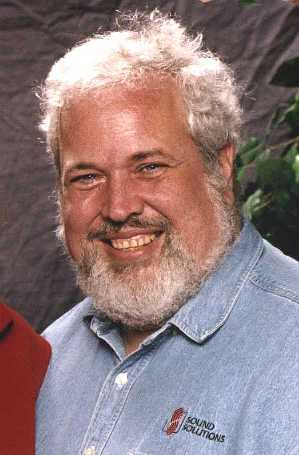
Ray A. Rayburn, Audio and Acoustic Consultant – PES 184
My guest is Ray A. Rayburn – Audio and Acoustic Consultant, Fellow of the Audio Engineering Society, and Member of the Acoustical Society of America. His audio “specialties” include legislative sound systems, church sound & acoustics, acoustic measurements, audio DSP programming, standards development for the AES and InfoComm.
Check out Ray’s articles, resume, and business selling mics and such: Superlux Microphones.
We discussed a TON including:
- Attending monthly AES meetings in NYC early in his career.
- In 1984, Ray’s involvement in upgrading Saturday Night Live’s control room from mono to stereo.
- In 1992, Ray’s involvement in installing the first all digital sound system in the world in the US Senate Chamber!
- A huge mix-minus setup with 100+ inputs and 100+ outputs!
- Settings drift – due to temperature and age.
- What should new podcasters know? Minimize the sound of your room’s noise and reflections. Get the mic close to your mouth. Use pop filters/windscreens.
- Speech intelligibility is dependent on 2 things – BG Noise and Reverb.
- Wireless mics – mic, transmitter (limited power), receiver
- Tiny microphones
Comment below with any questions or comments.
And THANKS for being a great guest, Ray!
.
-
RØDECaster Pro Accessories
RØDE now offers some helpful accessories for their RØDECaster Pro recorder/interface/mixer.
Check them out here.
Want to receive the Daily Goody in your email, daily or weekly? Subscribe free here.
And please keep in mind, the Daily Goody is only a tiny little tip, fact or lesson everyday. Please don’t expect any of these posts to be long, earth-shattering masterpieces that instantly answer every single question you can think of and completely transform you into a world class podcast engineer. “Little by little, a little becomes a lot.”
.
-
Sennheiser e835 Microphone

I bought four Sennheiser e835 microphones for my physical podcast studio in NJ, which I operated from 2012-2015. They cost around $99 each.
I decided on the e835 over other microphones mostly because I tested 4-5 handheld microphones at a local Guitar Center. I brought my portable digital recorder to the store and proceeded to plug in different microphones and talk for a bit, then listen back to decide which model I would buy.
I chose the e835 over the SM58 and a couple other handheld microphones.
To me it sounds a bit clearer than the SM58 and also has a higher output level. Overall it’s comparable to the SM58 but has it’s own flavor.
Have you used this mic personally?
Want to receive the Daily Goody in your email, daily or weekly? Subscribe free here.
And please keep in mind, the Daily Goody is only a tiny little tip, fact or lesson everyday. Please don’t expect any of these posts to be long, earth-shattering masterpieces that instantly answer every single question you can think of and completely transform you into a world class podcast engineer. “Little by little, a little becomes a lot.”
.
-
Echo vs. Reverb
Two part question:
Is a voice echo and reverb the same thing or similar? Does Dialogue De-reverb in Izotope RX remove echo from audio?
My answer:
Echo is when you stand near a cliff and yell, “Echo!” and then 2 seconds later you hear your reflected audio say, “Echo!” (btw, to recreate this effect you would use a “delay” effect)
Reverb is when you’re in a room with reflective surfaces and the mic picks up the multitude of reflections, making the recorded audio sound like it’s far away, in a large space, or sound like the person speaking is 40 feet down a hallway.
I assume you’re referring to reverb?
Yes, the de-reverb in RX reduces the reverb.
Getting rid of echo is an entirely different task, and pretty much impossible.
Want to receive the Daily Goody in your email, daily or weekly? Subscribe free here.
And please keep in mind, the Daily Goody is only a tiny little tip, fact or lesson everyday. Please don’t expect any of these posts to be long, earth-shattering masterpieces that instantly answer every single question you can think of and completely transform you into a world class podcast engineer. “Little by little, a little becomes a lot.”
.
-
Additional Features and Capabilities of Your Software, Plugins and Hardware
Most audio software have MANY MANY features and capabilities that you will never use for podcast production. (Especially DAW’s)
But probably SOME of those features could save you time and improve the quality of your production.
So, it’s a good idea, if you haven’t done it yet, to watch several tutorials and training videos focused on your particular software. Or even take a small course that’s focused solely on a particular application.
I still do this kind of research and training from time to time and it inspires me to keep upping my game.
How often do you do this?
Want to receive the Daily Goody in your email, daily or weekly? Subscribe free here.
And please keep in mind, the Daily Goody is only a tiny little tip, fact or lesson everyday. Please don’t expect any of these posts to be long, earth-shattering masterpieces that instantly answer every single question you can think of and completely transform you into a world class podcast engineer. “Little by little, a little becomes a lot.”
.
-
[VIDEO] 5 Experienced Podcasters Give a Guided Tour of Their Post-Production Software and Processes!
Enjoy watching 5 experienced podcasters give a guided tour of their post-production software and processes!
Featuring Bryan Entzminger, Jason DeFillippo, Brad Hargis, Steve Stewart, and Marcus dePaula — Thank you all for sharing so much!
Watch now:
Want to receive the Daily Goody in your email, daily or weekly? Subscribe free here.
And please keep in mind, the Daily Goody is only a tiny little tip, fact or lesson everyday. Please don’t expect any of these posts to be long, earth-shattering masterpieces that instantly answer every single question you can think of and completely transform you into a world class podcast engineer. “Little by little, a little becomes a lot.”
.
-
Into the Goody Bag – PES 183
I overview recent Daily Goody‘s (from Mar.27 – April 9). Here’s the link to view all those blog posts. And don’t forget that you can sign up to receive the Daily Goody in your email every day or once per week. Sign up here.
*This episode was recorded while I was streaming LIVE on Twitch! Follow me there if you’re a “Twitcher” 😉
Here are the Daily Goody posts that we discussed in this episode:
- Libsyn Now Integrates With Headliner
- Is It Time to Get Serious About Growing Your Podcast Production Business?
- Keeping Your Average Day-To-Day Listening Volume Low
- Audio Interface Buying Guide from Sweetwater
- Fabfilter Timeless 2
- Calling a Guests Cell Phone Using Skype on a Computer
- Earbuds Microphone vs. Samson Meteor Mic
- Trackspacer – Award Nominated Audio Plug-in
- CleanCast (needs Beta-Testers)
Announcements:
- Regarding all the stress caused by this virus, you may want to check out my Mystic Show which explores spirituality, mindfulness and meditation.
- My lack of marketing skills – please share this Podcast Engineering Show with any podcasters you know – you could send them a note saying, “Btw, here’s a show about podcast audio production you may find helpful.”
- You are welcome to support my content creation if you so desire.
- The start date for the next PES will be July 7, 2020
What did you learn in this episode? Let me know by commenting below.
I appreciate you listening, and if you have any questions please let me know 🙂
If you know anyone who would like to learn more about the technical production of podcasts, please share this show with them.
.
-
Best Way to Edit Someone’s Long Pauses for Thinking, Hesitations or Awkward Cadence?
Some podcast hosts and guests have these kinds of speech patterns: Long Pauses for Thinking, Hesitations or Awkward Cadence.
The question is — how to best edit that kind of audio?
A few thoughts: Tighten them up as much as you can WITHOUT ruining the naturalness of their delivery. It’s a balance between keeping the naturalness while speeding up the pacing a bit —versus— cutting it too tight and making it unnatural/weird. Long pauses have to be considered on a case by case basis. Sometimes you really want the long pause to emphasize that they are thinking, however even in those cases you can usually remove some of the original pause to speed things up while still leaving enough to give the impression that they are thinking.
How do _you_ handle these issues?
Want to receive the Daily Goody in your email, daily or weekly? Subscribe free here.
And please keep in mind, the Daily Goody is only a tiny little tip, fact or lesson everyday. Please don’t expect any of these posts to be long, earth-shattering masterpieces that instantly answer every single question you can think of and completely transform you into a world class podcast engineer. “Little by little, a little becomes a lot.”
.
-
Limiter vs. Compressor: One Way to Think About It
Compressor: General leveling of louder parts and quiet parts.
Limiting: Chopping off (squashing down, really) those transients that pierce through loudly.
What do you think of this over-simplification?
Want to receive the Daily Goody in your email, daily or weekly? Subscribe free here.
And please keep in mind, the Daily Goody is only a tiny little tip, fact or lesson everyday. Please don’t expect any of these posts to be long, earth-shattering masterpieces that instantly answer every single question you can think of and completely transform you into a world class podcast engineer. “Little by little, a little becomes a lot.”
.
-
Auphonic’s Mobile App (iOS and Android)
When I record audio on my smartphone I always love to use Auphonic Edit: Audio Editor and Recorder for Android. (The iOS app is called Auphonic Recorder)
I use it to capture uncompressed audio which I then upload to a cloud folder of mine so I can download it onto my computer for processing, etc.
I’m sure that there’s a lot more functionality built into the app but I have never delved too deeply into all its features including non-destructive editing and integration with Auphonic Web Service, etc.
Have you tried this app?
Want to receive the Daily Goody in your email, daily or weekly? Subscribe free here.
And please keep in mind, the Daily Goody is only a tiny little tip, fact or lesson everyday. Please don’t expect any of these posts to be long, earth-shattering masterpieces that instantly answer every single question you can think of and completely transform you into a world class podcast engineer. “Little by little, a little becomes a lot.”
.
-
Asking Remote Guests to Close All Unnecessary Applications Before Recording
When guests connect online to record a podcast episode, it’s best if they close all the applications on their computer which they don’t need open.
If a guest is connecting with the host via Squadcast, for instance, they obviously need Chrome open to run Squadcast. And if they have notes they want to refer to on their screen that’s fine too. But other than that, guests should close all other applications.
Because, the more applications that are running on any given computer can contribute to possible problems like glitching on the audio recording, computer completely freezing up, files syncing to the cloud taking up valuable bandwidth, etc.
Want to receive the Daily Goody in your email, daily or weekly? Subscribe free here.
And please keep in mind, the Daily Goody is only a tiny little tip, fact or lesson everyday. Please don’t expect any of these posts to be long, earth-shattering masterpieces that instantly answer every single question you can think of and completely transform you into a world class podcast engineer. “Little by little, a little becomes a lot.”
.
-
Reaper Can Record to Two Different Drives Simultaneously
Michael Jerry of Miti Productions discovered this recently — Reaper can record to two different drives simultaneously. If you’re the type to record directly into your DAW, you’ve instantly got a backup of your recording without needing anything more than a jump drive.
Here are two videos on this topic: ONE, TWO
Want to receive the Daily Goody in your email, daily or weekly? Subscribe free here.
And please keep in mind, the Daily Goody is only a tiny little tip, fact or lesson everyday. Please don’t expect any of these posts to be long, earth-shattering masterpieces that instantly answer every single question you can think of and completely transform you into a world class podcast engineer. “Little by little, a little becomes a lot.”
.
-
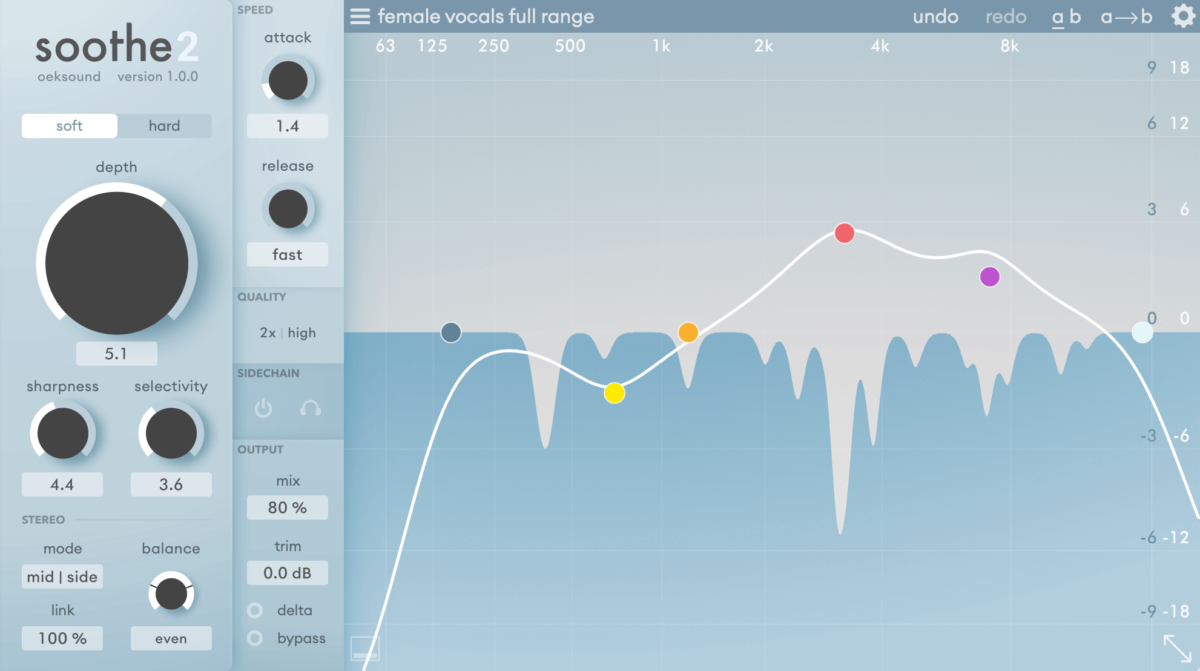
Hannes Andersson from oeksound (soothe2 and spiff plugins) – PES 182
My guest is Hannes Andersson, Marketing Manager at oeksound Ltd. in Helsinki, Finland! He is also a songwriter, music producer and mixer.
We discuss two awesome oeksound plugins – soothe2 and spiff!
We discussed:
- Hannes’s personal equipment setup: Shure SM7b, UA Apollo 8p (he loves the Unison preamps), Precision channel strip, Distressor, 1176 compressor, Knifaudio.com K804 (2 different capsules – U67 and C12)
- soothe2 – a dynamic resonance suppressor: Taming harsh resonance, how it works, what it’s used for, parameter controls, best practices, methods for dialing in settings, CPU usage, Sharpness, Selectivity, and moving nodes up and down for sensitivity.
- spiff – an adaptive transient processor: How it works, what it’s used for, and methods for dialing in settings.
Comment below with any questions or comments.
And THANKS for being a great guest, Hannes!
.
-
Best USB Hubs for Connecting Various Devices?
What are some good USB hubs for connecting various devices?
Here’s a nice article:
The Best USB Hubs on Amazon, According to Hyperenthusiastic Reviewers
Want to receive the Daily Goody in your email, daily or weekly? Subscribe free here.
And please keep in mind, the Daily Goody is only a tiny little tip, fact or lesson everyday. Please don’t expect any of these posts to be long, earth-shattering masterpieces that instantly answer every single question you can think of and completely transform you into a world class podcast engineer. “Little by little, a little becomes a lot.”
.
-
iRig Pro Duo I/O

The iRig Pro Duo I/O is a portable audio interface. It has two XLR inputs and phantom power. It’s compatible with iPhone, iPad, Android, and Mac/PC, with Lightning, USB-C and USB-A cables included for easy plug-in and play setup.
Also, here’s a nice article by Allan Tépper covering this piece of gear.
Want to receive the Daily Goody in your email, daily or weekly? Subscribe free here.
And please keep in mind, the Daily Goody is only a tiny little tip, fact or lesson everyday. Please don’t expect any of these posts to be long, earth-shattering masterpieces that instantly answer every single question you can think of and completely transform you into a world class podcast engineer. “Little by little, a little becomes a lot.”
.
-
Amplitude
Here’s a good technical definition of Amplitude from Sweetwater: https://www.sweetwater.com/insync/amplitude/
Amplitude alone does not singly determine power (or loudness in audio), but does affect it.
Amplitude is also the origin of the word amplifier, a device which increases the amplitude of a waveform.
Want to receive the Daily Goody in your email, daily or weekly? Subscribe free here.
And please keep in mind, the Daily Goody is only a tiny little tip, fact or lesson everyday. Please don’t expect any of these posts to be long, earth-shattering masterpieces that instantly answer every single question you can think of and completely transform you into a world class podcast engineer. “Little by little, a little becomes a lot.”
.
-
People. Process. Tools.
When it comes to efficiency and success in business, a wise man (the incomparable Joshua Wade) once taught me these three words:
People. Process. Tools.
And he stressed that THAT’S the order of their importance in business.
So, you may want to keep this short list in mind when growing your podcast editing/production business.
Want to receive the Daily Goody in your email, daily or weekly? Subscribe free here.
And please keep in mind, the Daily Goody is only a tiny little tip, fact or lesson everyday. Please don’t expect any of these posts to be long, earth-shattering masterpieces that instantly answer every single question you can think of and completely transform you into a world class podcast engineer. “Little by little, a little becomes a lot.”
.
-
iZotope Article: 8 Tips for Editing Dialogue with RX 7
Here’s a nice article on editing dialogue in iZotope RX 7.
Want to receive the Daily Goody in your email, daily or weekly? Subscribe free here.
And please keep in mind, the Daily Goody is only a tiny little tip, fact or lesson everyday. Please don’t expect any of these posts to be long, earth-shattering masterpieces that instantly answer every single question you can think of and completely transform you into a world class podcast engineer. “Little by little, a little becomes a lot.”
.