Your cart is currently empty!
Author: Chris Curran
-
Why I Rarely Use De-breath Plugins
De-breath plugins intelligently lower the volume of a person’s breath sounds. (iZotope RX Breath Control, Waves DeBreath, etc.)
Some podcasters, producers and editors really can’t stand the sound of breaths; some try to lower their volume, others cut them out altogether! It’s a matter of taste; though I will remind you that breaths are completely natural and listeners are used to hearing other humans take breaths when they’re speaking. Plus, 99.9% of all podcasts you hear DON’T remove or lower the volume of breaths.
I rarely use de-breath plugins because:
- It’s extremely rare that a person’s breaths are obnoxiously loud and distracting.
- It’s extremely difficult to dial-in the settings of a de-breath plugin perfectly so that it reduces ALL the breaths AND simultaneously leaves everything else alone. Most times the plugin will miss certain breaths and NOT reduce their volume, which can result in a weird, erratic sounding track which can sound MORE distracting than the original. Also, plugins can mistake a word or part of a word for a breath and then reduce its volume, ruining the intelligibility of certain words.
- Usually a better overall technique is the “Emily Prokop” technique where she clips and moves all the loud breaths onto a separate dedicated track in her DAW. Then she lowers the volume of that track so all the breaths are at a lower, more tasteful volume.
Unless someone’s breaths are super loud and distracting, I wouldn’t even worry about breaths – they’re natural.
Do you pay any special attention to breaths in your podcast production?
Want to receive the Daily Goody in your email, daily or weekly? Subscribe free here.
And please keep in mind, the Daily Goody is only a tiny little tip, fact or lesson everyday. Please don’t expect any of these posts to be long, earth-shattering masterpieces that instantly answer every single question you can think of and completely transform you into a world class podcast engineer. “Little by little, a little becomes a lot.”
-
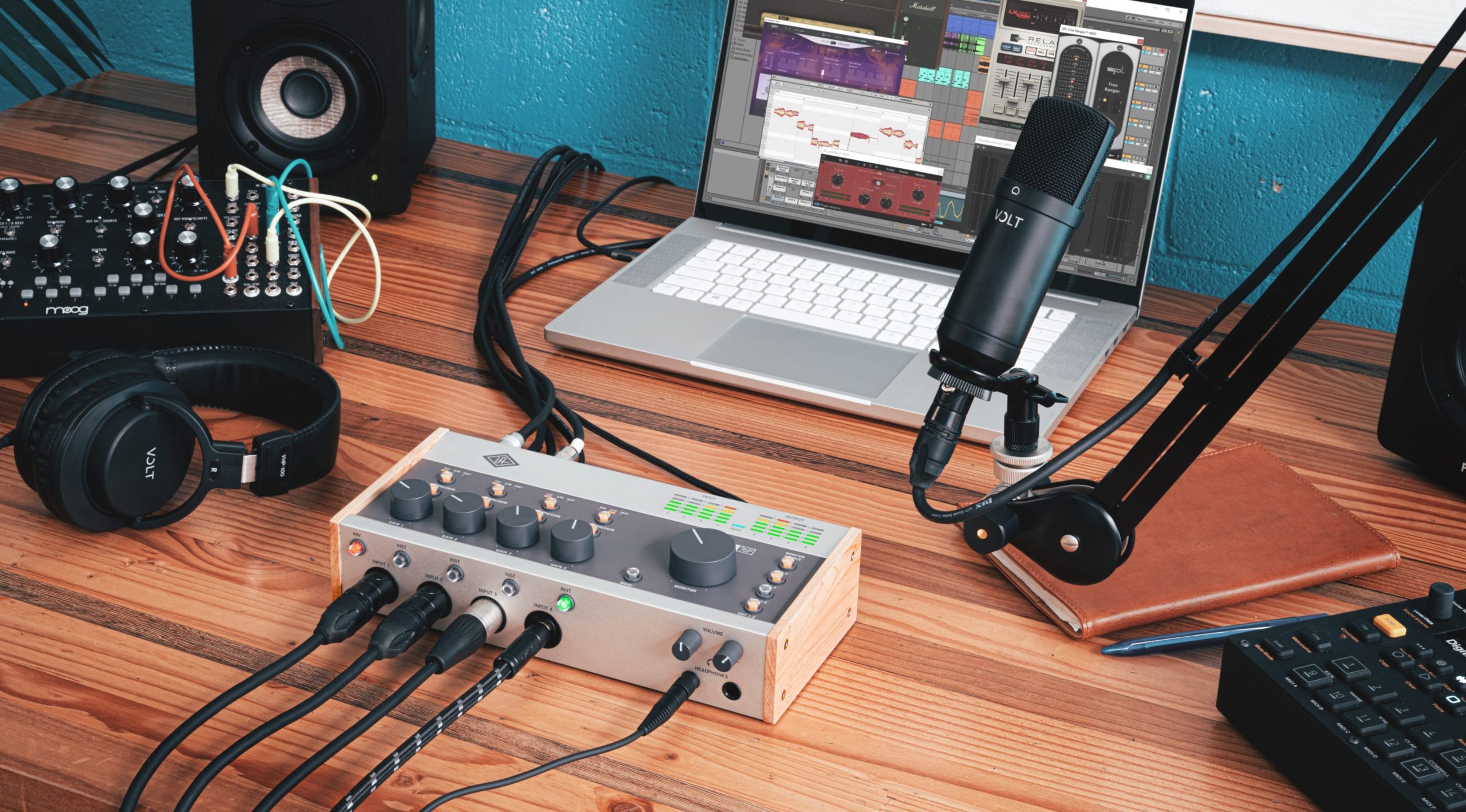
*NEW* Volt USB Audio Interfaces
I just came across these newly released VOLT interfaces from Universal Audio and they look very cool.
The smaller versions (which a podcaster would use) are priced pretty low, too, considering their quality ($139-$239), which I haven’t personally verified yet but everything UA makes has been exceptional quality.
From their website: We built Volt interfaces to let you easily record audio with legendary studio tone. Plug right into your Mac, PC, iPad, or iPhone and Volt just shows up — ready to capture your music, livestream, or podcast with professional sound.
NOTE: These interfaces are part of the UA ecosystem and you can actually get some free UA plugins when you purchase any VOLT interface.
If you get one of these please let me know how you like it!
Want to receive the Daily Goody in your email, daily or weekly? Subscribe free here.
And please keep in mind, the Daily Goody is only a tiny little tip, fact or lesson everyday. Please don’t expect any of these posts to be long, earth-shattering masterpieces that instantly answer every single question you can think of and completely transform you into a world class podcast engineer. “Little by little, a little becomes a lot.”
-
Save Money by Producing Your Own Podcast Audio (Instead of Outsourcing It)
If you’re currently outsourcing your podcast audio production to someone else, and you’d prefer to save that money instead, I’m here to tell you that if you’re willing to learn a bit you can definitely produce your own podcast audio.
You don’t have to attend PES or a 4-year program either — you can learn some basics and produce very good audio yourself.
HINT: By avoiding basic audio issues during the recording process you can virtually guarantee good sounding audio with very little effort 😉
Of course, if you literally don’t have time to produce your own audio that’s understandable.
By producing your own audio you’re developing a significant lifelong skill, too, and that’s worth A LOT!
What are your thoughts? Comment below.
Want to receive the Daily Goody in your email, daily or weekly? Subscribe free here.
And please keep in mind, the Daily Goody is only a tiny little tip, fact or lesson everyday. Please don’t expect any of these posts to be long, earth-shattering masterpieces that instantly answer every single question you can think of and completely transform you into a world class podcast engineer. “Little by little, a little becomes a lot.”
-
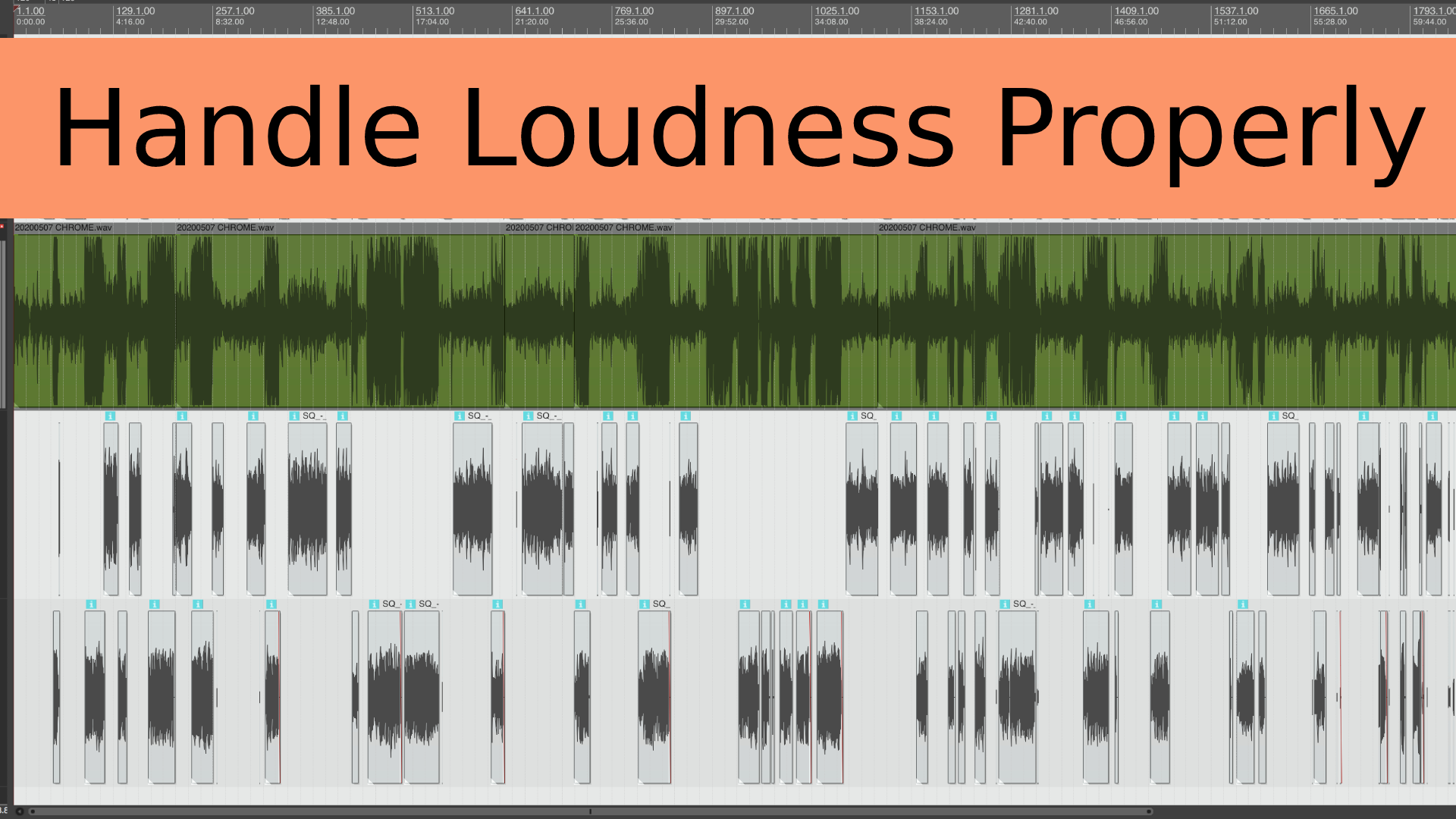
How To Handle Loudness Properly in All Stages of Your Podcast Production Workflow – PES 238
NOTE: In this episode I’m using a Sennheiser e835 microphone into my Portico 2 channel strip and using these plugins in post: KIT BB N105, Shadow Hills Class A Mastering Compressor, Saturn 2, and Aquamarine 4.
Here’s the summary of what I discuss on How To Handle Loudness Properly in All Stages of Your Podcast Production Workflow:
- Record all raw tracks at a healthy level (not too low or too hot)
- Set all raw tracks to the same LUFS before bringing them into your DAW. (I do this at the end of my cleanup phase after I remove background noise, plosives, hums, and other blemishes)
- Use Compression and/or MaxxVolume/Vocal Rider to compress/tame the loud parts as well as boost the lower volume parts. (NOTE: This step will effectively amplify any background noise, so be sure to absolutely minimize the background noise before pressing record!)
- Adjust the overall level of each participant so they all sound good compared to each other. (as part of your mixing phase, where you can also use other processing like EQ, saturation, etc.)
- After rendering the final episode audio, process this file so it adheres to the “unofficial” loudness standards of podcasting: -19 LUFS for mono episodes, or -16 LUFS for stereo episodes.
Other Notes:
- If you ever have questions please reach out!
- You can sign up to receive Daily Goody’s in your email a few times per week or a weekly roundup. Sign up here.
- The start date for the next PES semester is January 10, 2023! (fyi, the course is delivered once per quarter)
- If you’d like to share this show with any of your podcaster friends, feel free to send them a message saying, “Btw, here’s a show about podcast audio production you may find helpful” with this link: https://podcastengineeringschool.com/subscribe/)
Let me know if you have any questions or need any help with anything,
~Chris -
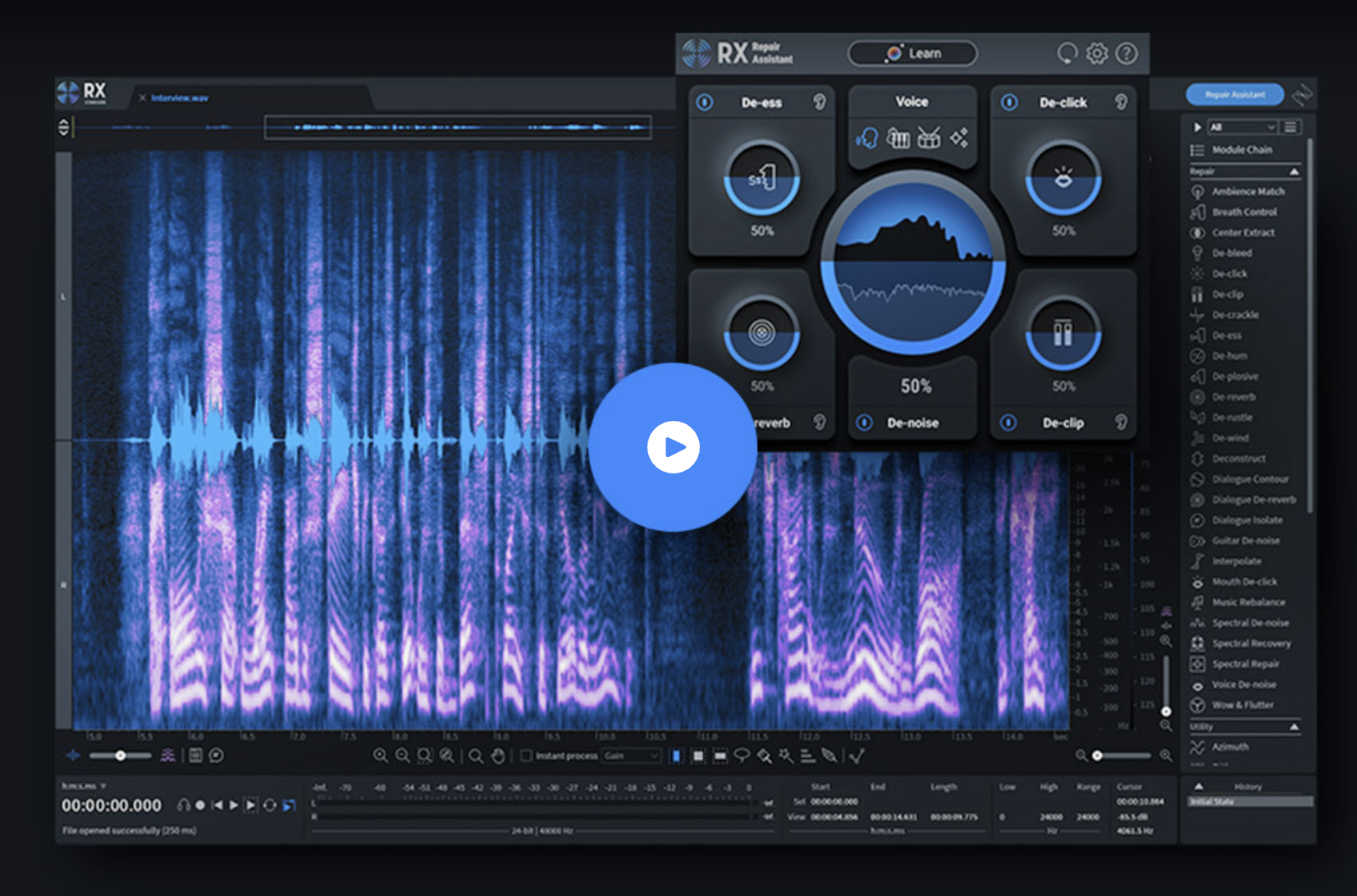
iZotope RX 10 Now Available!
iZotope just released their latest version of RX. RX 10 has several substantial updates from the previous version.
If you have RX 9 you’ll have to decide for yourself if you want top upgrade to 10. I did, but that’s partially because I have to stay on top of these things in order to teach them!
For a good explanation detailing all the new features and updates check out the short video at the top of the product page here!
FYI, students of PES get a 50% discount on iZotope RX and other iZotope products 😉
Want to receive the Daily Goody in your email, daily or weekly? Subscribe free here.
And please keep in mind, the Daily Goody is only a tiny little tip, fact or lesson everyday. Please don’t expect any of these posts to be long, earth-shattering masterpieces that instantly answer every single question you can think of and completely transform you into a world class podcast engineer. “Little by little, a little becomes a lot.”
-
Do You Know Anyone Around the Age of 18-25 Who Plays a Musical Instrument?
Who do you know around the age of 18-25 who plays a musical instrument?
I’m asking because those folks are literally primed and ready to learn how to produce podcasts for living and then earn $100k+ per year working from home. Yeah, really.
Lots of younger folks are struggling to find their way, so if you know someone who plays a musical instrument or loves audio in general, please tell them about Podcast Engineering School.
Better yet, put them directly in touch with me 😉
Thanks for helping me change so many individuals lives for the better.
There’s nothing better than when a graduate of Podcast Engineering School becomes a true professional and takes control of their financial success and starts bringing in serious income. Truly life changing for them.
Much Love,
ChrisWant to receive the Daily Goody in your email, daily or weekly? Subscribe free here.
And please keep in mind, the Daily Goody is only a tiny little tip, fact or lesson everyday. Please don’t expect any of these posts to be long, earth-shattering masterpieces that instantly answer every single question you can think of and completely transform you into a world class podcast engineer. “Little by little, a little becomes a lot.”
-
Which Would You Rather See Me Do on Video?
I appreciate you letting me know in the comments below 😉 or tweet at me @PodcastEngineer
Which would you rather see me do on video?
- Clean up a bad recording
- Demonstrate a new plugin
- EQ someone’s voice
- Compress someone’s voice
- Discuss my 5 favorite plugins for podcast production
- Purchase and unbox a new Blue Yeti
- Demonstrate my voice on 5 different microphones
Please comment below!
I appreciate you,
ChrisWant to receive the Daily Goody in your email, daily or weekly? Subscribe free here.
And please keep in mind, the Daily Goody is only a tiny little tip, fact or lesson everyday. Please don’t expect any of these posts to be long, earth-shattering masterpieces that instantly answer every single question you can think of and completely transform you into a world class podcast engineer. “Little by little, a little becomes a lot.”
-
Should You Publish Episodes in Stereo or Mono?
If you’re wondering whether you should publish your final episodes in stereo or mono, here are a few ideas to consider:
- If every element of your episode is mono (voices, effects, music, etc.), _AND_ you haven’t panned _ANY_ of them left or right, then you should publish in mono because your audio _IS_ mono. By the way, publishing a mono audio file in stereo doesn’t change or enhance the sound — it only doubles the file size, thereby unnecessarily causing you to publish a larger file (which with some hosting companies will cost you more money) _AND_ forcing listeners to download or stream a larger file (which for some will more quickly eat up their limited monthly mobile bandwidth).
- If there are _ANY_ stereo elements in your episode, I recommend publishing in stereo. (unless you have some limit on file size, etc.)
NOTE: The majority of podcasts use stereo intro music and publish in stereo, but some still opt to publish in mono (which is totally fine). Be aware that publishing stereo music in mono may cause it to sound a bit weird to some folks, but it’s not a major deal — it’ll just sound a bit flat, dimensionless, etc.
Do you publish in stereo or mono, and why?
Want to receive the Daily Goody in your email, daily or weekly? Subscribe free here.
And please keep in mind, the Daily Goody is only a tiny little tip, fact or lesson everyday. Please don’t expect any of these posts to be long, earth-shattering masterpieces that instantly answer every single question you can think of and completely transform you into a world class podcast engineer. “Little by little, a little becomes a lot.”
-
Max Flight and Your Mid-summer Podcast Re-evaluation – PES 237
Returning all-star guest Max Flight helps me cover 17 ways to re-evaluate your podcast this summer, and we also discuss Max’s latest podcast production workflow, equipment, software and more.
Max has been producing aviation podcasts since 2008:
- Airplane Geeks (now over 700 episodes!)
- The UAV Digest (looking at unmanned aircraft or drones)
- Check out his main site — http://thirtythousandfeet.com/
- He was previously on episodes 20 and 39 of this show
- Check out his equipment, software, services and more below…
We discuss these 17 ways in which you can re-evaluate and improve your show this summer:
- Update your goals
- Change the format
- Start using chapters
- Personal focus on eliminating verbal crutches. (A short duration of intense focus will provide years of good results)
- Change and/or add equipment
- Sell old equipment
- Treat yourself to that mic you’ve always wanted
- Sound absorption and diffusers
- Add a new segment
- Cover new yet pertinent subject matter topics
- Publish in video format as well
- Publish better shownotes
- Revamp your marketing
- Evaluate the shows overall effectiveness
- Hire a VA
- Bring on a cohost
- Decide to end your show???
- Perhaps decide you want to become a professional podcast engineer/producer and earn a great living producing podcasts for clients – from home?!
And here’s a lot more detail on Max’s production:
Big changes since PES 20 and PES 39 mostly involve a simplification of the signal path:
- Skype and cohost multi-enders replaced by Riverside.fm
- Behringer mixer (still going strong since 2009!) replaced with MixPre
- The MixPre handles all mic pre-amplification
- Sound clips and pre-recorded segments played through Riverside, replacing an iOS soundboard
- Backup recording is handled by the MixPre
Current equipment:
- Sound Devices MixPre-6
- Also use a MixPre-3 Gen 2 for field recordings
- Zoom H5 for field recordings, too
- Heil PR40
- Sennheiser MD46 interview mic
- Dell XPS 16 and MacBook Pro 15-inch, 2018 model, 2.9GHz i9 32 GB laptops
- Audio Technica ATH-M50x headphones
- Yamaha HS5 monitors
Software:
- Riverside.fm (was Skype then Squadcast)
- Hindenburg Journalist Pro
- Audacity (yep!)
- iZotope RX 8 Advanced
- ID3 Editor for tagging
Services:
- Media hosting: Blubrry and Libsyn
- Website hosting: Bluehost and SiteGround
Notes from Max:
- I’m retired and traveling more which makes weekly podcast production a bit more difficult.
- Biggest current problem: At the home studio I mix/master with my Yamaha monitors, which I love. I can’t master properly with the Audio Technica headphones when traveling.
Other Notes:
- If you ever have questions please reach out!
- You can sign up to receive Daily Goody’s in your email a few times per week or a weekly roundup. Sign up here.
- The start date for the next PES semester is Sep. 13, 2022! (fyi, the course is delivered once per quarter)
- If you’d like to share this show with any of your podcaster friends, feel free to send them a message saying, “Btw, here’s a show about podcast audio production you may find helpful” with this link: https://podcastengineeringschool.com/subscribe/)
Let me know if you have any questions or need any help with anything,
~Chris -
Dealing With Lipsmacks and Mouth Clicks in Post
If lipsmacks and mouth noises aren’t avoided in the recording process, then removing them in post can happen in several different ways:
- For big loud lipsmacks it’s usually better to remove them manually in the editing process.
- Regarding smaller mouthclicks: If there are only a limited number of mouthclicks, cutting them by hand is OK, but if a particular podcast participant a bazillion mouthclicks then Mouth De-click in iZotope RX is a lifesaver. Also Spiff from Oeksound can do a good job removing mouth clicks.
What’s your strategy with lipsmacks and mouth clicks? Comment below!
Want to receive the Daily Goody in your email, daily or weekly? Subscribe free here.
And please keep in mind, the Daily Goody is only a tiny little tip, fact or lesson everyday. Please don’t expect any of these posts to be long, earth-shattering masterpieces that instantly answer every single question you can think of and completely transform you into a world class podcast engineer. “Little by little, a little becomes a lot.”
-
Dealing With Plosives
If you don’t avoid capturing plosives in the recording process, you’ll have to deal with them in post-production.
Here are several ways to remove plosives in post:
- The De-plosive module in iZotope RX
- A multiband compressor to specifically crush the plosive frequencies which are usually in the range of around 120 Hz and below. Use a high ratio with very fast attack and release, then adjust threshold so that the compressor is only compressing the plosives.
- FYI, here’s the worst “solution”: Use a high pass filter to roll off the frequencies below ~120 Hz. The problem with this “solution” is that it will not only reduce the plosives but it will remove a significant amount of fullness and body from the sound, which can make the person’s voice sound a bit thin, weak or wimpy.
Also note that De-noise processors will NOT remove plosives.
Is there another method you use to remove plosives? Comment below!
Want to receive the Daily Goody in your email, daily or weekly? Subscribe free here.
And please keep in mind, the Daily Goody is only a tiny little tip, fact or lesson everyday. Please don’t expect any of these posts to be long, earth-shattering masterpieces that instantly answer every single question you can think of and completely transform you into a world class podcast engineer. “Little by little, a little becomes a lot.”
-
Nine Tips for Podcast Audio Production – PES 236
I overview 9 podcast production tips and techniques from recent Daily Goody posts Oct. 25 – Dec. 10, 2021 (see list below). You can sign up to receive Daily Goody’s in your email every day or a weekly roundup. Sign up here.
Daily Goody posts that I discussed in this episode:
- What is Mastering in Podcast Production?
- Musicians Can Fund Their Music Careers by Earning $50-150 Per Hour Producing Podcasts From Home
- Name One Song That Sounds Amazing/Perfect to You
- AKG K 240 MK II Stereo Studio Headphones
- Background Noise Is Exacerbated by Compression
- SplitEQ from Eventide
- 3 Different Categories of “Noise” to Avoid When Recording Podcasts
- One Participant Using a Condenser Mic, the Other Using a Dynamic Mic
- Do You Feel Hurried or Chill When You Edit Your Podcast?
Other Notes:
- Podcast Services Mastermind Workshop ($199) – A one day immersive and collaborative in-person event designed to build & grow your service based business! Full explanation of the program HERE.
- If you ever have questions please reach out!
- The start date for the next PES semester is Sep. 13, 2022! (fyi, the course is delivered once per quarter)
- If you’d like to share this show with any of your podcaster friends, feel free to send them a message saying, “Btw, here’s a show about podcast audio production you may find helpful” with this link: https://podcastengineeringschool.com/subscribe/)
- My smaller course that I mentioned: Getting New Clients at Higher Rates
Let me know if you have any questions or need any help with anything,
~Chris -
Reaper Now Offers Oversampling on Individual Plugins and Plugin Chains!
(FYI, see my post on What is Oversampling?)
Reaper now offers oversampling on individual plugins and plugin chains!
NOTE: Currently many plugins will not be able to handle more extreme (8x or 16x) oversampling, so listen carefully for weirdness when using Reaper’s oversampling features.
Here are two good videos explaining and showing more details:
- Oversample Everything! Reaper FX and FX Chain Oversampling
- Oversampling in REAPER? – The NEW Game-changing feature
Want to receive the Daily Goody in your email, daily or weekly? Subscribe free here.
And please keep in mind, the Daily Goody is only a tiny little tip, fact or lesson everyday. Please don’t expect any of these posts to be long, earth-shattering masterpieces that instantly answer every single question you can think of and completely transform you into a world class podcast engineer. “Little by little, a little becomes a lot.”
-
Add Oversampling to Plugins That Don’t Offer It Using Superplugin From DDMF
(FYI, here’s a post explaining oversampling and aliasing)
Superplugin from DDMF is a plugin that does many things. One handy and specific thing I’d like to highlight here that it does up to 16x oversampling during realtime playback (and 64x oversampling during offline rendering) for plugins that don’t offer oversampling!
Here’s a good video with more details and examples, etc.: Make Your Waves Plugins Sound Better | With Superplugin from DDMF.
Want to receive the Daily Goody in your email, daily or weekly? Subscribe free here.
And please keep in mind, the Daily Goody is only a tiny little tip, fact or lesson everyday. Please don’t expect any of these posts to be long, earth-shattering masterpieces that instantly answer every single question you can think of and completely transform you into a world class podcast engineer. “Little by little, a little becomes a lot.”
-
What is Oversampling? What is Aliasing?
Oversampling is when a digital processor internally increases the sample rate of the audio to avoid aliasing.
Aliasing is when one frequency is coded as a different frequency; when inaudible distortions above the Nyquist Frequency (half the sample rate) are interpreted by the D/A converter and mapped to frequencies within the audible range. (Here’s a good article on Aliasing, etc.)
Without oversampling, processors like saturation and distortion can create significant audible aliasing/artifacts that you may not want.
For the most commonly used processors, EQ and Compression, oversampling is not usually needed.
In general, for podcast audio production you don’t really need to worry about oversampling unless you’re using saturation or distortion as an effect, and even then you may not need or want oversampling. Keep in mind that sometimes you may even prefer the un-oversampled sound 😉
Here’s a good video explaining and showing more details: Oversampling Explained
Want to receive the Daily Goody in your email, daily or weekly? Subscribe free here.
And please keep in mind, the Daily Goody is only a tiny little tip, fact or lesson everyday. Please don’t expect any of these posts to be long, earth-shattering masterpieces that instantly answer every single question you can think of and completely transform you into a world class podcast engineer. “Little by little, a little becomes a lot.”
-
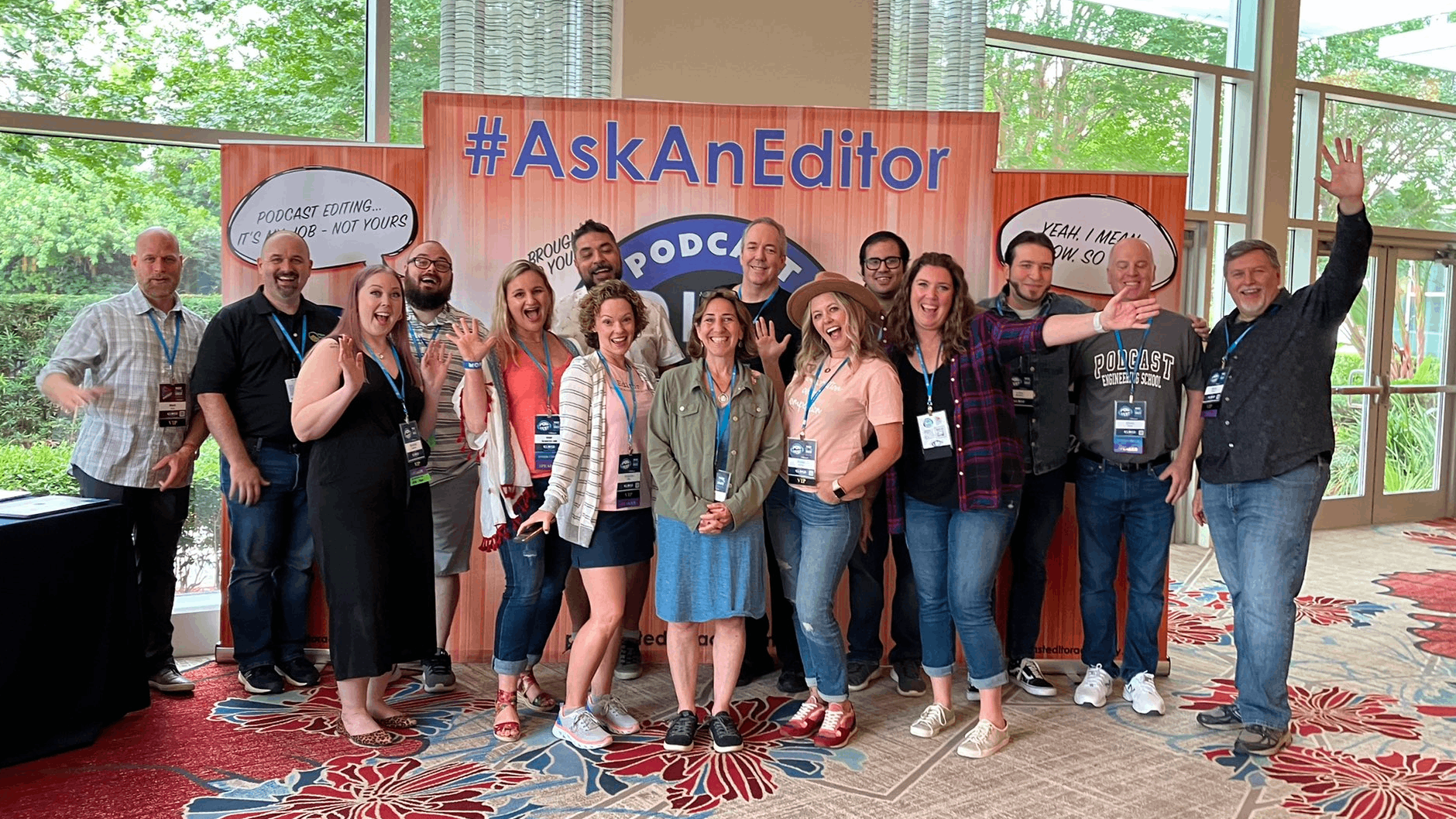
My Experience at Podfest 2022 – PES 235
I’ve attended every single Podfest since 2014. And this year it was great to see so many friends and colleagues in person again!
Here are some of my experiences, notes and highlights of the event:
MY TALK:
“How to Use Compression & Normalization (Mandatory for Creating Professional Grade Audio)” —> The full presentation will be published soon!
Outline what I covered:
- Normalization (Peak and Loudness) (When and where to normalize audio)
- Compression (Why, controls) (Demonstrations of compressors, upward compression, vocal riding, limiter, and a great sounding plugin chain)
*Audio Production Challenge for my listeners: Compress the ultra-dynamic audio clip that I used for demonstration in my presentation and send me your processed audio file!
Links to Apps and Plugins I Mentioned in My Talk at Podfest 2022 on “Compression and Normalization”
Link to 4 recent overview posts:
- What is Compression? (Audio Processing)
- Introduction to Compressor Controls
- What Are Audio Plugins? (Audio Processing)
- Introduction to Plugin Chains
PODCASTING 2.0, CRYPTO, BLOCKCHAIN, ETC.:
- Spoke with several podcast industry pro’s about Podcasting 22.0, crypto integrations into podcast feeds and websites, etc. Hardly anyone was talking about this. It’s still VERY early.
- The Florida Bitcoin & Blockchain Summit
PRESENTATIONS I SAW:
Seth Silvers, CEO of Story On Media — “The Roadmap To Using NFTs To Engage Your Podcast Audience and Increase Revenue”
- Focus on “how can NFTs help build my community, instead of how can NFTs make me money.”
- Think of an NFT as an access card.
- “Gratitude” NFTs just for people to support the show. (offer NFTs of every episode, etc.)
- Never-ending tickets.
- Uncut.fm “Collect NFTs from your favorite podcasts”
TikTok presentation by Melissa Hughes
- *Mindset when creating TikTok posts: Document instead of create.
WHAT I WAS INSPIRED TO CHANGE/DO:
- Create a new short course??
- TikTok posting for marketing purposes? (Am I really going to commit to this?!?!)
- Join a songwriting group (which I discussed w/Ashley Lehmann)
Other interesting things I learned about:
- Snowpixel: AI-generated images (Natalie Champa Jennings told me about this)
- “Dream 100”, gatekeepers, (from my conversation with Seth Silvers) — The Dream 100 are relationships with people and/or companies who can help me market my business to their audiences. Instead of focusing on marketing, focus on building these 100 relationships.
MY OVERALL EVALUATION OF THE ENTIRE EVENT:
- All in all very good
- Perhaps too many speakers and tracks, etc.
- Felt a bit too spread out
- I should have bought groceries
PEOPLE I HUNG OUT WITH:
- Seth Silvers
- Jennie Wren
- Steve Stewart and Mark Deal
- Glenn the Geek
- Mike Helms
- Marc Johanssen
- Roy Stegman
- Harry Duran
- Natalie Champa Jennings
- Ashley Lehmann
- Paul Desmond Adams
- Gordon Firemark
- Bryan Entzminger
- Julia Levine
- Ross Brand
- Dave Jackson
- Dan Hughley
- Daniel Abendroth
- MANY OTHERS!
NOTE: The next semester of PES starts on June 28, 2022.
Want to receive the Daily Goody in your email, daily or weekly? Subscribe free here.
And please keep in mind, the Daily Goody is only a tiny little tip, fact or lesson everyday. Please don’t expect any of these posts to be long, earth-shattering masterpieces that instantly answer every single question you can think of and completely transform you into a world class podcast engineer. “Little by little, a little becomes a lot.”
-
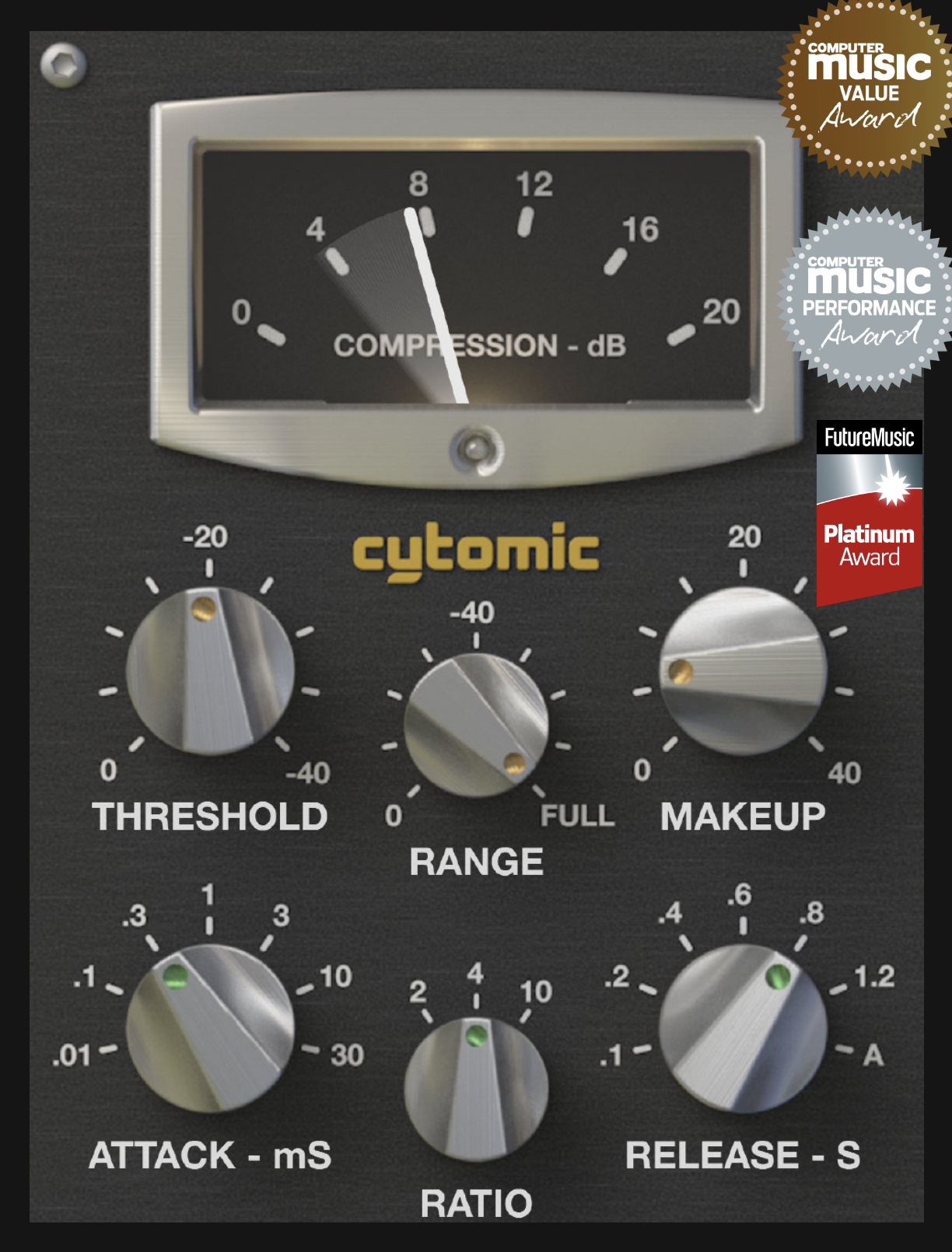
Cytomic The Glue – Analog Modeled Compressor Plugin
At Podfest last week Bryan Entzminger told me about this plugin – Cytomic The Glue (basically modeled off the classic SSL Buss Compressor). When asked for comment he said, “I like to set it to CRAZZZZY. Super fast attack. Very fast release, 4:1 ratio, and targeting 2-3 dB of compression. Pretty much the only things I tweak are the threshold (obviously), the makeup gain (sometimes) and maybe the high pass filter if the intro/outro music has heavy bass information that’s over-triggering the compressor.”
It retails for $99 but of course you can always try before you buy 😉
I haven’t tried Cytomic The Glue yet, but I will, at some point.
Want to receive the Daily Goody in your email, daily or weekly? Subscribe free here.
And please keep in mind, the Daily Goody is only a tiny little tip, fact or lesson everyday. Please don’t expect any of these posts to be long, earth-shattering masterpieces that instantly answer every single question you can think of and completely transform you into a world class podcast engineer. “Little by little, a little becomes a lot.”
-
Apps and Plugins I Mentioned in My Talk at Podfest 2022 on “Compression and Normalization”
Below are links to various apps and plugins I discussed in my presentation on Compression and Normalization at Podfest Expo 2022.
NOTE: Four handy posts if you need them: What is Compression?, Introduction to Compressor Controls, What Are Audio Plugins? and Introduction to Plugin Chains
Plugins and apps in the order I mentioned them:
- Auphonic
- Auphonic Multitrack
- iZotope RX (also its Loudness Control module)
- Adobe Audition
- Hindenburg Journalist Pro
- Introduction to Compressor Controls
- CLA-2A (compressor plugin from Waves)
- Scheps Omni Channel (channel strip plugin from Waves)
- MaxxVolume (dynamics plugin from Waves)
- Vocal Rider (dynamics plugin from Waves)
- Pro-L 2 (limiter plugin from Fabfilter)
- Introduction to Plugin Chains
- Sign up for Daily Goody emails (a tiny little tip, fact or lesson 3x per week on podcast production)
- Info on the next semester of Podcast Engineering School
*Also, you’re welcome to check out this page which lists MANY more plugins and apps: Podcast Audio Plugins – The Big List
If you have any questions contact me HERE 🙂
Sound great!
Want to receive the Daily Goody in your email, daily or weekly? Subscribe free here.
-
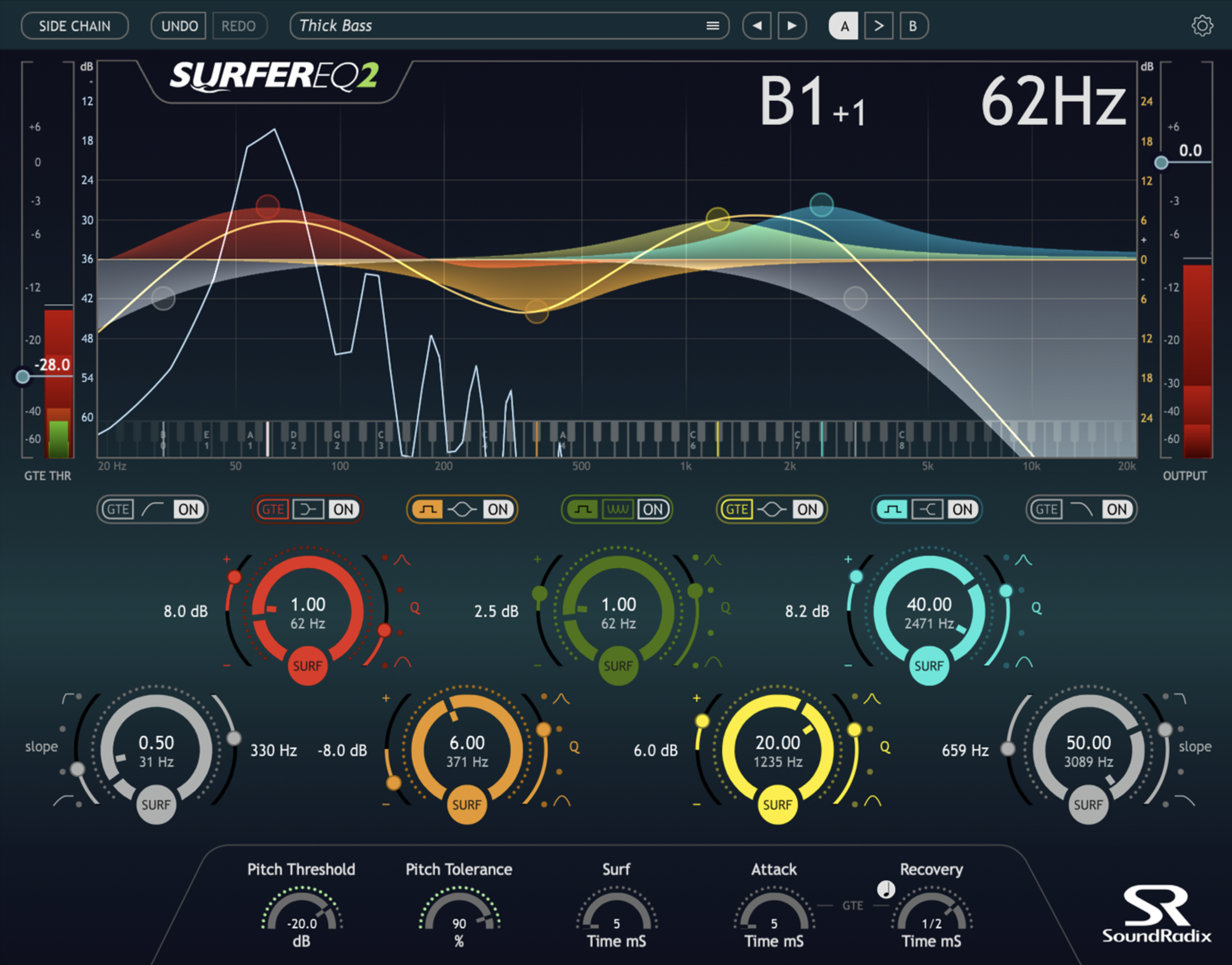
SurferEQ: Pitch-tracking Equalizer Plugin
The SurferEQ plugin has been around for 6+ years but I only just recently discovered it for myself. It looks awesome and I plan on trying it (via their 14 day free trial) very soon. Have you tried it?
SURFEREQ follows the pitch of a monophonic instrument or vocal in real-time and can adjust any of its bands accordingly, thus “Surfing” the sound waves.
Here’s a good overview video of the plugin:
Want to receive the Daily Goody in your email, daily or weekly? Subscribe free here.
And please keep in mind, the Daily Goody is only a tiny little tip, fact or lesson everyday. Please don’t expect any of these posts to be long, earth-shattering masterpieces that instantly answer every single question you can think of and completely transform you into a world class podcast engineer. “Little by little, a little becomes a lot.”