Your cart is currently empty!
Author: Chris Curran
-
Introduction to Plugin Chains
If you’re not sure what plugins are: What Are Audio Plugins? (Audio Processing)
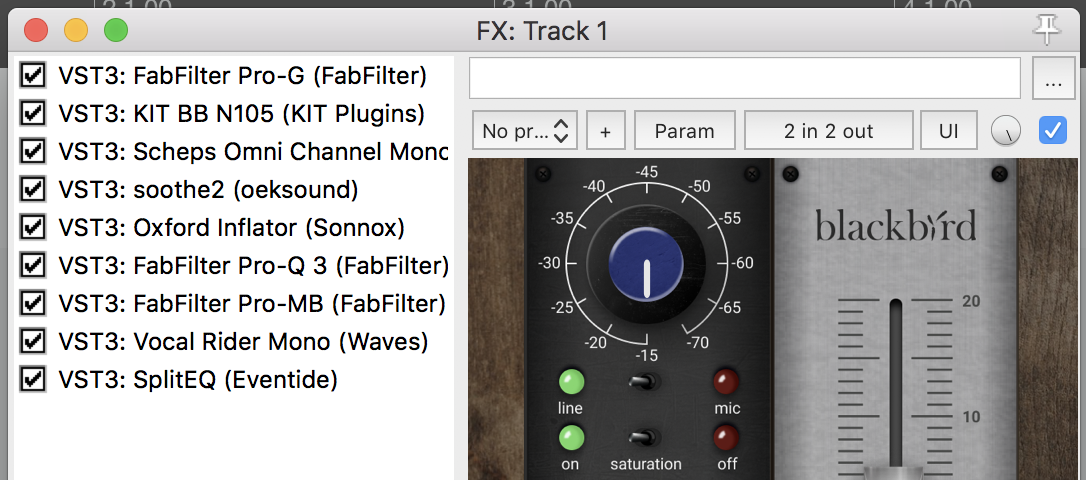
A plugin chain is a series of audio plugins that your audio flows through.
Most times when you’re producing audio you’re going to want to process the audio using several processors which typically include compressors, EQ, expanders, de-essers, etc.
In your DAW you can add multiple plugins to individual channels and order the plugins as you please.
You can also save these plugin chains so that next episode you can apply the same exact plugin chain with all the same exact settings dialed in 😉
Do you save and re-use plugin chains?
Want to receive the Daily Goody in your email, daily or weekly? Subscribe free here.
And please keep in mind, the Daily Goody is only a tiny little tip, fact or lesson everyday. Please don’t expect any of these posts to be long, earth-shattering masterpieces that instantly answer every single question you can think of and completely transform you into a world class podcast engineer. “Little by little, a little becomes a lot.”
-
What Are Audio Plugins? (Audio Processing)
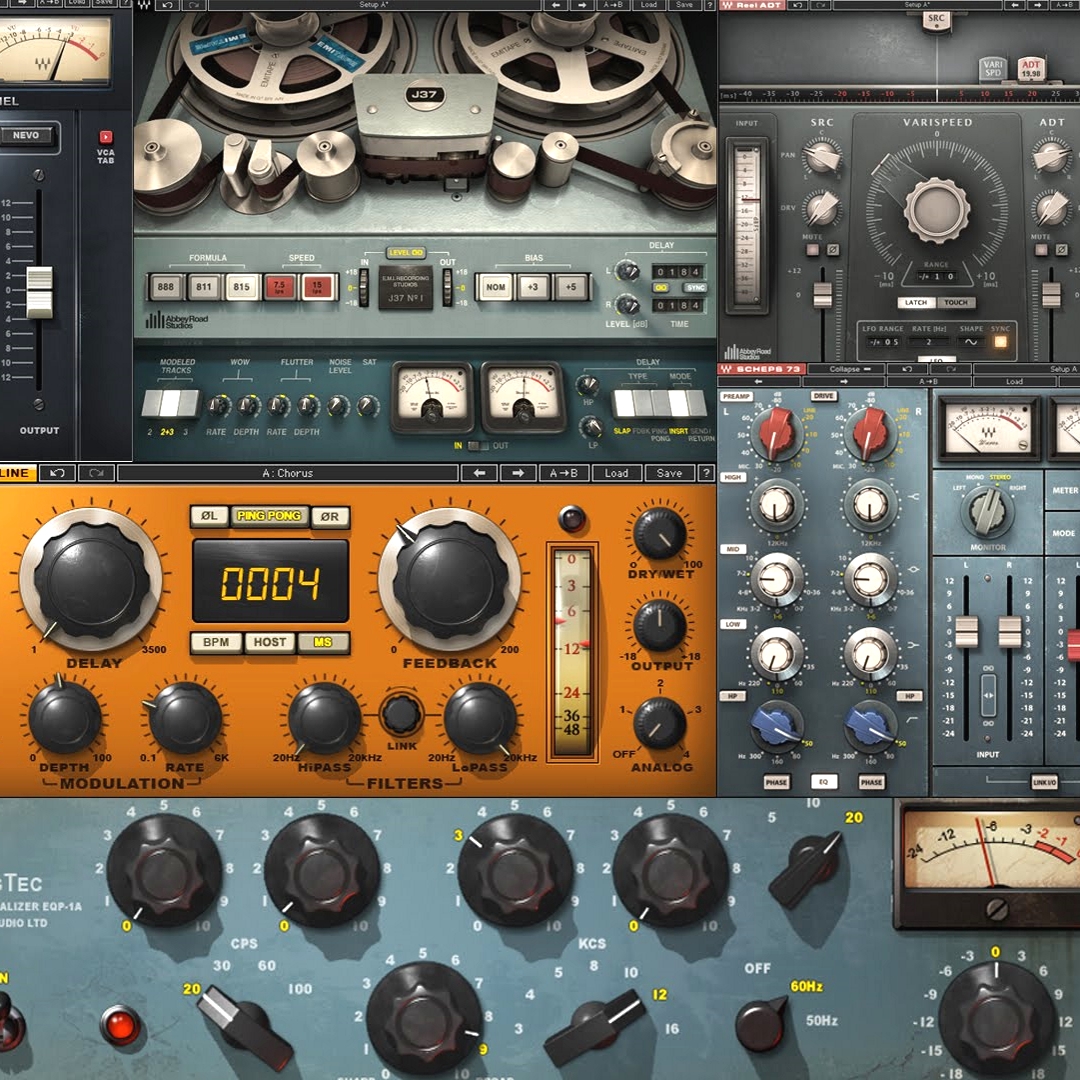
Audio plugins are small self-contained audio processors which you can use inside your audio software.
Most DAWs have built-in audio processors. In addition, 3rd party plugins can be purchased, installed and used within most DAWs.
The fundamental types of audio plugins for podcast production include compressors, limiters, EQs, channel strips, expanders, gates, de-essers, saturation, reverb, delays and other effects.
There are also other types of plugins including diagnostic tools, virtual instruments, sound synthesis and others.
RESOURCE: Here’s a big list of plugins that I use and recommend: Podcast Audio Plugins – The Big List
Want to receive the Daily Goody in your email, daily or weekly? Subscribe free here.
And please keep in mind, the Daily Goody is only a tiny little tip, fact or lesson everyday. Please don’t expect any of these posts to be long, earth-shattering masterpieces that instantly answer every single question you can think of and completely transform you into a world class podcast engineer. “Little by little, a little becomes a lot.”
-
Introduction to Compressor Controls
If you’re not sure what compression is: What is Compression? (Audio Processing)
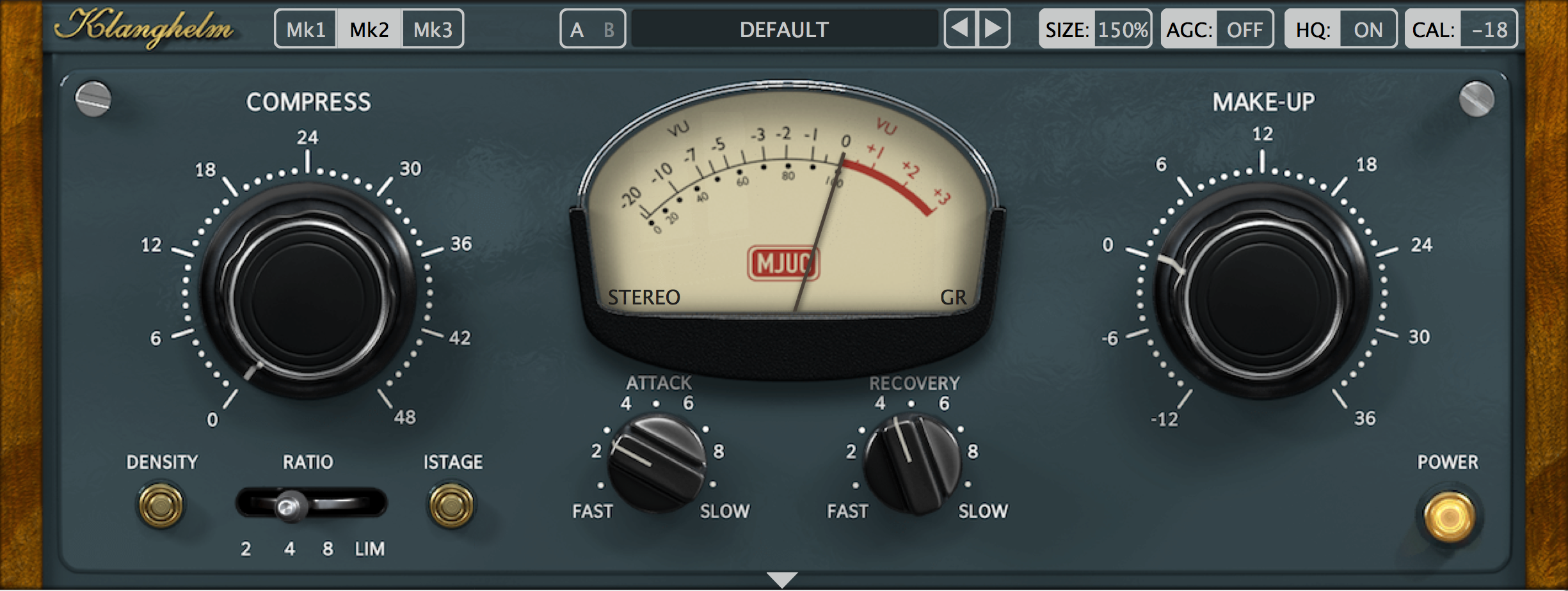
Compressors are audio processors that are vital to producing professional audio and they come in all shapes and sizes with widely varying features and controls. Some compressors have only one adjustable parameter (“one-knob compressors”) and others have many adjustable parameters.
Here are the fundamental controls of a compressor: (note, this is not an exhaustive list)
- Threshold – the level at which the compressor engages and disengages.
- Ratio – how aggressively or subtly the audio is compressed when it’s above the threshold.
- Attack – how quickly the compressor engages after the level goes above the threshold.
- Release – how quickly the compressor disengages after the level goes back below the threshold.
- Mix – the blend of the compressed signal with the original (uncompressed) signal.
- Sidechain – an external audio source that triggers the compressor to engage.
- Gain reduction meter – this is not a parameter but an ultra-handy meter so you can see how much compression is actually happening at any moment.
Experimenting with these controls yourself will give you lots more insight into each of these fundamental parameters of compressors. Spend 30 minutes twisting knobs and practicing – I dare you!
Sound great!
Want to receive the Daily Goody in your email, daily or weekly? Subscribe free here.
And please keep in mind, the Daily Goody is only a tiny little tip, fact or lesson everyday. Please don’t expect any of these posts to be long, earth-shattering masterpieces that instantly answer every single question you can think of and completely transform you into a world class podcast engineer. “Little by little, a little becomes a lot.”
-
What is Compression? (Audio Processing)
When producing audio it’s almost always necessary to use some type of audio compression.
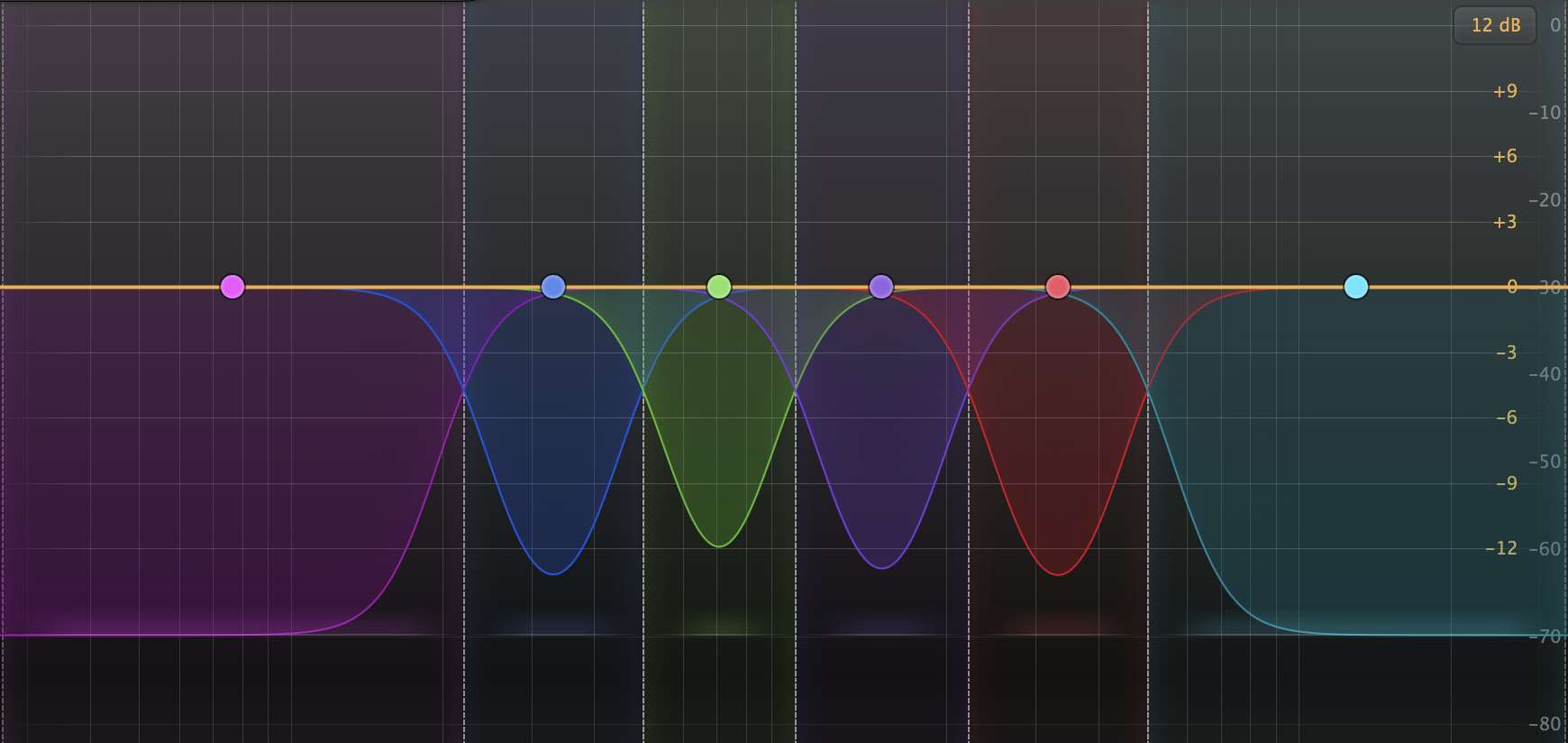
The process of Compression reduces the dynamic range of audio. Dynamic range is the difference in loudness between the quietest parts of the audio signal and the loudest parts of the audio signal. Meaning, it’s the difference in loudness between a podcast participant mumbling quietly under their breath and then screaming or laughing really loud.
Raw recordings with no compression applied are usually much too dynamic and deliver a horrible listening experience; listeners are forced to “ride the volume knob” which means to manually turn down loud parts and manually turn up quiet parts. NOTE: Listeners will do this for about 30 seconds before turning off that podcast and never listening again.
Want to receive the Daily Goody in your email, daily or weekly? Subscribe free here.
And please keep in mind, the Daily Goody is only a tiny little tip, fact or lesson everyday. Please don’t expect any of these posts to be long, earth-shattering masterpieces that instantly answer every single question you can think of and completely transform you into a world class podcast engineer. “Little by little, a little becomes a lot.”
-
Independent Podcast Editors and Producers: Are You Profiting Enough?
Bringing in revenue is one thing, but being profitable is another. And it’s possible to have lots of clients and NOT be profitable!
Profit equals income minus expenses, and expenses include monetary expenses as well as your time expenditure.
Are you profiting enough?
To answer that question compare your revenue, expenses and time spent working to figure out your profit — then determine if the time you’re spending is worth the profit you’re achieving.
Seriously, sit down and figure it out for yourself. The clarity you gain will be priceless.
Resource: I go into way more detail on this subject in the Getting New Clients at Higher Rates course.
Want to receive the Daily Goody in your email, daily or weekly? Subscribe free here.
And please keep in mind, the Daily Goody is only a tiny little tip, fact or lesson everyday. Please don’t expect any of these posts to be long, earth-shattering masterpieces that instantly answer every single question you can think of and completely transform you into a world class podcast engineer. “Little by little, a little becomes a lot.”
-
Are Your Podcast Episodes Loud Enough?
Before publishing, how do you make sure that the loudness level of your podcast episodes are at or near the industry standards? (-19 LUFS for mono episodes, and -16 LUFS for stereo episodes)
- I use iZotope RX‘s Loudness Module to precisely set the final loudness level.
- Many people use Auphonic.
- Others try to look at the meter in their DAW to guesstimate the LUFS level. (not recommended)
- Some DAWs allow you to set the LUFS level when exporting. (Hindenburg Journalist Pro and others)
- Adobe Audition allows you to Match Loudness to your desired LUFS level.
- I’m sure there are many other ways.
How do you accomplish this important task?
Want to receive the Daily Goody in your email, daily or weekly? Subscribe free here.
And please keep in mind, the Daily Goody is only a tiny little tip, fact or lesson everyday. Please don’t expect any of these posts to be long, earth-shattering masterpieces that instantly answer every single question you can think of and completely transform you into a world class podcast engineer. “Little by little, a little becomes a lot.”
-
Podcast Editing: A Chore or Labor of Love?
Or both?
If you do edit your own podcast (some podcasters don’t edit at all) — is editing a painful experience for you, or do you enjoy doing a great job editing for the benefit of your listeners?
Personally, for my own show, I do minimal editing because I can’t stand podcasts that are over-edited, sterilized and devoid of all humanity. However, knowing this in advance, I try to perform my episodes as best I can with as few mistakes as possible when recording — and when you get in the habit of recording this way, you’d be shocked at how much you improve as a host!
Of course, if you edit podcasts for clients you better enjoy editing at least a little bit 😉
What do you dislike most about editing? Comment below!
Want to receive the Daily Goody in your email, daily or weekly? Subscribe free here.
And please keep in mind, the Daily Goody is only a tiny little tip, fact or lesson everyday. Please don’t expect any of these posts to be long, earth-shattering masterpieces that instantly answer every single question you can think of and completely transform you into a world class podcast engineer. “Little by little, a little becomes a lot.”
-
Into the Goody Bag With Chris and Barry – PES 234
I overview 8 podcast production tips and techniques from recent Daily Goody posts Oct. 6 – Oct. 22, 2021 (see list below). You can sign up to receive Daily Goody’s in your email every day or a weekly roundup. Sign up here.
Daily Goody posts that I discussed in this episode:
- Captivate’s Interview Management & Guest Booking Platform Integrates With SquadCast
- Remote Recording Using WiFi vs Ethernet Cable
- Being Ready at Least 5-10 Minutes Before Each Recording Session
- How to Make Decisions Regarding Buying New Plugins
- Podcast Intro Music: How Loud Should It Be?
- Bad Edits Are Terrible – Don’t Make Bad Edits!
- iZotope RX 9
- Using “Room Tone” When Editing Podcasts
Other Notes:
- If you ever have questions please reach out!
- The start date for the next PES semester is June 28, 2022! (fyi, the course is delivered once per quarter)
- If you’d like to share this show with any of your podcaster friends, feel free to send them a message saying, “Btw, here’s a show about podcast audio production you may find helpful” with this link: https://podcastengineeringschool.com/subscribe/)
- My smaller course that I mentioned: Getting New Clients at Higher Rates
Let me know if you have any questions or need any help with anything,
~Chris -
Can Some Particular Microphones Exacerbate Sibilance?
Yes, some microphones accentuate the frequency spectrum in the sibilance range (typically from around 5 kHz up to around 9kHz). Therefore, whatever natural sibilance a person’s voice has will be accentuated by these microphones.
Keep in mind that in all cases, two factors greatly affect the quality of the sound of a podcast participant: The unique audio characteristics of the person’s voice COMBINED WITH the unique audio characteristics of the particular microphone they’re speaking into. This is what makes it virtually impossible to recommend a specific microphone that will sound good on everyone’s voice.
Want to receive the Daily Goody in your email, daily or weekly? Subscribe free here.
And please keep in mind, the Daily Goody is only a tiny little tip, fact or lesson everyday. Please don’t expect any of these posts to be long, earth-shattering masterpieces that instantly answer every single question you can think of and completely transform you into a world class podcast engineer. “Little by little, a little becomes a lot.”
-

Unplugged Kingsize Megaphones in the Pähni Nature Centre by students of the Estonian Academy of Arts
This is pretty cool – check out this article with lots of pics: Unplugged Kingsize Megaphones Help Nature Explorers To Listen To The Forests.
An installation of three gigantic wooden megaphones built by a team of Estonian Academy of Arts interior architecture students will be opened for all forest dwellers for resting, contemplation and above all – listening to the sounds of nature and forests around them.
“Sound is the medicine of the future.” – Edgar Cayce
Want to receive the Daily Goody in your email, daily or weekly? Subscribe free here.
And please keep in mind, the Daily Goody is only a tiny little tip, fact or lesson everyday. Please don’t expect any of these posts to be long, earth-shattering masterpieces that instantly answer every single question you can think of and completely transform you into a world class podcast engineer. “Little by little, a little becomes a lot.”
-
Want To Approach Potential Clients but You Have a Fear of Rejection
The single most helpful book I’ve ever read on the topic of handling rejection is Rejection Proof by Jia Jiang. I love that book so much.
One important truth: The more prepared you are, the more comfortable you will be approaching potential clients.
That’s why in my smaller course called Getting New Clients at Higher Rates I teach all the practical preparation that you should do before going after new clients; topics include income goals, core offerings, market positioning, pricing, practical approaches to potential clients, niche focus (or not) and more.
Do you struggle with fear of rejection?
Want to receive the Daily Goody in your email, daily or weekly? Subscribe free here.
And please keep in mind, the Daily Goody is only a tiny little tip, fact or lesson everyday. Please don’t expect any of these posts to be long, earth-shattering masterpieces that instantly answer every single question you can think of and completely transform you into a world class podcast engineer. “Little by little, a little becomes a lot.”
-
Is It Necessary to Tweak the Sound of Royalty-free/Stock Music Tracks?
When you purchase royalty-free music to use as the introduction music for your podcast show, in almost all cases that music track has already been mastered, which means EQ’d, compressed and set to the standard LUFS loudness level.
Therefore, you may believe that you don’t have to do ANY additional processing to it.
Usually you don’t, but sometimes you do.
Of course you always have to adjust the overall volume of the music (via its channel fader) so that its loudness level is appropriate (not too loud, not too soft) in comparison to the peoples voices, but…
Typically the only processing you might want to apply to an already-mastered stock music track, if necessary, is an EQ to attenuate some high frequencies if the track sounds too bright (overly pronounced high frequencies, which is very common among stock music) or attenuate some low frequencies if there’s too much low end.
*And keep in mind that the only reason to tweak the sound of the music track using an EQ is so that the sound of the music blends in better with the sound of the voices.
Want to receive the Daily Goody in your email, daily or weekly? Subscribe free here.
And please keep in mind, the Daily Goody is only a tiny little tip, fact or lesson everyday. Please don’t expect any of these posts to be long, earth-shattering masterpieces that instantly answer every single question you can think of and completely transform you into a world class podcast engineer. “Little by little, a little becomes a lot.”
-
Upward Compression
Upward compression is explained very well in this Fabfilter video.
Basically, regular compression (“downward compression”) reduced the level of the loud parts, and upward compression raises the level of the lower volume parts.
Both reduce and control the dynamic range of raw audio, which produces a better listening experience listeners.
FabFilter’s Pro-MB does upward compression, and the following plugins do the same or similar type of processing: Waves’ MaxxVolume, MV2 and Vocal Rider, as well as iZotope Neutron 3 and the Oxford Inflator.
Have you ever used upward compression?
Want to receive the Daily Goody in your email, daily or weekly? Subscribe free here.
And please keep in mind, the Daily Goody is only a tiny little tip, fact or lesson everyday. Please don’t expect any of these posts to be long, earth-shattering masterpieces that instantly answer every single question you can think of and completely transform you into a world class podcast engineer. “Little by little, a little becomes a lot.”
-
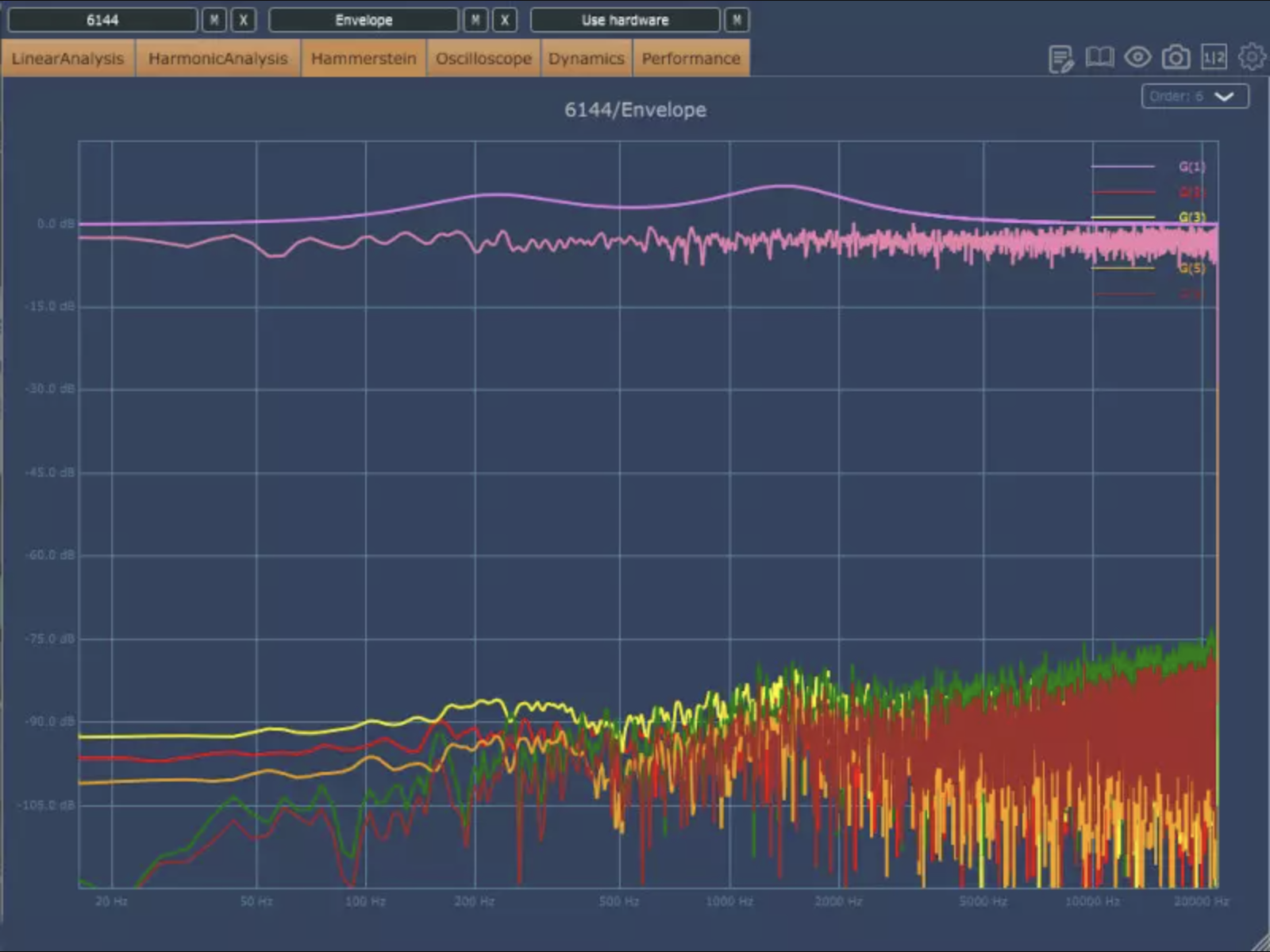
Plugin Doctor, a Plugin Analyzer for VST and AU Plugins
Plugin Doctor is a diagnostic tool, therefor not needed by 99.999% of podcasters. I haven’t used this plugin yet but it has a reputation for being incredibly handy for analyzing exactly how individual plugins are affecting the audio that passes through them.
From their website: Plugindoctor fills a longstanding gap in the market: a cross-platform and cross-bitformat plugin analyzer for VST and AU plugins. Whether you are a plugin developer yourself who wants to thoroughly test the audio quality of your latest and greatest product, or a power user who wants to understand in more detail what exactly a specific plugin is doing to your precious audio material, Plugindoctor will help you find out!
Want to receive the Daily Goody in your email, daily or weekly? Subscribe free here.
And please keep in mind, the Daily Goody is only a tiny little tip, fact or lesson everyday. Please don’t expect any of these posts to be long, earth-shattering masterpieces that instantly answer every single question you can think of and completely transform you into a world class podcast engineer. “Little by little, a little becomes a lot.”
-
Eight Fat Nuggets – PES 233
I overview 8 podcast production tips and techniques from recent Daily Goody posts Sep. 20 – Oct. 4, 2021 (see list below). You can sign up to receive Daily Goody’s in your email every day or a weekly roundup. Sign up here.
Daily Goody posts that I discussed in this episode:
- Reduce Editing Time With Better Recording Habits
- Referencing Your Old Episodes to Evaluate the Sound
- Earning Over $100k Producing Podcasts From Home
- Audio Production Fundamentals
- Apollo x4 Audio Interface
- How Podcasters Can Receive Crypto From Listeners (PES 226)
- Sound Absorbing Items in Your Recording Space
- Gullfoss Master
NOTE: In post-production I processed my voice (recorded on a Shure SM7b into a Sound Devices MixPre-6 first gen.) using the following plugins (in this order):
- Fabfilter Pro-G (gate)
- BB N105 channel strip (for saturation and EQ)
- Abbey Road RS124 (compressor)
- Aquamarine 4 (compressor)
Other Notes:
- If you ever have questions please reach out!
- The start date for the next PES semester is April 19, 2022! (fyi, the course is delivered once per quarter)
- If you’d like to share this show with any of your podcaster friends, feel free to send them a message saying, “Btw, here’s a show about podcast audio production you may find helpful” with this link: https://podcastengineeringschool.com/subscribe/)
Let me know if you have any questions or need any help with anything,
~Chris -
I Love This: Morbid Podcast Mixes Their Ads a Bit Lower in Volume
I recently discovered the Morbid podcast and I really like it.
As a podcast producer, one detail of their show caught my ear and made me SO HAPPY —> The ads in their episodes are reduced in volume slightly compared to the main audio!
In many podcasts the ads are actually LOUDER than the hosts voices, which is very annoying and ruins the vibe.
But in Morbid the ads are nicely lower in volume; you can still hear the ad but it’s not nearly as annoying as most podcasts.
Big Thanks to Morbid for taking their listeners into consideration!
Of course there’s always a chance that they’re doing this by accident, but I’ve heard it in 10+ episodes so I’m thinking it must be intentional.
Tell me your thoughts on this below!
Want to receive the Daily Goody in your email, daily or weekly? Subscribe free here.
And please keep in mind, the Daily Goody is only a tiny little tip, fact or lesson everyday. Please don’t expect any of these posts to be long, earth-shattering masterpieces that instantly answer every single question you can think of and completely transform you into a world class podcast engineer. “Little by little, a little becomes a lot.”
-
Tips for Pitching Yourself To Be a Guest on Other Podcasts
An old friend just asked me for tips for pitching himself to be a guest on other podcasts.
I responded…
*But first – do you have any additional advice to add?? Comment below.
Tips for Pitching Yourself To Be a Guest on Other Podcasts:
OK, here are a few ideas for when you initially approach them…
- If you can listen to a bit of their show before approaching them, that’s optimal. Then you can open communication with them by complimenting their show with one or two specific compliments. Maybe say something like, “The episode you did with Joe Guest two months ago was particularly excellent.” And/or, “Your audio quality is great compared to other podcasts.” Etc.
- Offer yourself as a guest and list 4-5 relevant topics that you could discuss with them that may be valuable to their listeners.
- Mention that you will be happy to share and promote the episode with all of your audiences.
- State that you already have a good audio setup. (And if you don’t yet have a good audio setup, get one!)
- Also, having a flexible schedule with lots of availability would be great to mention, if that’s true.
If you are a good fit for their show and provide all this info, your chances of getting booked are very high.
Also, another key is to reach out to as many shows as possible. Don’t just try for 2-3 shows; go for like 20-30 shows at least, if there are that many shows in your specific genre.
Hope this helps!
Want to receive the Daily Goody in your email, daily or weekly? Subscribe free here.
And please keep in mind, the Daily Goody is only a tiny little tip, fact or lesson everyday. Please don’t expect any of these posts to be long, earth-shattering masterpieces that instantly answer every single question you can think of and completely transform you into a world class podcast engineer. “Little by little, a little becomes a lot.”
-
Audio Normalization
NOTE: Full definition below. But in short…
Loudness normalization sets an audio file to a certain LUFS (perceived loudness) level. Peak normalization sets the peak level of an audio file to a certain dB level, and is much less useful in podcast production in my experience.
There are two places in podcast post-production where you want to use Loudness normalization:
- On individual tracks before the mixing phase (to make sure everyone’s raw tracks are the same exact LUFS level before you begin using plugins and processors, etc.)
- On the final episode mix in the mastering phase (to make sure the final episode adhere’s to the unofficial loudness standards of podcasting)
And here’s a good definition of Audio Normalization from Wikipedia:
Audio normalization is the application of a constant amount of gain to an audio recording to bring the amplitude to a target level (the norm). Because the same amount of gain is applied across the entire recording, the signal-to-noise ratio and relative dynamics are unchanged. Normalization is one of the functions commonly provided by a digital audio workstation.
Two principal types of audio normalization exist. Peak normalization adjusts the recording based on the highest signal level present in the recording. Loudness normalization adjusts the recording based on perceived loudness.
Normalization differs from dynamic range compression, which applies varying levels of gain over a recording to fit the level within a minimum and maximum range. Normalization adjusts the gain by a constant value across the entire recording.
Want to receive the Daily Goody in your email, daily or weekly? Subscribe free here.
And please keep in mind, the Daily Goody is only a tiny little tip, fact or lesson everyday. Please don’t expect any of these posts to be long, earth-shattering masterpieces that instantly answer every single question you can think of and completely transform you into a world class podcast engineer. “Little by little, a little becomes a lot.”
-

Bleeping Curse Words
If a podcast participant uses a curse word and you’d like to remove it, there are several ways to accomplish this:
- Delete the word entirely. (Unfortunately the resulting audio usually sounds very weird, unnatural and/or distracting to the listeners.)
- Replace the word with another piece of audio, usually a 1 kHz tone or another sound effect like a horn, etc. (Note that the 1kHz tone is the familiar “bleep” sound that you’ve heard throughout your life on radio and TV, etc.)
- Highlight the word and reverse it, so the word sh*t would then sound like tish. (This is a very effective method.)
What other methods are there to save the listener from hearing curse words?
Also, this post brings to mind the classic Barry clip, “Profanities left, profanities right!“
Want to receive the Daily Goody in your email, daily or weekly? Subscribe free here.
And please keep in mind, the Daily Goody is only a tiny little tip, fact or lesson everyday. Please don’t expect any of these posts to be long, earth-shattering masterpieces that instantly answer every single question you can think of and completely transform you into a world class podcast engineer. “Little by little, a little becomes a lot.”