Your cart is currently empty!
Author: Chris Curran
-
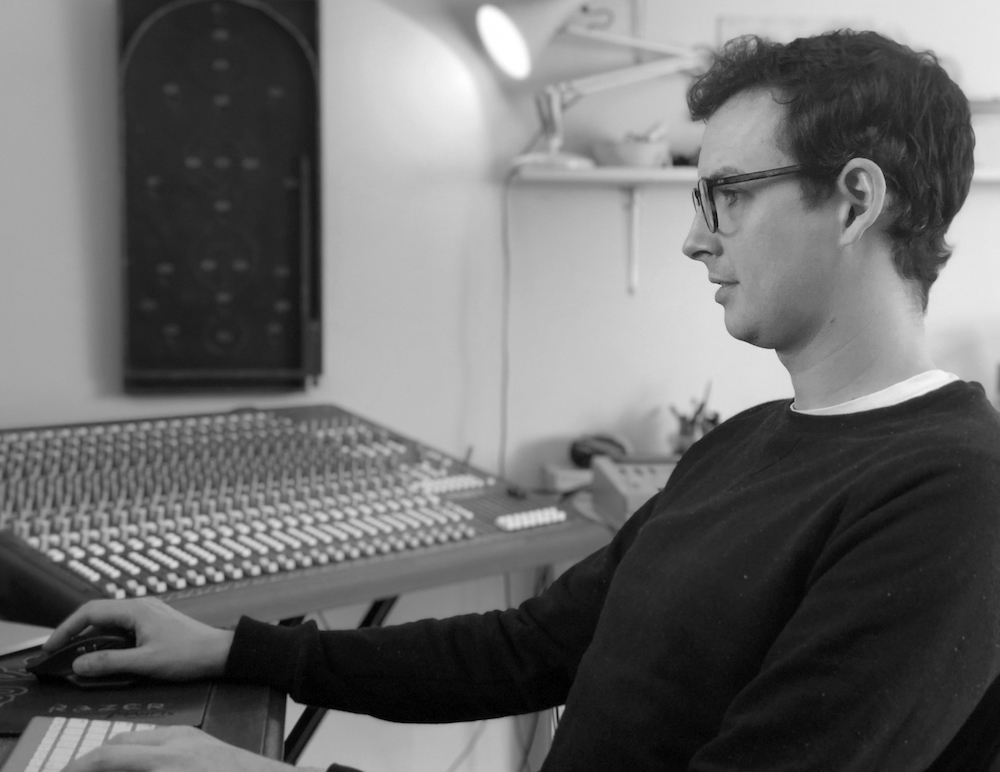
Harry Morton, Podcast Producer – PES 198
About the Guest
My guest is Harry Morton – podcast producer and founder of Lower Street.
We discussed podcast audio production in-depth including these topics:
- AKG C414 microphone
- Bunch of AT835b mics
- SM57/58’s of course
- AKG lavalier mic
- Sound Devices Mix-Pre 6
- Zoom H4n
- An old Allen & Heath 16 channel mixer for music
- MacBook Pro
- Pair of Yamaha HS8s monitors
- ATR2100 mic
- Squadcast
- Marantz PMD recorder
- ProTools
- 3rd party Plugins:
- Fabfilter: Compressor, EQ
- Waves: Vocal Rider, L3 for mastering
- iZotope RX7: De-noise, De-reverb, De-plosive
- Generates MP3 mixes straight out of ProTools, Stereo 128kbps
- Transistor for media hosting
- Descript – he loves it
- Getting back into producing music: SH01A synthesizer, Drum machine, modular synthesis, JAMUARY!!!
Please comment below with any questions or comments.
And THANKS for being a great guest, Harry!
-
What is Dynamic Range Processing?
 When finalizing podcast episode audio, Dynamic Range Processing is more important than overall loudness.
Georg and Thomas from Auphonic wrote an excellent blog post explaining this thoroughly.
From their article:
If listeners find themselves using the volume up and down buttons a lot, level differences within your podcast or audio file are too big.
In this article, we are discussing why audio dynamic range processing (or leveling) is more important than loudness normalization, why it depends on factors like the listening environment and the individual character of the content, and why the loudness range descriptor (LRA) is only reliable for speech programs.Were you aware of Dynamic Range Processing? If so, where do your final episodes end up in terms of Loudness Range (LRA)?
I use sufficient compression when mixing episodes so that the LRA ends up in a range that I like, meaning I don’t rely on any automated mastering processing (like Auphonic) to compress the audio into the desired range. *Though there’s nothing wrong with relying on Auphonic or other software to do this! 😉
My episodes usually end up in the 4.8 to 6.3 LRA loudness range, though my last few episodes came in at around 7.8 +/- (not yet sure why).
Want to receive the Daily Goody in your email, daily or weekly? Subscribe free here.
And please keep in mind, the Daily Goody is only a tiny little tip, fact or lesson everyday. Please don’t expect any of these posts to be long, earth-shattering masterpieces that instantly answer every single question you can think of and completely transform you into a world class podcast engineer. “Little by little, a little becomes a lot.”
.
-
NEW Course Announced! “Getting New Clients at Higher Rates”

I have created a course to help independent podcast editors and producers earn more money by getting new clients and charging them higher rates.
Course details here —> Getting New Clients at Higher Rates
PLUS, as part of the course you’ll get access to the New Client Challenge to help escort you (aka kick your butt) into massive action!
If you’re not sure how to find new clients, charge more and earn a great living as a podcast producer/editor, this course is for you!
Over the past 9 years I’ve personally had a lot of success producing podcasts for high-end clients, and I’m psyched to help other editors/producers tap into the HUGE numbers of companies that are ready to start podcasts and NEED a professional like you!
Also, can you think of an editor/producer who wants more podcasting clients? Consider sharing this post with them.
Want to receive the Daily Goody in your email, daily or weekly? Subscribe free here.
And please keep in mind, the Daily Goody is only a tiny little tip, fact or lesson everyday. Please don’t expect any of these posts to be long, earth-shattering masterpieces that instantly answer every single question you can think of and completely transform you into a world class podcast engineer. “Little by little, a little becomes a lot.”
.
-
Specializing in Producing/Editing Podcasts in a Specific Niche
One way of growing a podcast production business is to focus on producing/editing podcasts in a specific niche. This makes it possible to become the go-to production person in that niche, enables you to have more fun if you already love that niche, and allows you to learn lots of niche-specific knowledge that can be helpful to future clients in that niche (and this specialized knowledge allows you to raise your rates from time to time because you’re able to offer more value).
Of course this doesn’t mean that you automatically have to reject any and all potential clients who are not in that niche, because if you’re just beginning to grow your podcast production business you may have to bring on clients just to survive. But if/when you become very busy in that niche and known in that niche, it should be possible to pass on clients who don’t fit your focus.
So, what niche would you choose, if you were going to narrow your focus?
Want to receive the Daily Goody in your email, daily or weekly? Subscribe free here.
And please keep in mind, the Daily Goody is only a tiny little tip, fact or lesson everyday. Please don’t expect any of these posts to be long, earth-shattering masterpieces that instantly answer every single question you can think of and completely transform you into a world class podcast engineer. “Little by little, a little becomes a lot.”
.
-
Chris’s Goody Bag – PES 197
I overview recent Daily Goody‘s from July 3 – July 16 (see list below). Don’t forget you can sign up to receive Daily Goody’s in your email every day or a weekly roundup. Sign up here.
Here are the Daily Goody posts that were discussed in this episode:
- Listen to Your Own Podcast in All These Places Because…
- I WANT THIS MIC SO BAD! AEA KU5A Hypercardioid Ribbon Microphone
- Studio Monitor Placement
- El Rey, Compressor Plugin
- Forgetting to Press Record
- How to Use a Multiband Compressor to Remove Plosives
- Crossfading When Editing Audio
- Podcast Producers Being Credited at the End of Their Clients’ Episodes
- Podcast Gym website by Andy Wang, Host of Inspired Money
- Listen Very Carefully to Two of Your Favorite Songs and…
Announcements:
- I launched a new smaller course for independent podcast editors and producers!: Getting New Clients at Higher Rates! The pre-launch pricing is incredible and never to be seen again. * Launching October 1 * PRE-ORDER NOW
- The start date for the next PES semester is January 12, 2021.
- If you’d like to share this show with any of your podcaster friends, feel free to send them a message saying, “Btw, here’s a show about podcast audio production you may find helpful” with this link: https://podcastengineeringschool.com/subscribe/
What did you learn in this episode?
Comment below 😉
.
-
Which App Do You Use To Tag Your Final Episode MP3’s? I Use…
Which app do you use to tag your final episode MP3 files?
For my clients I use the very popular ID3 Editor. For my show I use Fission to create and tag my final M4A file (Yes, I publish M4A files, which btw Libsyn automatically re-encodes to MP3 for distribution to the few platforms that don’t accept M4A files).
Which app do you use? Some folks use other apps like Auphonic, Hindenburg, and more — AND SOME FOLKS don’t believe it’s necessary to tag MP3 files AT ALL (!).
Do you believe in NOT tagging MP3 files? Please share your opinion in the comments below.
Want to receive the Daily Goody in your email, daily or weekly? Subscribe free here.
And please keep in mind, the Daily Goody is only a tiny little tip, fact or lesson everyday. Please don’t expect any of these posts to be long, earth-shattering masterpieces that instantly answer every single question you can think of and completely transform you into a world class podcast engineer. “Little by little, a little becomes a lot.”
.
-
The Main Thing Podcast Editors Are Using Descript For:
Removing umms and ahhs. That’s it.
In a recent livestream featuring Bryan Entzminger I learned about lots of different functionality within Descript, but when I asked Bryan and Steve Stewart exactly what they were using Descript for, they both said that removing umms and ahhs is the only thing they do there…. mostly because all other Descript functionality is either unnecessary or unreliable.
What do you do in Descript?
Want to receive the Daily Goody in your email, daily or weekly? Subscribe free here.
And please keep in mind, the Daily Goody is only a tiny little tip, fact or lesson everyday. Please don’t expect any of these posts to be long, earth-shattering masterpieces that instantly answer every single question you can think of and completely transform you into a world class podcast engineer. “Little by little, a little becomes a lot.”
.
-
Sonarworks’ latest ebook, Get the Most from Mixing on Headphones
This eBook is free to download and has LOTS of great information about mixing on headphones including:
- Closed-Back vs Open-Back
- Frequency Response
- Stereo Imaging
- Ear Fatigue
- Translation to Speakers
- Benefits and Limitations
- Tips, Tricks, and Techniques for Mixing on Headphones
Here’s the link to the PDF.
Comment below if this was helpful to you.
Want to receive the Daily Goody in your email, daily or weekly? Subscribe free here.
And please keep in mind, the Daily Goody is only a tiny little tip, fact or lesson everyday. Please don’t expect any of these posts to be long, earth-shattering masterpieces that instantly answer every single question you can think of and completely transform you into a world class podcast engineer. “Little by little, a little becomes a lot.”
.
-
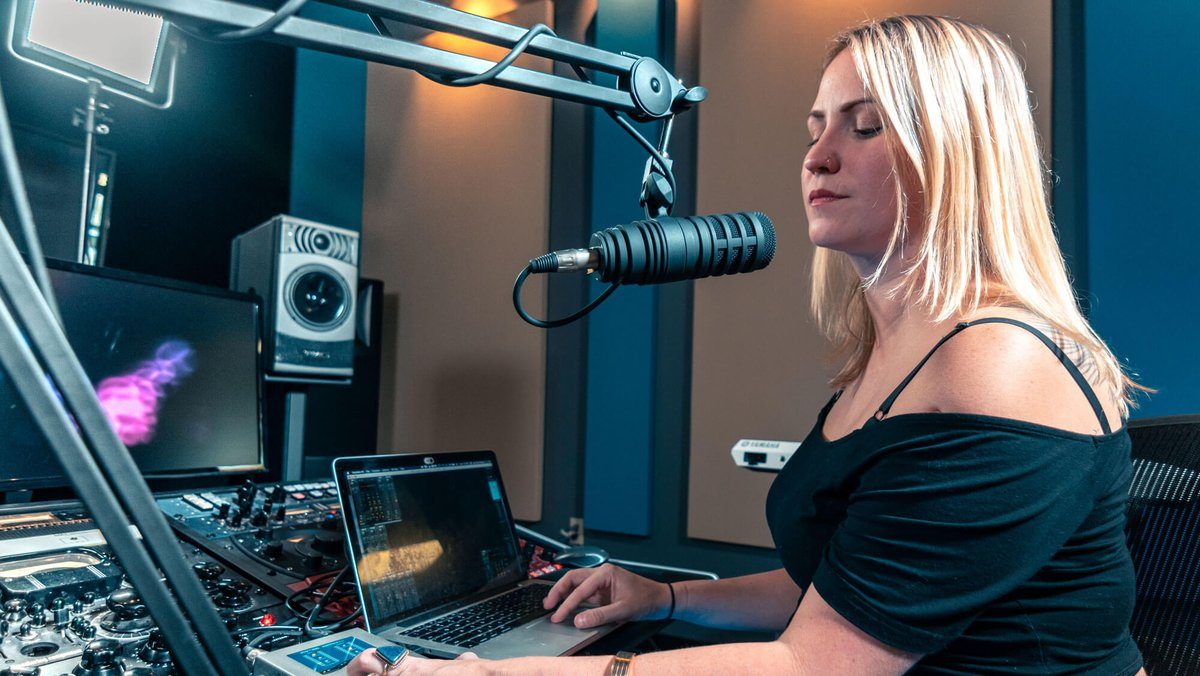
Jeni Wren Stottrup: Podcast Producer and Coach – PES 196
My guest is Jeni Wren Stottrup! She is a Podcast Producer and Coach, and Owner of Gritty Birds Podcasting. Her expertise includes multimedia journalism, audio production, content production, and she’s a vocalist and songwriter.
We discussed podcast audio production in depth, including:
- Scoring and sound design
- Tape Sync – bring her equipment to record someone at their location
- Shure Beta 87a
- RME Babyface Pro
- Macbook Pro, 1 TB SSD
- Adobe Audition
- Hindenburg Journalist Pro
- iZotope RX 7
- Shure SM7b
- Cloudlifter
- Audio Technica BP40
- Shure MV88+
- Condenser attached to iPhone
- Compression
- De-reverb
- Editing in Hindenburg: Umms, long pauses, crossfading
Comment below with any questions or comments.
And THANKS for being a great guest, Jeni!
.
-
New in Zoom: High Fidelity Audio Mode

If you use Zoom to record podcast audio then you should DEFINITELY use this new “mode” to capture the best quality audio possible.
From this New and enhanced features announcement from Zoom:
High Fidelity Audio mode: This option in Advanced Audio enhances “Original Audio” mode, allowing for disabling echo cancellation & post-processing, while raising audio codec quality to 48Khz, 96Kbps mono/192kbps stereo for professional audio transmission in music education and performance applications. Professional audio interface, microphone, and headphones required.
Have you tried this yet? Does it sound better?
Want to receive the Daily Goody in your email, daily or weekly? Subscribe free here.
And please keep in mind, the Daily Goody is only a tiny little tip, fact or lesson everyday. Please don’t expect any of these posts to be long, earth-shattering masterpieces that instantly answer every single question you can think of and completely transform you into a world class podcast engineer. “Little by little, a little becomes a lot.”
.
-
Zencastr Video Beta Has Launched!
Zencastr Video Beta has launched! Check out the details here.
Zencastr is one of the few remote recording apps that are Top Quality for recording remote podcast guests. I’ve been using it for many years and now I’m psyched to try it their video recording capabilities!
Have you recorded any video sessions with it yet? Do tell in the comments.
Want to receive the Daily Goody in your email, daily or weekly? Subscribe free here.
And please keep in mind, the Daily Goody is only a tiny little tip, fact or lesson everyday. Please don’t expect any of these posts to be long, earth-shattering masterpieces that instantly answer every single question you can think of and completely transform you into a world class podcast engineer. “Little by little, a little becomes a lot.”
.
-
iZotope RX 8 Just Released – The Complete Audio Repair Toolkit!

I’ve been using RX for many years and it’s invaluable for fixing bad podcast audio. In RX 8 they’ve added Spectral Recovery which recovers and restores band-limited spoken audio, as in bad sounding audio from Zoom, Skype, etc.
RX has long been the go-to audio repair and polishing suite for film, television, music, podcasts, video games, sample libraries, and more. With RX 8, they’ve created new tools and improved beloved modules to help you accomplish more in less time than ever.
What’s new in RX 8: (video here)
Spectral Recovery to restore discarded frequencies in speech from compressed file formats, live-streams or remote calls. The all-new Wow & Flutter module to fix pitch aberrations in music recordings. Guitar De-noise to control squeaks, buzz and pick sounds from guitar recordings.
An even more powerful Music Rebalance for stem separation and mix tweaking.I’m going to upgrade to RX 8 because I love their software and I use it everyday, and especially for the Spectral Recovery module!
Want to receive the Daily Goody in your email, daily or weekly? Subscribe free here.
And please keep in mind, the Daily Goody is only a tiny little tip, fact or lesson everyday. Please don’t expect any of these posts to be long, earth-shattering masterpieces that instantly answer every single question you can think of and completely transform you into a world class podcast engineer. “Little by little, a little becomes a lot.”
.
-
Into the Goody Bag – PES 195
I overview recent Daily Goody‘s from June 19 – July 2 (see list below). Don’t forget you can sign up to receive Daily Goody’s in your email every day or a weekly roundup. Sign up here.
Here are the Daily Goody posts that we discussed in this episode:
- BEWARE of This Nonsensical Squadcast “Feature” Every Time a Participant Drops off a Session
- Keyboard Typing “Thumps” Coming Through the Mic
- Riverside.fm Records Audio and Video Locally for Each Participant
- Avoid Constantly Saying “Mm-Hmm” or “Uh-Huh”
- Finishing a Mix the Next Day If Your Ears Are Getting Too Fatigued
- Do You Leave Any Blank Space at the End of Episodes?
- Waves WLM Plus Loudness Meter
- NPR’s Signature Sound
- [VIDEO] Podcast Episode Post-Production: Dan Hughley of Focusrite on The Podcast Engineering Show Ep.186
Announcements:
- The start date for the next PES semester is September 15, 2020 and the next semester after that starts in January 2021.
- If you’d like to share this show with any of your podcaster friends, feel free to send them a message saying, “Btw, here’s a show about podcast audio production you may find helpful” with this link: https://podcastengineeringschool.com/subscribe/
What did you learn in this episode?
Comment below 😉
-
Harsh Critique of a Particular Episode of a Famous Podcast
Recently I struggled through an episode of an extremely popular podcast, which I shall not name, and this was BY FAR the worst podcast listening experience I’ve ever had. Ever. By far. (btw, the show is no longer publishing episodes)
The host, who is famous, is someone whose expertise I really appreciate and I find value in almost every single piece of content he puts out.
I’m posting my evaluation below for the purpose of helping all podcasters produce good audio.
NOTE: The episode switches back and forth between the “announcer guy” and the host (famous person).
Here are my observations and professional opinions: (feel free to comment below)
- The announcer guy’s voice was WAY louder than the hosts voice. This is a major issue which causes listeners to “ride the volume knob” in order to be able to hear everything. But after a while listeners get tired of having to do all that work and they just turn it off.
- The hosts parts were recorded in a reverby conference room and the audio quality was OK/barely passable.
- There were LOTS of loud distracting thuds and table noises. Nasty and jolting.
- Some participants in the room were asking the host questions but they sounded like they were 50 feet away; you could barely hear them, if at all. Sometimes the host would answer one of their questions with a one word answer, but since you couldn’t hear the question his answer made no sense. This was very annoying.
- The announcer guy had ZERO energy and didn’t sound like he cared; his recording was full of loud distorted plosives;” and he had that “lazy millennial voice vocal fry.”
- At one point the announcer guy abruptly broke in while the host was speaking with a VERY loud “Psssssst…,” which literally scared the bejesus out of me! The reason he broke in was to ask listeners to send in takeaways from this episode so the host could use them as content on his social media. This is a great example of a show/host doing something that is good for themselves in the name of “engagement” but in the process annoys 95% of the listeners. Annoying on two levels – interrupting the episode as well as milking the audience for more content for the host to use.
- At another time the announcer guy asked the audience, “What is your favorite podcast platform?” and, “What platform are you listening on right now?” Again, I think this annoyed me because they are blatantly just doing market research on the air when they should be just doing a show. And before asking this, the announcer guy literally said that he could ALREADY get this info by looking at the shows analytics but nevertheless he wanted to hear from you – implying that, “We are too lazy to look up the answer so we need you, the listeners, to do our work for us.”
- Over the course of this 27 minute episode the announcer guy mentioned three times that he’s been working with the host for 5-6 years. OK, we get it, and no one cares.
I mean no disrespect with this critique. I’m simply making professional observations which could potentially help many people’s podcasts sound better and be much more enjoyable for the listeners.
In a perfect world I would like to post a link to the episode for you to hear for yourself, but I don’t want to get into any drama with anyone at that show. And I would LOVE to be able to approach them and offer to help them avoid and solve all their audio issues, but we all know, “No good deed goes unpunished.”
Want to receive the Daily Goody in your email, daily or weekly? Subscribe free here.
And please keep in mind, the Daily Goody is only a tiny little tip, fact or lesson everyday. Please don’t expect any of these posts to be long, earth-shattering masterpieces that instantly answer every single question you can think of and completely transform you into a world class podcast engineer. “Little by little, a little becomes a lot.”
.
-
Ground Loop Hum Eliminator
If you’re hearing any electrical hum in your audio you may want to check out this ground loop hum eliminator: Ebtech Hum X Ground Line Voltage Filter
I haven’t used this product but it has excellent reviews from many industry professionals.
Want to receive the Daily Goody in your email, daily or weekly? Subscribe free here.
And please keep in mind, the Daily Goody is only a tiny little tip, fact or lesson everyday. Please don’t expect any of these posts to be long, earth-shattering masterpieces that instantly answer every single question you can think of and completely transform you into a world class podcast engineer. “Little by little, a little becomes a lot.”
.
-
True Peace of Mind for the Podcast Editor/Producer/Engineer
The vast majority of podcast episodes, once published, will be available to the public for many, many years into the future.
Therefor, when a podcast editor, producer or engineer is careful enough and professional enough to produce very good sounding audio, he or she can sleep well at night knowing that Every Single Listener who hears that audio in the years to come is guaranteed to have an excellent listening experience and be able to enjoy the content without being distracted or annoyed by bad audio quality.
I believe audio production is important and influential.
Want to receive the Daily Goody in your email, daily or weekly? Subscribe free here.
And please keep in mind, the Daily Goody is only a tiny little tip, fact or lesson everyday. Please don’t expect any of these posts to be long, earth-shattering masterpieces that instantly answer every single question you can think of and completely transform you into a world class podcast engineer. “Little by little, a little becomes a lot.”
.
-

Drew DeVore: Podcast Producer and Audio Engineer for Jupiter Broadcasting – PES 194
My guest is Drew DeVore – podcast host, producer and audio engineer for Jupiter Broadcasting. Here are the podcasts he hosts: Linux Headlines, Linux Unplugged, Self Hosted, and Jupiter Extras.
We discussed a ton including:
- Interfaces/Mixers: Behringer X32, Focusrite Scarlett (couple different models and generations), Zoom H5, U22, Mackie Onyx Artist interface
- Records dry, adds effects later
- Mics: RE20, RE320 (didn’t prefer it), MXL990, Sennheiser MD46
- All recording into Linux-based computers. Less audio proficient hosts use Audacity, more proficient (myself, studio, couple of other hosts) use Reaper.
- Headphones: Typically records with AT M40x closed back, mixes with ATH-AD700.
- Restores audio using a mix of software depending on what’s wrong, and usually contains a mix of iZotope RX7 Advanced and Acon Digital products
- iZotope RX7 Advanced
- Reaper
- Mixing and effects done “in the box” while editing
- Host Track Mixing – Compression, EQ, De-ess
- Master Bus Mixing – Glue compression, Limiting
- Mastering – FabFilter Pro-Q3, Pro-MB, Saturn 2, and Pro-L2
- iZotope Ozone 9
- Dynamic EQ in Fabfilter Pro-Q 3
- ALL Fabfilter plugins including Pro-MB, Saturn and the rest!
- Master’s episodes in a new session
- Automation system for publishing: Render to FLAC, Upload FLAC to castablasta which generates various copies of it, MP3 goes to Fireside, Version goes to Youtube.
Comment below with any questions or comments.
And THANKS for being a great guest, Drew!
.
-
Mastering Plugins I Like
FYI, you may want to check out my recent post titled Top 10 Audio Plugins for Podcast Production where I discuss my favorite plugins for various types of processing.
For my mastering step I like using:
Aquamarine 4 dual-stage compressor from Acustica — every episode. Unbelievably good quality.
Ozone 9 from iZotope — a suite of mastering plugins that includes MANY different processors. See the full list here.
Sometimes I use:
Abbey Road TG Mastering Chain from Waves — includes compressor/limiter, EQ, Tome module, Filter module, Stereo/Duo/MS processing modes, and more.
Various Fabfilter plugins — usually Saturn 2 for saturation and/or the Pro-MB multiband compressor to control the overall dynamics a bit more.
*Don’t forget, you can use ANY plugin in your mastering step, as long as it sounds good!
Want to receive the Daily Goody in your email, daily or weekly? Subscribe free here.
And please keep in mind, the Daily Goody is only a tiny little tip, fact or lesson everyday. Please don’t expect any of these posts to be long, earth-shattering masterpieces that instantly answer every single question you can think of and completely transform you into a world class podcast engineer. “Little by little, a little becomes a lot.”
.
-
Non-Destructive Audio Editing
Most audio software performs non-destructive edits which means that your source audio files are never modified or “destroyed.” For instance, in Reaper you can delete sections of audio, process tracks and clips, move audio around — but the raw source files are never touched or changed. Non-destructive editing is wonderful because if/when you want to reverse your editing decisions at a later time, you can, easily.
Destructive editing software actually modifies (“destroys”) your source audio files so that you can NEVER go back and recover any audio that you deleted or modified. Audacity fits into this category, so be careful and ALWAYS back up your original recordings just in case.
Want to receive the Daily Goody in your email, daily or weekly? Subscribe free here.
And please keep in mind, the Daily Goody is only a tiny little tip, fact or lesson everyday. Please don’t expect any of these posts to be long, earth-shattering masterpieces that instantly answer every single question you can think of and completely transform you into a world class podcast engineer. “Little by little, a little becomes a lot.”
.