Your cart is currently empty!
Author: Chris Curran
-
If Your Recording Level is Really Low…

If your recording level is really low, you need to figure out how to boost the level so it’s recorded at strong healthy level.
To do this, follow the microphone signal through it’s entire journey from microphone to recorder and make sure the level is strong at each transition.
Your signal path may include some or all of these transitions: Microphone to preamp, to mixer, to interface, to computer input device (settings), and to recording software/hardware (settings).
Want to receive the Daily Goody in your email, daily or weekly? Subscribe free here.
And please keep in mind, the Daily Goody is only a tiny little tip, fact or lesson everyday. Please don’t expect any of these posts to be long, earth-shattering masterpieces that instantly answer every single question you can think of and completely transform you into a world class podcast engineer. “Little by little, a little becomes a lot.”
.
-
A Guest Who Can Record His/Her Own Audio Locally
It’s a HUGE help to a podcast producer when a guest records his/her own audio locally.
Usually this audio is the highest quality recording you can hope for – an uncompressed WAV file which hasn’t been degraded by traveling through the internet.
After the episode recording the guest can send the file via Dropbox, etc.
Beware though – there have been a few cases where the guest was recording locally but either the recording failed or they recorded all the participants on the same track! So in addition to a guests local recording you should ALWAYS record a “backup” track of their voice using an online recording service (Zencastr, Squadcast, etc.) and/or the hosts/producers local computer.
Want to receive the Daily Goody in your email, daily or weekly? Subscribe free here.
And please keep in mind, the Daily Goody is only a tiny little tip, fact or lesson everyday. Please don’t expect any of these posts to be long, earth-shattering masterpieces that instantly answer every single question you can think of and completely transform you into a world class podcast engineer. “Little by little, a little becomes a lot.”
.
-
Adobe Audition
Adobe Audition, formerly Cool Edit Pro, is a digital audio workstation (DAW) from Adobe Systems featuring both a multitrack, non-destructive mix/edit environment and a destructive-approach waveform editing view.
All the aspects of this software are very high quality. In fact, for podcasting this may be the overall highest quality production software available. In general, the built-in plugins/processors are better quality than those in other DAWs.
The only downside is the monthly fee, which you have to pay every month, forever, as long as you want to continue using the software, which will cost you $20.99 per month, or you can get it as part of Adobe’s Creative Cloud All Apps bundle.
Want to receive the Daily Goody in your email, daily or weekly? Subscribe free here.
And please keep in mind, the Daily Goody is only a tiny little tip, fact or lesson everyday. Please don’t expect any of these posts to be long, earth-shattering masterpieces that instantly answer every single question you can think of and completely transform you into a world class podcast engineer. “Little by little, a little becomes a lot.”
.
-
Chris’s Goody Bag – PES 148
Enjoy my brief overview of recent Daily Goody‘s (from July 19 – July 31). Here’s the link to view all those blog posts. And don’t forget that you can sign up to receive the Daily Goody in your email every day or once per week. Sign up here.
Here are the Daily Goody posts that we discussed in this episode:
- On-boarding New Clients
- A Related Audio Thought About Video Production
- Phantom Power
- Dust in Your Studio
- Saturation Knob from Softube (Free Plugin)
- The Positioning of Your Guests Headset Microphone
- Your Headphone Volume When Recording
- Vocal Rider from Waves
- Editing Out Distracting Noises
- The Vintage Tape Module in iZotope Ozone 8
- Podcast Editors: Choose Your Hours
- PES Graduates
- Frequency
Announcements:
- The start date for the next PES will be January 14, 2020
- Whoever is your best friend who podcasts, please share this show with them today. Tell them, “Hey – you should check out The Podcast Engineering Show.”
- Upcoming episodes: Tom Kelly, Andrew Chadwick, and Sarah Wendel!
Big Thanks to everyone who comments on the website Daily Goody posts!
I appreciate you listening, and if you have any questions please let me know 🙂
If you know anyone who would like to learn more about the technical production of podcasts, please share this show with them.
Punarmilāma!
.
-
Keeping Your Studio Uncluttered
Keeping your studio nice and tidy seems to have the effect of relaxing your mind.
Whereas if your studio is a complete mess with crap strewn about everywhere, you’re likely to carry a little extra stress in your mind.
True or false: When we clean up our physical environment, our mind is also cleared up a bit.
Want to receive the Daily Goody in your email, daily or weekly? Subscribe free here.
And please keep in mind, the Daily Goody is only a tiny little tip, fact or lesson everyday. Please don’t expect any of these posts to be long, earth-shattering masterpieces that instantly answer every single question you can think of and completely transform you into a world class podcast engineer. “Little by little, a little becomes a lot.”
.
-
Electro-Voice RE20 Microphone
The Electro-Voice RE20 microphone is extremely popular in radio studios.
It’s also one of the best podcasting microphones, but the $450 price tag puts it out of range of many podcasters.
I use an RE20 on my show and it’s a great sounding microphone on most people’s voices.
Want to receive the Daily Goody in your email, daily or weekly? Subscribe free here.
And please keep in mind, the Daily Goody is only a tiny little tip, fact or lesson everyday. Please don’t expect any of these posts to be long, earth-shattering masterpieces that instantly answer every single question you can think of and completely transform you into a world class podcast engineer. “Little by little, a little becomes a lot.”
.
-
Audio Sample Rate
The sample rate of audio describes how many digital “snapshots” (or samples) per second were taken of the original analog signal when converting that analog signal to digital.
The higher the sample rate, the more accurately the digital information represents the original analog signal. Higher sample rate equals higher resolution.
Standard sample rates are 44.1 kHz and 48 kHz.
Want to receive the Daily Goody in your email, daily or weekly? Subscribe free here.
And please keep in mind, the Daily Goody is only a tiny little tip, fact or lesson everyday. Please don’t expect any of these posts to be long, earth-shattering masterpieces that instantly answer every single question you can think of and completely transform you into a world class podcast engineer. “Little by little, a little becomes a lot.”
.
-
Private Slack Group for PES Students and Alumni
One of the most valuable benefits of attending Podcast Engineering School is being invited to the school’s official Slack group, which offers lifetime personal support to students and alumni.
Want to receive the Daily Goody in your email, daily or weekly? Subscribe free here.
And please keep in mind, the Daily Goody is only a tiny little tip, fact or lesson everyday. Please don’t expect any of these posts to be long, earth-shattering masterpieces that instantly answer every single question you can think of and completely transform you into a world class podcast engineer. “Little by little, a little becomes a lot.”
.
-
Being Profitable as a Podcast Producer/Editor
Being profitable as a podcast producer/editor comes down to making sure that the time you’re spending on client work is worth the net profit that you’re earning.
Be sure to do the math and evaluate your overall situation. #wisdom
And this also applies if you’re only producing your own show, though if your show I being used to market your business then tracking your profitability becomes extremely difficult or even impossible. And even if your show ends up costing you money, it may still be worth doing for many reasons.
Want to receive the Daily Goody in your email, daily or weekly? Subscribe free here.
And please keep in mind, the Daily Goody is only a tiny little tip, fact or lesson everyday. Please don’t expect any of these posts to be long, earth-shattering masterpieces that instantly answer every single question you can think of and completely transform you into a world class podcast engineer. “Little by little, a little becomes a lot.”
.
-
The Audio Controls Within Auphonic
Auphonic does many things, and regarding audio processing if you want to quickly level your audio and set its loudness Auphonic is a great tool to use.
Here are the parameters you can adjust with regards to audio processing:
- Adaptive Leveler (Set your Preset, Dynamic Range and Compressor)
- Loudness Normalization (Set your Loudness Target and Maximum Peak Level)
- Filtering (reduces very low frequencies)
- Noise and Hum Reduction
If you want to hear more about these parameters, consider listening to my interview with the founder of Auphonic, Georg Holzmann: Auphonic’s New Advanced Features, with Georg Holzmann – PES 108
Want to receive the Daily Goody in your email, daily or weekly? Subscribe free here.
And please keep in mind, the Daily Goody is only a tiny little tip, fact or lesson everyday. Please don’t expect any of these posts to be long, earth-shattering masterpieces that instantly answer every single question you can think of and completely transform you into a world class podcast engineer. “Little by little, a little becomes a lot.”
.
-
Friday the 13th Trivia
(From this article)
…the Fear is Very Real… So real that one scientific name wasn’t enough. The fear of Friday the 13th is also called friggatriskaidekaphobia or paraskevidekatriaphobia. Now say that 10 times really fast!
Friggatriskaidekaphobia comes from Frigg, the Norse goddess of wisdom after whom Friday is named, and the Greek words triskaideka, meaning 13, and phobia, meaning fear. Paraskevidekatriaphobia is also derived from Greek: paraskeví translates as Friday, and dekatria is another way of saying 13.
You have a nice day, now 🙂
Want to receive the Daily Goody in your email, daily or weekly? Subscribe free here.
And please keep in mind, the Daily Goody is only a tiny little tip, fact or lesson everyday. Please don’t expect any of these posts to be long, earth-shattering masterpieces that instantly answer every single question you can think of and completely transform you into a world class podcast engineer. “Little by little, a little becomes a lot.”
.
-
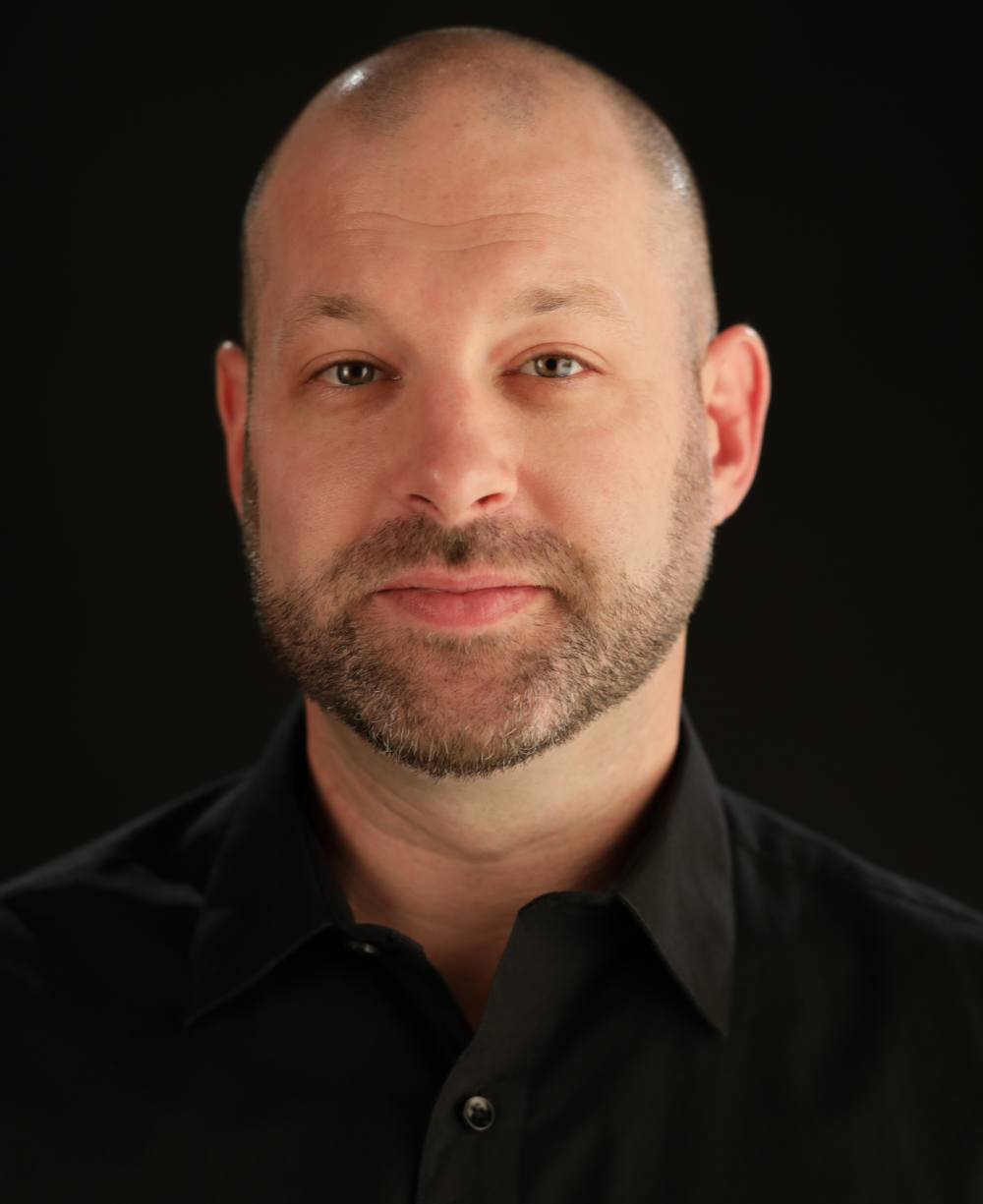
Scott Somerville – PES 147
My guest is Scott Somerville, audio engineer and podcast producer!

Here’s some of what we discussed in terms of Scott’s equipment, software, workflow, etc.:
- Wondery studio: Mac mini, UA Apollo 8 interface, Cloudlifter, RE20’s, Pro Tools. Plays theme song, adds a segment, edits it, mixes it, Art19 for hosting, etc.
- Headphones: Sony MDR7506
- Speakers: Genelec 1029 (powered) with 4” woofers
- Home – SM57, UA Apollo (2 inputs)
- Mobile – Macbook pro, Presonus interface, various mics
- Plugins: Waves SSL E and G channel strips, Waves F6 Floating-Band Dynamic EQ (adaptable in itself, vocal cleaner preset), Waves WLM+ to monitor levels
- iZotope RX: de-click, etc.
- Lots of automation
- He chimes in on the “Ask Eliza Anything” podcast
Thanks for being a great guest, Scott!
Comment below with any questions or comments.
.
-
Work off an External Hard Drive or Not?
First of all, it’s most common and usually best to have your audio applications installed on your internal hard drive.
With regards to where to store your audio and session files while you’re mixing, editing, etc., both internal and external hard drives will both function perfectly well.
Personally I keep all my audio and session files on an external hard drive because I believe this allows my internal hard drive to run my applications without having to simultaneously perform lots of reading/writing of audio and session data.
Want to receive the Daily Goody in your email, daily or weekly? Subscribe free here.
And please keep in mind, the Daily Goody is only a tiny little tip, fact or lesson everyday. Please don’t expect any of these posts to be long, earth-shattering masterpieces that instantly answer every single question you can think of and completely transform you into a world class podcast engineer. “Little by little, a little becomes a lot.”
.
-
Tweaking Your Standard Sound Each Episode
(Even if I have sent you your custom optimized Scheps Omni Channel settings for your particular voice…)
The reason you probably want to tweak your sound each episode is to better match up with your guests sound.
In general, if one speaker has lots of low end and the other has very little low end, they will sound extremely different and it will be more difficult to balance them to the same perceptual volume. The same goes for large differences in high frequency clarity between speakers.
So even though you have all the plugin settings dialed in and saved for your voice, you may want to tweak your sound a bit each episode to achieve a better mix between participants in each particular episode.
Want to receive the Daily Goody in your email, daily or weekly? Subscribe free here.
And please keep in mind, the Daily Goody is only a tiny little tip, fact or lesson everyday. Please don’t expect any of these posts to be long, earth-shattering masterpieces that instantly answer every single question you can think of and completely transform you into a world class podcast engineer. “Little by little, a little becomes a lot.”
.
-
Using a Large Diaphragm Condenser Mic Without a Pop Filter
Don’t do it, because large diaphragm condenser microphones are so sensitive that even mild plosives can distort the signal.
If you do have to record using a large diaphragm condenser mic without a pop filter, then make sure your plosives don’t hit the mic directly. This is done by angling the direction of your voice about 45 degrees off-axis from the mic, so that you’re kind of speaking past the mic instead of directly into it.
Here are some popular large diaphragm condenser microphones used for podcasting:
- Neumann TLM 102
- Neumann TLM 103
- Audio Technica AT2020
- RØDE NT1-A
- MXL 990
- Behringer C-1
- Samson C01
Want to receive the Daily Goody in your email, daily or weekly? Subscribe free here.
And please keep in mind, the Daily Goody is only a tiny little tip, fact or lesson everyday. Please don’t expect any of these posts to be long, earth-shattering masterpieces that instantly answer every single question you can think of and completely transform you into a world class podcast engineer. “Little by little, a little becomes a lot.”
.
-
A Guest With a Bad Mic Cable
An old or damaged microphone cable can add some pretty nasty crunchy sounds to your audio. It can also make the signal cut in and out, too.
A client of mine recently had a guest who had a bad mic cable and every time they moved their microphone or cable, there was MAJOR crunchy/scratchy noise in their signal. Luckily when the guest didn’t touch anything the signal was OK, and this is a common workaround which will usually allow you to record the session at hand without any problems.
But of course faulty cables should be replaced asap.
Want to receive the Daily Goody in your email, daily or weekly? Subscribe free here.
And please keep in mind, the Daily Goody is only a tiny little tip, fact or lesson everyday. Please don’t expect any of these posts to be long, earth-shattering masterpieces that instantly answer every single question you can think of and completely transform you into a world class podcast engineer. “Little by little, a little becomes a lot.”
.
-
Kramer Master Tape Plugin
The Kramer Master Tape plugin from Waves adds the richness and warmth of real tape saturation to your recordings.
Tape saturation is definitely not necessary for podcast production but it adds a nice touch.
Want to receive the Daily Goody in your email, daily or weekly? Subscribe free here.
And please keep in mind, the Daily Goody is only a tiny little tip, fact or lesson everyday. Please don’t expect any of these posts to be long, earth-shattering masterpieces that instantly answer every single question you can think of and completely transform you into a world class podcast engineer. “Little by little, a little becomes a lot.”
.
-
Optimal Height for Your Studio Monitors
Simply put, your monitors (speakers) should be at ear level. Not sitting on your desk pointed up at your head, and not way up near the ceiling pointed down at your head.
Also the two monitors and your head should make an equilateral triangle, being the same distance apart and also at a 60 degree angle from each other.
Want to receive the Daily Goody in your email, daily or weekly? Subscribe free here.
And please keep in mind, the Daily Goody is only a tiny little tip, fact or lesson everyday. Please don’t expect any of these posts to be long, earth-shattering masterpieces that instantly answer every single question you can think of and completely transform you into a world class podcast engineer. “Little by little, a little becomes a lot.”
.
-
Is the Blue Yeti a Good Mic for Podcasting?
I’d love to know your thoughts and opinion 😉
Want to receive the Daily Goody in your email, daily or weekly? Subscribe free here.
And please keep in mind, the Daily Goody is only a tiny little tip, fact or lesson everyday. Please don’t expect any of these posts to be long, earth-shattering masterpieces that instantly answer every single question you can think of and completely transform you into a world class podcast engineer. “Little by little, a little becomes a lot.”
.