Your cart is currently empty!
Author: Chris Curran
-
SiX – The Ultimate Desktop Mixer from Solid State Logic

This mixer is definitely overkill for almost all podcast applications, but it’s newsworthy because SSL makes some of the best music production mixing consoles and gear in the world and now they have a small mixer for around $1,500.
And it’s worth every penny due to the highest-level quality of all the components – mic pre’s, EQ’s, stereo compressor, etc. It’s in an entirely different league than every small mixer you’ve ever seen or heard of.
It is 100% analog; it has no USB output, so you would need a separate audio interface as well.
So, essentially it was not made for podcasting scenarios, but it definitely could be used for podcasting and live-streaming.
Want to receive the Daily Goody in your email, daily or weekly? Subscribe free here.
And please keep in mind, the Daily Goody is only a tiny little tip, fact or lesson everyday. Please don’t expect any of these posts to be long, earth-shattering masterpieces that instantly answer every single question you can think of and completely transform you into a world class podcast engineer. “Little by little, a little becomes a lot.”
.
-
Editing Words That Are Slurred Together
This is usually not easy.
The classic example is the infinitely-overused “And umm…,” which is usually pronounced, “Andumm” and it actually sound more like “Ann dumb.”
Try separating those two words. Have you ever tried that?
Sometimes people actually pause a TINY bit after “and” and before the “umm,” and this makes it easy to remove the umm.
But in most cases the two words are slurred together pretty well. For these cases, sometimes this works (and sometimes not): 1. Remove the umm, leaving as much of the D in “and” as you can. 2. Use a very quick fade at the very end of the D in the word “and.”
Sometimes this will sound natural enough. If not, you really have no choice but to leave the umm in there.
Want to receive the Daily Goody in your email, daily or weekly? Subscribe free here.
And please keep in mind, the Daily Goody is only a tiny little tip, fact or lesson everyday. Please don’t expect any of these posts to be long, earth-shattering masterpieces that instantly answer every single question you can think of and completely transform you into a world class podcast engineer. “Little by little, a little becomes a lot.”
.
-
NAB 2019 Recap and Chris’s Goody Bag – PES 126
Enjoy my brief overview of recent Daily Goody‘s (March 15 – 27). Here’s the link to view all those blog posts. And don’t forget that you can sign up to receive the Daily Goody in your email every day or once per week. Sign up here.
I also recapped my experience at NAB last week — see below.
Here are the Daily Goody posts that we discussed in this episode:
- Wavelength
- Headphone Amplifiers
- Temporary Podcast Studios at Events
- You Can’t Evaluate the Sound of a Microphone While You’re Speaking Into It
- What are Others Using for Hardware and Software?
- ERA Voice Leveler
- Need More Mic Gain: A Chat with Johan
- Accurately Hearing Low End vs. High End When…
- The Difficulty of Re-recording the Hosts Track
- Safe Peak Level for Final Episodes
- Finishing an Episode vs. Tweaking it Forever
- Publishing Episodes Immediately After They Are Recorded
- My Previous Studio Setup
Announcements:
- Enter to win a win a Focusrite Scarlett 2i2 here!: https://focusrite.com/Focusrite-Podcast-Engineering-School-Giveaway
- The next semester of PES starts June 25, 2019.
- Upcoming episodes: Carrie Caulfield, ‘Glenn the Geek’ Hebert, Shawn Kitchen, Nick Dunkerley, Evo Terra, Dan Radin, Adam Gordon Bell, and Travis Vengroff!
- Podnews – a daily briefing in your inbox every weekday about podcasting and on-demand.
My NAB Recap
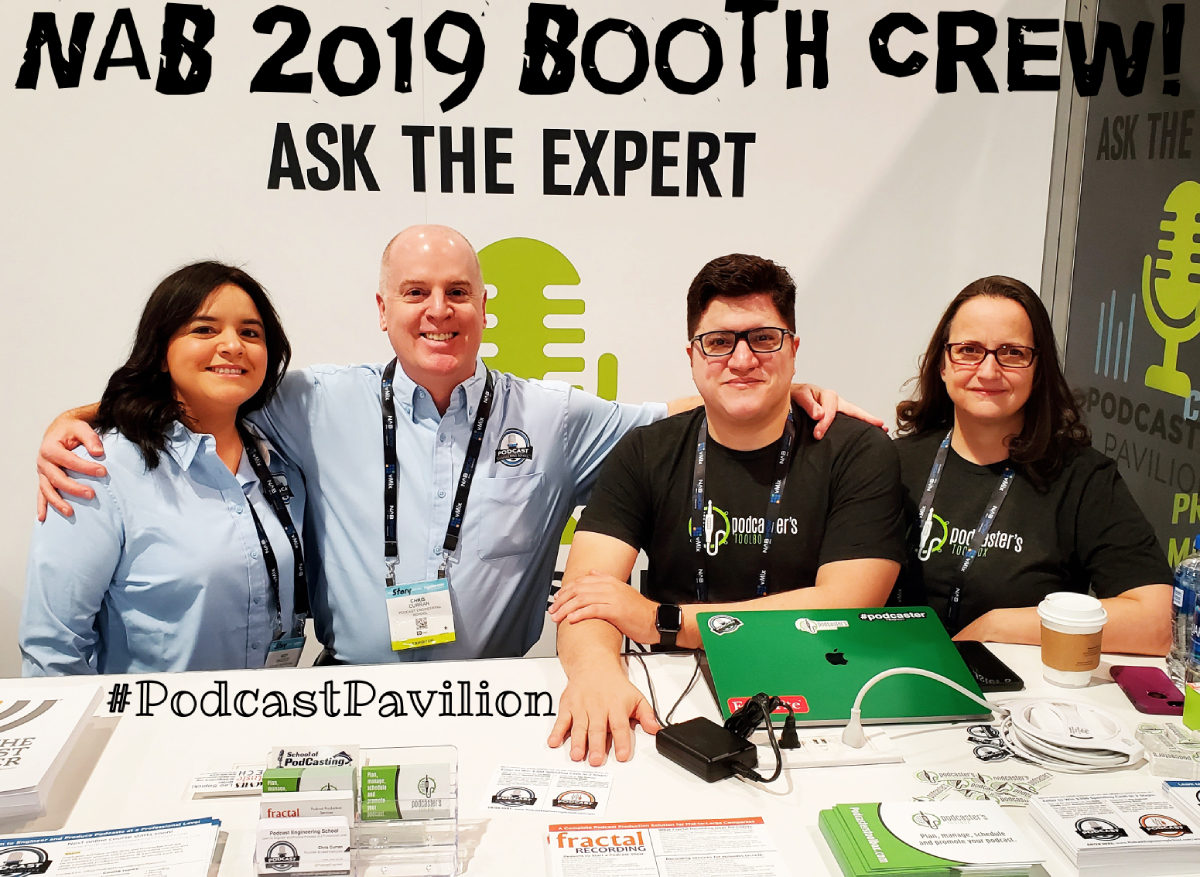
- My awesome booth mates at the Ask The Expert booth in the Podcast Pavilion area!:
- Addy Saucedo – The Podcast Planner. She also interviewed me for her Modern Vintage Radio podcast.
- Ralph and Carol Lynn Rivera – Podcaster’s Toolbox.
- Interesting: The podcast studio across the aisle. Condenser mics with no pop filters. Hmm.
- I met Brandon Gonzales in person! (my guest on episode 84)
- Dan Hughley from Focusrite interviewed me in their booth for their upcoming podcast.
- SSL – I met Fernando who lives in Denver. He let me mix for a bit on a Live console. I also saw the new SiX in person!
- Waves – I dropped by their booth.
- Dan Dugan Sound Design (my guest on episode 101) – dropped by his booth and thanked him in person for being my guest.
- Joel from Sound Devices.
- Michelle from Heil.
- Mark Bakos from Cleanfeed.
- Ira from Samson.
- Greg Laney from Apogee.
- Gina Clement from Gator. We discussed the Gator Frameworks GFW-MIC-0822 Telescoping Boom Mic Stand.
- Arielle Nissenblatt from EarBuds Podcast Collective.
- Ever Gonzalez in person! He’s the founder of The Outlier Podcast Festival, a traveling national event held in major cities across the U.S. *In Denver July 12-13!
- Zachary Davis from Sound Education, a conference for educational audio producers and listeners. October 10-12, 2019 at Harvard University.
- Audionamix, regarding the IDC: Instant Dialogue Cleaner plugin.
- Philipp Sonnleitner, CEO of Mikme!
- Soren Pederson, Sr. Product Specialist (Wired Microphone) at Shure.
- Sarah Logan Gregory – Host of the Emerging Infectious Diseases Podcast.
- Mark Ethier, CEO of iZotope!
- Rodger Cloud – He gave me a Cloudlifter!
- James Cridland from Podnews!
- Didn’t get to meet: Durin Gleaves from Adobe, and the RODE rep at the B&H booth.
I appreciate you listening, and if you have any questions please let me know 🙂
.
-
Subtleness of Transitions When Mixing
When an episode transitions from loud intro music to the announcer guy, then to the host of the show, then to the guest, to the commercial, etc., it’s best if you make these transitions feel seamless and smooth, or in other words, a non-distracting fluid manner.
You don’t want any aspects of the audio production to jump out and distract the listeners.
Now, sometimes you WANT something to jump out and get the listeners attention, but regular simple transitions are usually not in that category.
In simple interview episodes transitions should be prompt but not rushed – maintain a good flow to maintain the energy of the episode.
In storytelling episodes anything goes. Sometimes you want there to be 10 seconds of soft music for a slow deliberate transition. Or something fading in very slowly, etc.
Want to receive the Daily Goody in your email, daily or weekly? Subscribe free here.
And please keep in mind, the Daily Goody is only a tiny little tip, fact or lesson everyday. Please don’t expect any of these posts to be long, earth-shattering masterpieces that instantly answer every single question you can think of and completely transform you into a world class podcast engineer. “Little by little, a little becomes a lot.”
.
-
The TV in My Vegas Hotel Room Had No Low End
The sound coming out off the TV had only midrange and high frequencies. And you better believe I tried to find the settings to add the low end back in!
But why do some hotels purposefully remove the low frequencies from the TV speakers?
Because low frequencies travel through walls and could disturb people in neighboring rooms.
Some of the midrange frequencies can travel through the wall too, but most of them get absorbed by the walls, unlike the low frequencies which pretty much go right through walls sustaining only a bit of attenuation.
Want to receive the Daily Goody in your email, daily or weekly? Subscribe free here.
And please keep in mind, the Daily Goody is only a tiny little tip, fact or lesson everyday. Please don’t expect any of these posts to be long, earth-shattering masterpieces that instantly answer every single question you can think of and completely transform you into a world class podcast engineer. “Little by little, a little becomes a lot.”
.
-
Check Your Input and Output Devices Settings Every Time You…
…start or restart your computer.
Verify that the correct input and output devices are chosen.
Many of us have been burned by recording a session or episode and the WRONG microphone was being recorded. You may be speaking into an ATR2100 mic but your laptop mic was the mic being recorded, and when you find this out later you will be angry with how crappy it sounds.
Every time I restart my Mac, which is basically before and after every recording session, I check the input and output device settings, which for me the input device is my MixPre-6 and my output (virtual) device is Sonarworks Systemwide (which flattens the EQ on my studio monitors and headphones).
Checking your input device and output device settings is kinda like looking both ways before crossing the street. It’s best to do it every time.
Want to receive the Daily Goody in your email, daily or weekly? Subscribe free here.
And please keep in mind, the Daily Goody is only a tiny little tip, fact or lesson everyday. Please don’t expect any of these posts to be long, earth-shattering masterpieces that instantly answer every single question you can think of and completely transform you into a world class podcast engineer. “Little by little, a little becomes a lot.”
.
-
Don’t Expect Magic From Audio Processors
The moral of the story: Record good sounding audio. Period.
Recently I saw someone complain that Auphonic isn’t cleaning up their tracks well enough. It turns out his tracks were recorded at an extremely low level which means that the resolution of the recording and the signal to noise ratio were terrible. In addition, there was a lot of background noise and erroneous noises as well.
Reality check: If you take your bad sounding audio and feed it into ANY processor, you can’t expect it to magically fix all your mistakes and spit out a diamond.
If you aren’t able to record decent audio, THAT is the problem you need to fix first.
Decent audio means: High signal to noise ratio, which means the voice is loud and all background noise is very faint or non-existent. Record in quiet environments and get very close to the microphone when speaking. Use good mic technique. Don’t make lots of erroneous distracting noises – BE QUIET when you’re not speaking.
I understand that all this can be difficult for non-engineers. And with regards to to dealing with crappy audio from guests, it’s not easy for anyone, including me. But please, before you blame the tools or your consultant, please make sure you record your audio properly.
Want to receive the Daily Goody in your email, daily or weekly? Subscribe free here.
And please keep in mind, the Daily Goody is only a tiny little tip, fact or lesson everyday. Please don’t expect any of these posts to be long, earth-shattering masterpieces that instantly answer every single question you can think of and completely transform you into a world class podcast engineer. “Little by little, a little becomes a lot.”
.
-
It’s Sunday – Take a Walk and Observe
Take a leisurely walk today and be aware of every sound you hear.
Don’t strain yourself – just relax and observe.
Plenty of sounds will be in the foreground – loud and easily heard. In addition to appreciating those, allow yourself to perceive sounds that are lower in volume and deep in the background of the soundscape you’re in.
There are levels to sound.
Explore them today.
Want to receive the Daily Goody in your email, daily or weekly? Subscribe free here.
And please keep in mind, the Daily Goody is only a tiny little tip, fact or lesson everyday. Please don’t expect any of these posts to be long, earth-shattering masterpieces that instantly answer every single question you can think of and completely transform you into a world class podcast engineer. “Little by little, a little becomes a lot.”
.
-
Earbuds Rubbing
Some earbud microphones can sound OK but most don’t sound that good. If a guest doesn’t have a real microphone, then we have to accept their earbuds as the best option.
But we CAN coach them so that they don’t make one of the cardinal mistakes with earbuds – letting the microphone flap around and rub against their shirt, their hair, etc.
Why is it vital to avoid this mistake? Because removing that annoying rubbing sound in post-production is nearly impossible, though the De-rustle module in RX 7 usually can help quite a bit.
During soundcheck I always ask the guest to hold the wire with the mic on it about 4-6 inches away from their body. And I ask them to hold that wire in front of them for the entire interview! Of course some people let go midway through and the mic starts flapping around (and that nasty rubbing noise starts) and so we have to stop the interview to remind them to hold the wire.
Note: This rubbing sound doesn’t happen with all people or all earbuds. I’ve recorded lots of folks who don’t hold the wire and there is no rubbing noise.
Want to receive the Daily Goody in your email, daily or weekly? Subscribe free here.
And please keep in mind, the Daily Goody is only a tiny little tip, fact or lesson everyday. Please don’t expect any of these posts to be long, earth-shattering masterpieces that instantly answer every single question you can think of and completely transform you into a world class podcast engineer. “Little by little, a little becomes a lot.”
.
-
Diamond Color EQ 2
I recently downloaded the 30-day trial of the Diamond Color EQ 2 plugin and had some fun messing around with it. I’m not sure if I’ll purchase it, but I am loving how it sounds.
It’s an EQ that can add saturation as well.
I tried it on one of my client’s voices and the saturation really brings her voice closer / more up front / perceptually louder.
And the EQ is super smooth and pleasing to the ear. It adds so much clarity and fullness.
I’m going to experiment with it for the rest of the trial period and then decide if I want to buy it. (It costs 150 EURO)
Maybe I’ll try it on a vocal subgroup next…
Want to receive the Daily Goody in your email, daily or weekly? Subscribe free here.
And please keep in mind, the Daily Goody is only a tiny little tip, fact or lesson everyday. Please don’t expect any of these posts to be long, earth-shattering masterpieces that instantly answer every single question you can think of and completely transform you into a world class podcast engineer. “Little by little, a little becomes a lot.”
.
-
Emily Prokop – PES 125
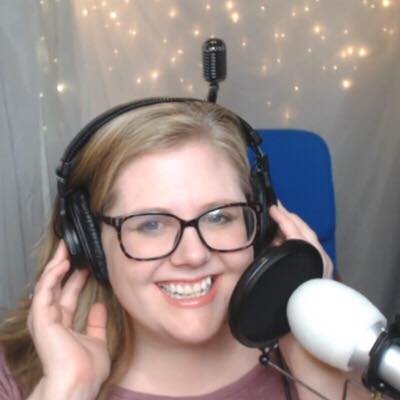
Hang out with me and Emily Prokop. She is the host of The Story Behind podcast, a podcast editor and consultant, and author of The Story Behind: The Extraordinary History Behind Ordinary Objects!
We discussed Emily’s equipment and workflow, and lots more:
- Blooper track: She copies clips onto a dedicated track for bloopers.
- Handling loud breaths: She moves all the loud breaths onto a dedicated track where she lowers their volume!
- Noise reduction
- Hi-pass filtering
- In her “studio”: Moving blankets around her desk and curtains to dampen room noise, white shears
- Reaper and Reaper templates
- iZotope RX 6: De-plosive, Mouth De-click
- ATR2100 microphone
- Sony MDR-7506 Headphones
- Publishing a 96kbps mono MP3 for her show
- Auphonic leveling to -16 LUFS (! her mono track!)
- Hardwired to internet
- Previously Emily was on Dave Jackson’s show discussing structuring and presenting good content on podcasts because she has more than 10 years editing experience in print journalism. That episode is titled Journalism 101 For Podcasters.
Thanks for sharing so much great info, Emily!
Comment below with any questions or comments.
.
-
Classic Episode
You will hear:
- A 10 minute audio piece I created called “Audio Adjectives and What They Sound Like.” Hear what these sound like: Big, Small, Boomy, Muddy, Boxy, Hollow, Midrangy, Biting, Presence, Clarity, Brightness, “Air,” and that telephone sound.
- 19 previous guests and friends roasting and/or congratulating me!
Treat yourself to episode 100 of my show, The Podcast Engineering Show.
Enjoy!
Want to receive the Daily Goody in your email, daily or weekly? Subscribe free here.
And please keep in mind, the Daily Goody is only a tiny little tip, fact or lesson everyday. Please don’t expect any of these posts to be long, earth-shattering masterpieces that instantly answer every single question you can think of and completely transform you into a world class podcast engineer. “Little by little, a little becomes a lot.”
.
-
Focusrite 6i6 Interface
The creators of Podcaster’s Toolbox, Carol Lynn and Ralph M. Rivera, recently purchased a Focusrite 6i6 Interface.
Besides being very high quality, there are a couple features they were looking for that convinced them to buy it:
- Two XLR inputs as well as two 1/4” line inputs (so they can plug in their mics and still have 2 line inputs for sound effects, remote guests, etc.)
- Two headphone jacks, each with its own volume control. This is important to them because each like their headphone volume to be just right, and now they can each set their volume to their personal preference without affecting the others volume.
Want to receive the Daily Goody in your email, daily or weekly? Subscribe free here.
And please keep in mind, the Daily Goody is only a tiny little tip, fact or lesson everyday. Please don’t expect any of these posts to be long, earth-shattering masterpieces that instantly answer every single question you can think of and completely transform you into a world class podcast engineer. “Little by little, a little becomes a lot.”
.
-
Audio Daily Double – What Effect is This?
Play this short piece of audio and comment below about what effect you think I used on my voice: (no peeking at previous guesses!)
Also you are welcome to download the file.
And you are welcome to share this with others, too.
Want to receive the Daily Goody in your email, daily or weekly? Subscribe free here.
And please keep in mind, the Daily Goody is only a tiny little tip, fact or lesson everyday. Please don’t expect any of these posts to be long, earth-shattering masterpieces that instantly answer every single question you can think of and completely transform you into a world class podcast engineer. “Little by little, a little becomes a lot.”
.
-
Today NAB Starts!
I’m heading up the Ask The Expert booth at NAB in their Podcast Pavilion area from today through Thursday (Apr. 8-11).
And I have some awesome help:
- Addy Saucedo (The Podcast Planner)
- Ralph and Carol Lynn Rivera (Podcaster’s Toolbox)
Many other podcasting companies have booths there, too.
*See our social posts from the event:
- Chris Curran – Twitter, Facebook, Instagram
- Addy Saucedo – Twitter, Facebook, Instagram
- Ralph M. Rivera – Twitter, Facebook, Instagram
- Carol Lynn Rivera – Twitter, Facebook, Instagram
Want to receive the Daily Goody in your email, daily or weekly? Subscribe free here.
And please keep in mind, the Daily Goody is only a tiny little tip, fact or lesson everyday. Please don’t expect any of these posts to be long, earth-shattering masterpieces that instantly answer every single question you can think of and completely transform you into a world class podcast engineer. “Little by little, a little becomes a lot.”
.
-
Audio Bit Depth
Bit depth is the number of bits of information in each sample, and it directly corresponds to the resolution of each sample.
Examples of bit depth include Compact Disc Digital Audio, which uses 16 bits per sample, and DVD-Audio and Blu-ray Disc which can support up to 24 bits per sample.
For us podcast producers in terms of uncompressed audio like .WAV and .AIFF files:
- 24 bit files are MUCH higher resolution than 16 bit files.
- 24 bit captures more dynamic range than 16 bit.
- 24 bit files are larger than 16 bit files.
Want to receive the Daily Goody in your email, daily or weekly? Subscribe free here.
And please keep in mind, the Daily Goody is only a tiny little tip, fact or lesson everyday. Please don’t expect any of these posts to be long, earth-shattering masterpieces that instantly answer every single question you can think of and completely transform you into a world class podcast engineer. “Little by little, a little becomes a lot.”
.
-
The “soothe” Plugin ROCKS!!!
I’ve been enjoying this plugin immensely, not only how it sounds but also the process of figuring out how to set the controls to get the effect I want (because I enjoy tinkering for the purpose of perfecting).
soothe is a “a dynamic resonance suppressor for mid and high frequencies.”
Basically it removes harshness, which for us podcast producers usually comes in the form of sibilance. And it does it really well.
Unlike a traditional de-esser where you set a specific frequency range, soothe is a kind of dynamic equalizer with self-adjusting frequency bands, so it catches and removes sibilance wherever it occurs.
From their website: “Unlike traditional EQ-tools, soothe analyses the signal on the fly and adjusts the frequency-wise reduction based on the input. This saves you from having to manually notch the problematic mid and high frequencies. The reduction kicks in when needed and where needed, without affecting the nearby frequency areas. This results in more detail, top end, and presence, in a way that is hard to unhear.”
And you can try it for free!
Want to receive the Daily Goody in your email, daily or weekly? Subscribe free here.
And please keep in mind, the Daily Goody is only a tiny little tip, fact or lesson everyday. Please don’t expect any of these posts to be long, earth-shattering masterpieces that instantly answer every single question you can think of and completely transform you into a world class podcast engineer. “Little by little, a little becomes a lot.”
.
-
Podcast Editors Business Entity and Taxes
This is not tax advice; please do your own research.
And note, I’m speaking very generally here.
Probably the best reason to set up a business entity for your podcast production business (like an LLC, etc.) is so that you can clearly deduct all your business expenses and pay less tax.
For instance, you can usually write off all equipment purchases (computers, mics, interfaces, etc.), software and plugin purchases, even “furniture” for your studio, and if you have a dedicated room/office/studio for your business you can usually write off some part of your rent or mortgage, etc. Oh, also marketing services, conferences, travel, business services, etc etc.
This is not tax advice; please do your own research.
Want to receive the Daily Goody in your email, daily or weekly? Subscribe free here.
And please keep in mind, the Daily Goody is only a tiny little tip, fact or lesson everyday. Please don’t expect any of these posts to be long, earth-shattering masterpieces that instantly answer every single question you can think of and completely transform you into a world class podcast engineer. “Little by little, a little becomes a lot.”
.
-
Comparing Audio from 3 VoIP Recording Services, and Chris’s Goody Bag – PES 124
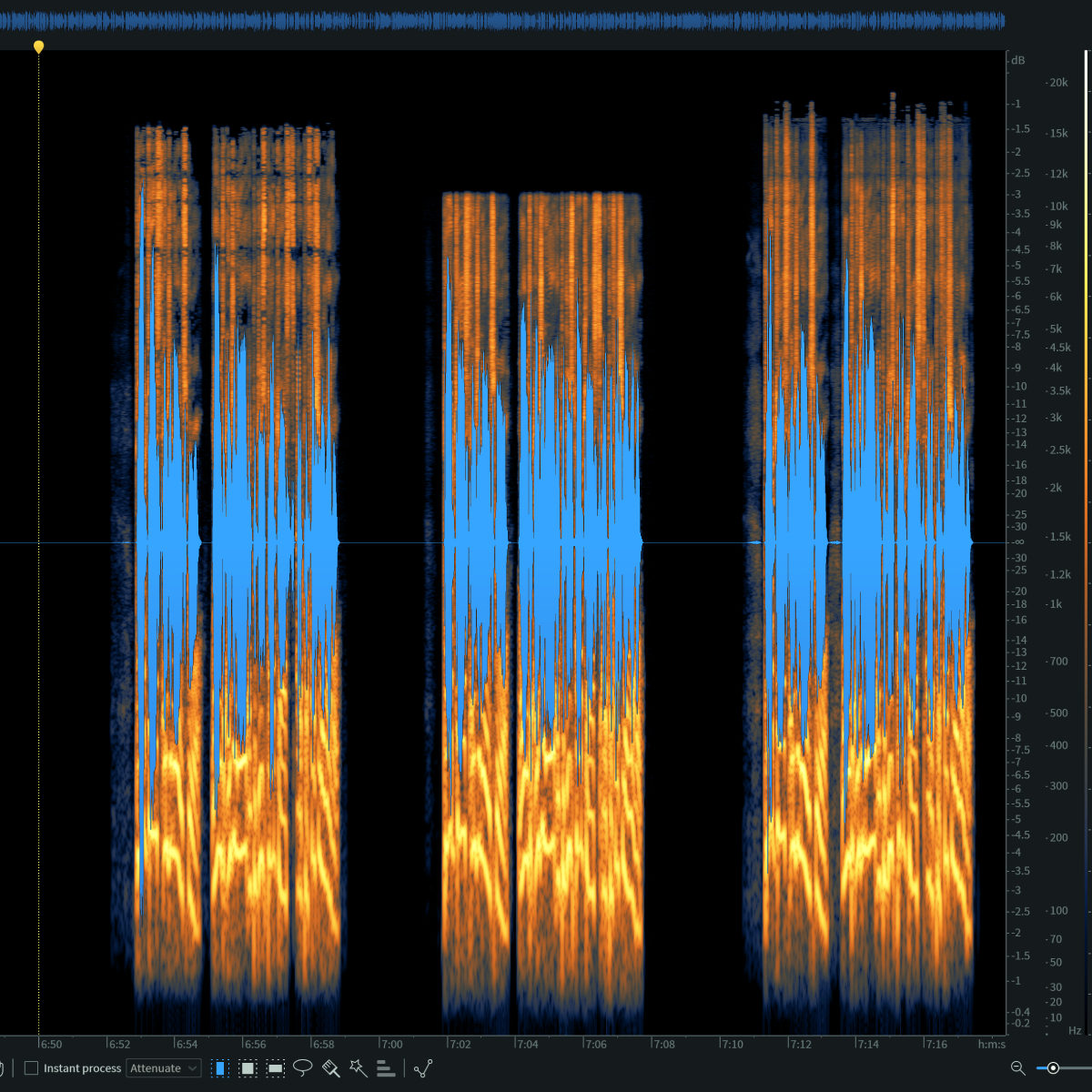
Hear and discern the audio quality differences between 3 popular podcast recording services – Zencastr, Squadcast and Ringr. Then let me know which service you think I used to record clip #1, #2 and #3. I play each of them twice and also give my evaluation of the 3 clips.
Also enjoy my brief overview of recent Daily Goody’s (March 1-14). Here’s the link to view all those blog posts: https://podcastengineeringschool.com/category/daily-goody/
And don’t forget that you can sign up to receive the Daily Goody in your email every day or every week. Sign up here.
Here are the Daily Goody posts that we discussed in this episode:
- Volume Spikes at the Beginning of Sentences
- Be My Guest!
- What is Monaural, Stereo and Surround?
- Fast Processor, Lots of RAM
- The Pressure of a Publishing Schedule
- If Two Guests MUST Share One Microphone…
- Helping Guests Connect via Online Recording Services
- Intro Music That Goes on Way Too Long
- Making Edit Cuts on Words and Syllables
- Small Tweaks When Mastering
- Know Where Distortion is Coming From
- Continued Learning
- Adjusting the Phase of Recordings
I made some announcements, too:
- PES starts April 16th, and we conduct the course Live every quarter.
- Upcoming episodes: Emily Prokop, Carrie Caulfield, ‘Glenn the Geek’ Hebert, Shawn Kitchen, Nick Dunkerley and Evo Terra!
- NAB conference – we will be manning the Ask The Expert booth in the Podcast Pavilion area from April 8-11 in Las Vegas. Addy Saucedo with her Podcast Planner, and Ralph & Carol Lynn Rivera with their Podcaster’s Toolbox.
If you have any questions please let me know 🙂
.