Your cart is currently empty!
Author: Chris Curran
-
Captivate’s Interview Management & Guest Booking Platform Integrates With SquadCast
Captivate is a podcast hosting platform with many good features and now they are offering their customers a free Interview Management & Guest Booking platform that integrates with SquadCast. Apparently when a guest books a session in the Captivate ecosystem, a SquadCast recording session will be automatically created. Pretty cool. I’m sure there are more cool features but this is brand new and I don’t have access to it to check it out myself.
Details here.
If you use Captivate we’d love to hear your experience with this in the comments 😉
Want to receive the Daily Goody in your email, daily or weekly? Subscribe free here.
And please keep in mind, the Daily Goody is only a tiny little tip, fact or lesson everyday. Please don’t expect any of these posts to be long, earth-shattering masterpieces that instantly answer every single question you can think of and completely transform you into a world class podcast engineer. “Little by little, a little becomes a lot.”
-
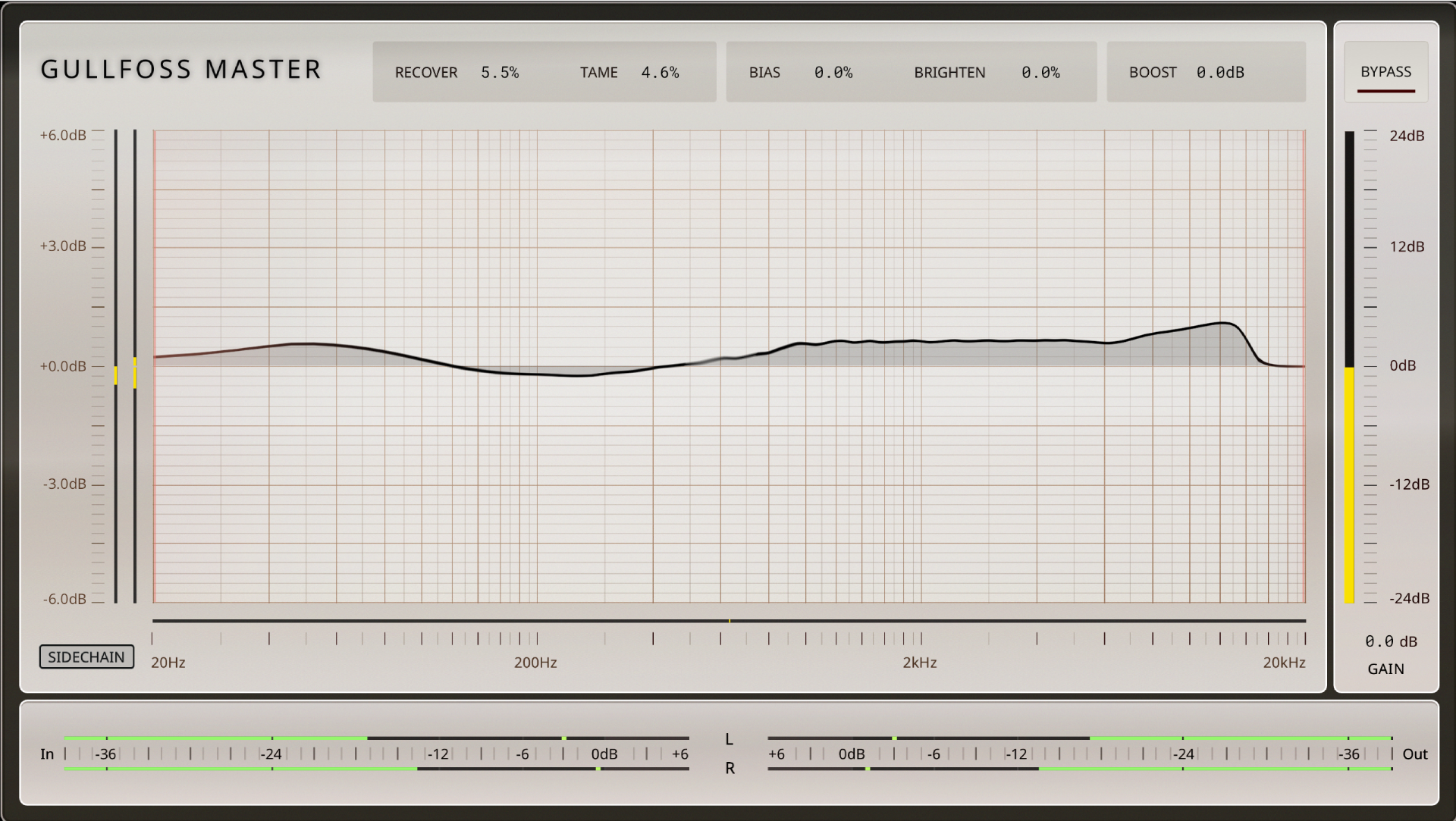
Gullfoss Master
Since my original post on Gullfoss (Intelligent EQ from Soundtheory) they released a higher resolution version for “mastering” a few months ago. Check out this video overview of Gullfoss Master (priced at $199).
For podcast production I don’t use Gullfoss that often but when I need to fix some really bad audio (which is all too common in podcasting) Gullfoss usually helps quite a bit.
Here’s a very helpful excerpt from this Sound on Sound article:
Gullfoss, the innovative ‘automatic EQ’ plug-in from Soundtheory, has just been made available in a Master edition, completing what is now a trilogy alongside Gullfoss Standard and Gullfoss Live.
We reviewed the original version of Gullfoss back in 2018, and were so impressed that we included it in that year’s Gear Of The Year round-up, as well as our recent 100 Plug-ins Every Engineer Should Try feature. It’s essentially a multiband dynamics processor, but while it presents the user with a familiar EQ-like interface and controls, under the hood it uses a mathematical model of human auditory perception to increase or decrease your audio’s apparent brightness, eliminate temporal masking, and even remove unpleasant resonances — all while sounding natural and “artifact-free”. Its inner workings (devised by mathematical physicist Andreas Tell) are far from intuitive, but in use we’ve found it to be perhaps the closest thing yet to a ‘make better’ plug-in, with SOS Executive Editor Paul White calling it “addictive”, and SOS Publisher Dave Lockwood lauding its ability to “tame resonances that you didn’t know were there until you hear them taken away, and somehow emphasize all the nicest bits of a sound without making it any louder.”
All three Gullfoss versions share the same processing, but have been subtly tweaked to better equip them for different roles. Gullfoss Standard is the most versatile, and trades off accuracy against CPU usage, while the new Gullfoss Master places higher demands on your computer’s resources but employs an “extended auditory model tuned for mastering”, and also presents the user with finer control resolution. The Live version of Gullfoss, meanwhile, applies less transient processing and can thus run at a lower latency of 2ms (compared with the other versions’ 20ms).
Happily, you don’t need to make the choice as to which version to buy: a single Gullfoss license authorizes all three versions, so you can pick and choose depending on your workflow. Existing users of Gullfoss will also be entitled to install the new Master edition.
The Gullfoss trilogy is available now, priced at $199
Try Gullfoss for Free! An iLok account and the iLok License Manager is required (they are free). The trial is fully functional and lasts for two weeks.
Want to receive the Daily Goody in your email, daily or weekly? Subscribe free here.
And please keep in mind, the Daily Goody is only a tiny little tip, fact or lesson everyday. Please don’t expect any of these posts to be long, earth-shattering masterpieces that instantly answer every single question you can think of and completely transform you into a world class podcast engineer. “Little by little, a little becomes a lot.”
-
Sound Absorbing Items in Your Recording Space
Your audio will sound clearer and more intelligible if you reduce the amount of reflections (reverb) in your recording space.
Reflections are the sound bouncing off walls, floors, etc. and create the effect known as reverb. This makes you sound like you’re far away from your microphone in a large hall or 40 feet down a hallway and makes you much less intelligible to listeners.
If the surfaces of your walls and floors etc. are reflective (hardwood floors, bare walls, etc), the sound will continue bouncing around from wall to wall etc. until gradually it loses its energy over time, usually 1-2 seconds. The more the surfaces in your space are covered with sound absorbing materials, the less reverb you’ll capture in your microphone, therefor creating a much better listening experience for your listeners.
Here are some common absorbing materials you can use in your space: Carpeting, area rugs, curtains, soft furniture, acoustic foam on the walls, etc.
Want to receive the Daily Goody in your email, daily or weekly? Subscribe free here.
And please keep in mind, the Daily Goody is only a tiny little tip, fact or lesson everyday. Please don’t expect any of these posts to be long, earth-shattering masterpieces that instantly answer every single question you can think of and completely transform you into a world class podcast engineer. “Little by little, a little becomes a lot.”
-
How Podcasters Can Receive Crypto From Listeners – PES 226
Evo Terra joins me to discuss the emerging methods by which podcasters can receive crypto from listeners. Evo Terra is the host of Podcast Pontifications!
We briefly introduce crypto in general as well as Podcasting 2.0, Bitcoin, satoshis, Lightning Network, Satoshi.stream support on Telegram, NFTs, and more.
RESOURCES AND LINKS:
Twitter enables tipping with Bitcoin, plans to let users authenticate NFTs
Dave Jackson’s show, Leading The Bleeding
Video on how to setup your show
Basic understanding of Value 4 Value (some podcast apps are “value for value” enabled)
Transferring Bitcoin From satoshis.stream
Here are a few of the crypto creators that I watch regularly:
My NFT artwork:
- Rarible: https://rarible.com/fractalchris
- Opensea: https://opensea.io/accounts/fractalchris
Comment below with questions 😉
-
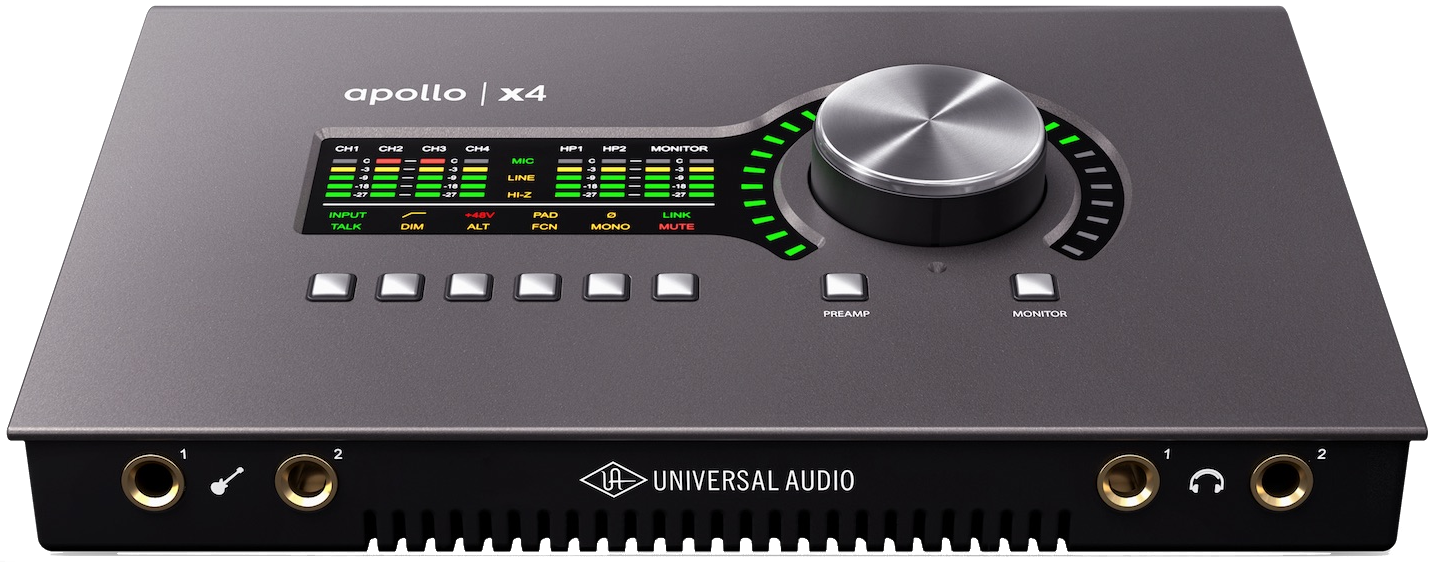
Apollo x4 Audio Interface
I recently purchased the Universal Audio Apollo x4 interface and I’m loving it! At $2,199 it’s definitely overkill for the average podcaster, but…
It can be a great solution for various podcasting situations. It has 4 XLR inputs so if you want to record 4 people sitting around a table you can, at great quality. And you’re able to use vintage preamps on everyone’s voice to make the audio sound more professional. It also has a nice big volume knob to control your headphone and speaker volume (VERY handy!). Plus there’s an entire ecosystem of EXCELLENT plugins. There are many more features which you can check out here.
Personally I’ll be using it for more than just podcasting:
- To record music and vocals, etc.
- To Livestream (It allows me to use plugins on my voice LIVE and without latency so I’m able to make my voice sound great on Livestreams!)
- To utilize Universal Audio’s microphone modeling plugins for my new Townsend Labs Sphere L22 microphone.
I’m still exploring and testing this interface so I’ll give a future update at some point 😉
What are your thoughts?
Want to receive the Daily Goody in your email, daily or weekly? Subscribe free here.
And please keep in mind, the Daily Goody is only a tiny little tip, fact or lesson everyday. Please don’t expect any of these posts to be long, earth-shattering masterpieces that instantly answer every single question you can think of and completely transform you into a world class podcast engineer. “Little by little, a little becomes a lot.”
-
Audio Production Fundamentals
There are many advanced audio tools available today, but no one can be expected to produce professional audio unless they have AT LEAST a fundamental knowledge of audio production in the areas of microphone technique, recording level, editing, sample rate, bit depth, polar patterns, signal flow, gain staging (drink Ralph!), loudness, EQ, compression, acoustic treatment, digital I/O, Fletcher Munson Curve, and the list goes on.
The good news is that these fundamentals are not difficult to learn (unless you decide to “learn” only from YouTube videos, in which case you’ll most likely frustrate the heck out of yourself and completely give up within a very short time like 99.99% of people do).
Another piece of good news is that once you learn these fundamentals properly, they will stick with you for the rest of your life and also assist you in many other areas like video production, music production, consumer audio products, – even dialing in the sound of your car stereo so it absolutely BANGS!, and much more.
Of course, if you’re NOT endeavoring to produce professional grade audio then you don’t have to concern yourself with ANY of this stuff! Just have fun podcasting.
Want to receive the Daily Goody in your email, daily or weekly? Subscribe free here.
And please keep in mind, the Daily Goody is only a tiny little tip, fact or lesson everyday. Please don’t expect any of these posts to be long, earth-shattering masterpieces that instantly answer every single question you can think of and completely transform you into a world class podcast engineer. “Little by little, a little becomes a lot.”
-
Earning Over $100k Producing Podcasts From Home
In today’s podcast industry it is VERY DOABLE to earn over $100K per year producing podcasts from home. I and others have done it / are doing it. Many of my students are on their way as we speak!
There are a few character traits that you will need to develop, though:
- Technical skills – you have to be VERY GOOD at producing podcast audio and efficiently managing clients.
- Outreach – talking with MANY potential clients each week. And when I say many, I mean MANY!
- Persistence for at least a couple years – if you persist YOU WILL NOT FAIL. (Read that again!)
- Strong will and ample confidence – if you need help in this area I suggest setting goals (properly), focusing on your MANY positive attributes as a human being, and having a small, intimate, trusted support team (and this could be just one other person).
Are you willing to put in the effort that it takes?!?! I’m here to support you the whole way 🙂
If you need any help of guidance feel free to reach out to me.
Want to receive the Daily Goody in your email, daily or weekly? Subscribe free here.
And please keep in mind, the Daily Goody is only a tiny little tip, fact or lesson everyday. Please don’t expect any of these posts to be long, earth-shattering masterpieces that instantly answer every single question you can think of and completely transform you into a world class podcast engineer. “Little by little, a little becomes a lot.”
-
Referencing Your Old Episodes to Evaluate the Sound
One insightful habit of professional chess players is that after each of their games they review the game for the purpose of learning from their mistakes and improving their play. Podcasters, editors and producers can follow a similar process with their previous episodes.
This type of evaluation can be completed within a short time and can give deep insight into what can be improved, changed or terminated in terms of audio quality, performance and much more. And you probably only have to do these types of evaluations every 6-12 months. Doing so will ensure that your overall production value continues to improve over time. And you personally will train your ears SO MUCH!
On a related note: Many folks HATE their first handful of episodes. Mostly because of their performance but also sometimes because of the audio quality.
What are your thoughts on this topic? Comment below.
Want to receive the Daily Goody in your email, daily or weekly? Subscribe free here.
And please keep in mind, the Daily Goody is only a tiny little tip, fact or lesson everyday. Please don’t expect any of these posts to be long, earth-shattering masterpieces that instantly answer every single question you can think of and completely transform you into a world class podcast engineer. “Little by little, a little becomes a lot.”
-
Reduce Editing Time With Better Recording Habits
It’s possible to cut down the time it takes you for post-production by developing a handful of good recording habits.
Here are a few examples:
- Avoid extraneous noises (putting drinks/items down on your desk/table, phone notifications, pet sounds, etc.)
- Avoid moving your mic around too much (mic bumps, rumble, etc.)
- Consciously avoid umms and lipsmacks, etc. (in the beginning you will have to watch yourself like a hawk but very soon your new habit will become second nature)
- Prepare a simple outline for each episode so you don’t fumble transitions
- Train guests a bit before pressing record (instruct them to not make any extraneous noises, to stay close to their mic, etc.)
- Record your show in one take as if it’s Live (this captures lots of authentic energy)
Do you have any additional ideas in this regard? Comment below! I know you can think of at least one additional good habit 😉
Want to receive the Daily Goody in your email, daily or weekly? Subscribe free here.
And please keep in mind, the Daily Goody is only a tiny little tip, fact or lesson everyday. Please don’t expect any of these posts to be long, earth-shattering masterpieces that instantly answer every single question you can think of and completely transform you into a world class podcast engineer. “Little by little, a little becomes a lot.”
-
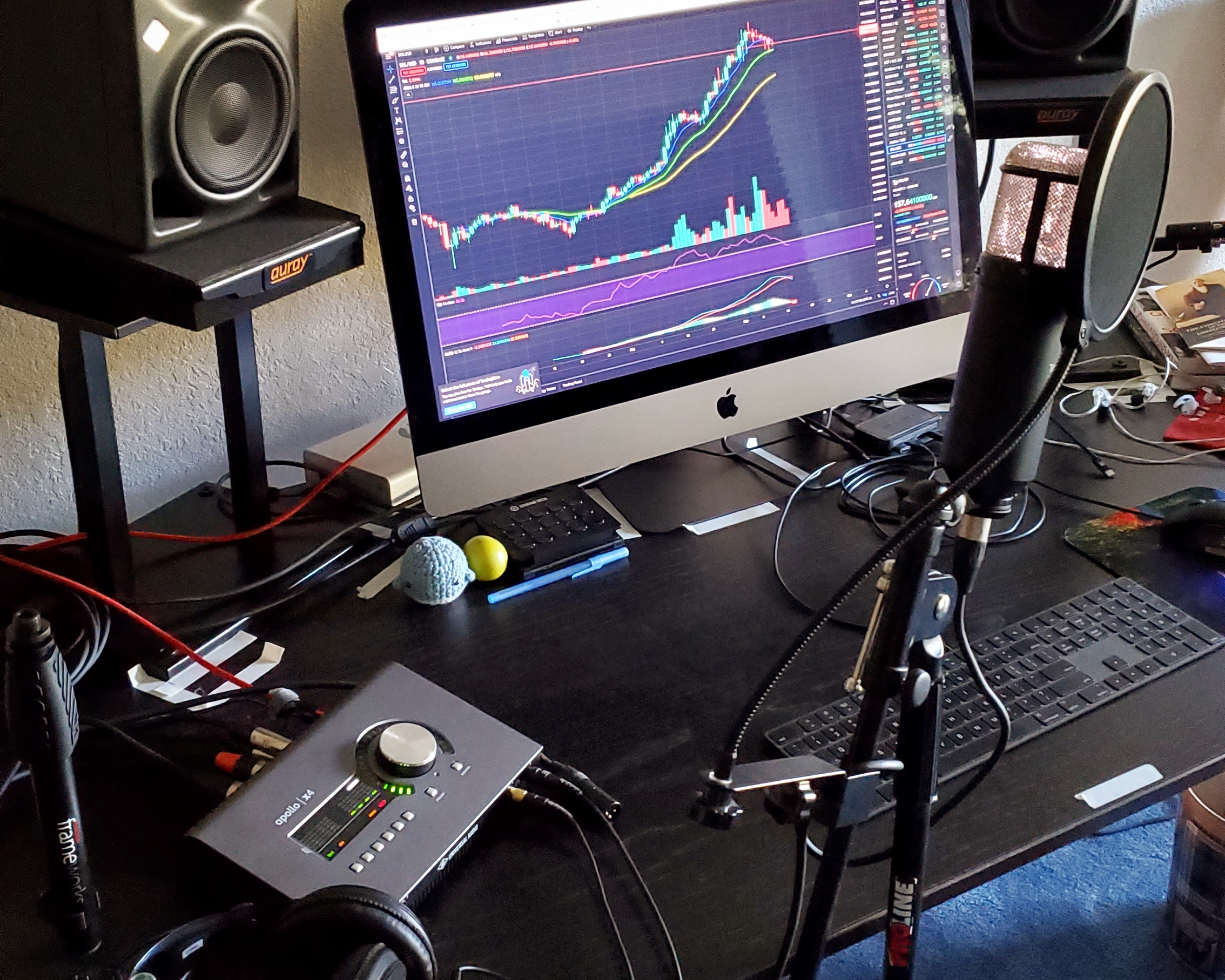
Goody Bag with New Mic and Interface – PES 225
I overview 9 recent Daily Goody‘s from March 19 through April 7 (see list below). You can sign up to receive Daily Goody’s in your email every day or a weekly roundup. Sign up here.
Here are the equipment and plugins I used to produce this episode:
- Sphere L22™ microphone system from Townsend Labs
- Apollo x4 audio interface from Universal Audio
- For the U47 emulation I mentioned in the episode, I ended up using the Ocean Way Mic collection‘s emulation profile. I chose that particular U47 sound for my voice over the U47 sounds in the Townsend Labs Sphere collection and the Putnam Mic collection, but of course this choice was solely dependent on the quality of my particular voice. For other people’s voices the best sounding choice would probably be different.
- Studer A800 tape emulation plugin (Universal Audio)
- Focusrite SC channel strip plugin (Plugin Alliance)
- Pro-L 2 limiter plugin (Fabfilter)
Daily Goody posts that I discussed in this episode:
- The Evolution of Riverside.fm
- SoundID Reference (formerly known as Sonarworks Reference)
- What Are Some Things That You Purposefully Do NOT Edit Out of Podcast Episodes?
- Using a Dual-Stage Compressor on Your Master Buss
- 6 PES Graduates Who Are Now Rocking Their Own Podcast Production Businesses!
- DaVinci Resolve
- Be Aware: Using Echo-Cancellation Degrades Audio Quality
- Shadow Hills Mastering Compressor Class A
Other Notes:
- If you ever have questions please reach out!
- The start date for the next PES semester is January 11, 2021
- If you’d like to share this show with any of your podcaster friends, feel free to send them a message saying, “Btw, here’s a show about podcast audio production you may find helpful” with this link: https://podcastengineeringschool.com/subscribe/)
Let me know if you have any questions or need any help with anything,
~Chris -
Chris’s Goody Bag – PES 224
I overview 9 recent Daily Goody‘s from Feb. 26 through Mar. 17 (see list below). You can sign up to receive Daily Goody’s in your email every day or a weekly roundup. Sign up here.
Be sure to check out the Focusrite Scarlett series of audio interfaces, the world’s best-selling USB interface range with over 3 million units sold worldwide. Choose from 6 different interfaces with 1, 2, 4, or 8 microphone inputs. Works with the recording software you’re already using and works with any type of XLR microphone. New unique Air feature adds brightness and presence to your voice. Thanks to Focusrite for sponsoring this episode!
Daily Goody posts that I discussed in this episode:
- Voice Recorder Plugin (for WordPress)
- Be Aware: Compression, EQ, Etc. Can Sometimes Exacerbate Sibilance
- Editing Tip: Use Short Fades for Transparency, When Applicable
- Stereo Imaging Enhancers
- PES Monthly Q&A Meeting for Students and Alumni
- Pro Headphone Buyers Guide 2020 [ebook]
- We Want to See Your Equipment Setup! Comment with a Link to a Pic
- Reaper’s Play Frequency Selection
- AirPods Are OK but They Don’t Give Professional Audio Quality
Other Notes:
- If you ever have questions please reach out!
- The start date for the next PES semester is September 14, 2021
- If you’d like to share this show with any of your podcaster friends, feel free to send them a message saying, “Btw, here’s a show about podcast audio production you may find helpful” with this link: https://podcastengineeringschool.com/subscribe/)
Let me know if you have any questions or need any help with anything,
~Chris -
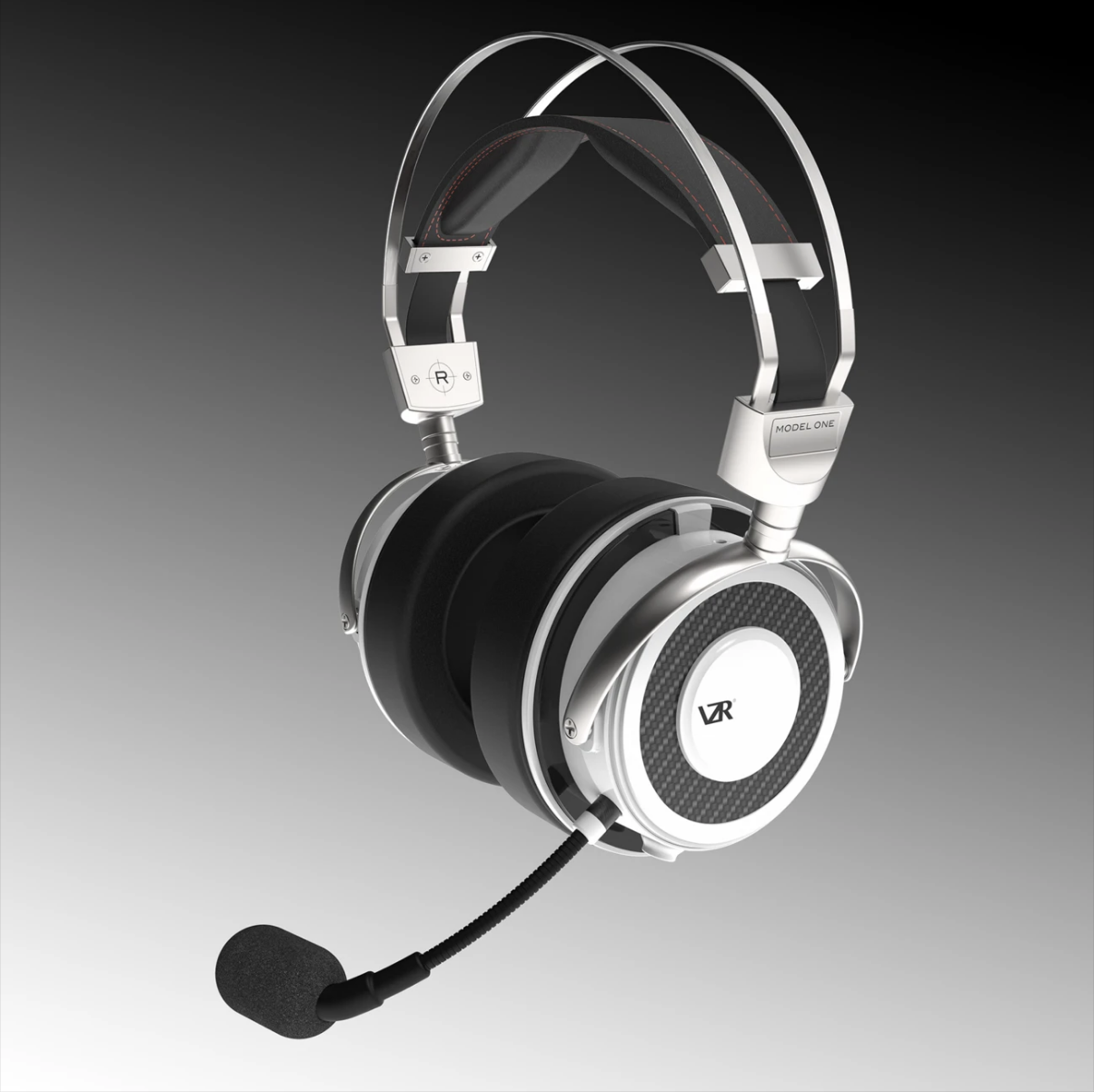
Vic Tiscareno and Mike Henein, VZR Model One – PES 223

The acoustic lenses inside of the VZR Model One headset My guests are Vic Tiscareno and Mike Henein from VZR, makers of the VZR Model One – an innovative headset designed for audiophiles, gamers, podcasters, livestreamers, etc.
We discussed Vic and Mike’s impressive audio backgrounds (see their bio’s below), their Model One headset, why they designed it like they did, as well as Spatial, “3D” and Ambisonic audio, and much more!
Hear various audio examples here:
- Binaural + DSP
- RealSpace 3D Audio Demo
- The Incredible Sounds of the Falcon Heavy Launch (BINAURAL AUDIO IMMERSION)
- 3D Audio Machu Picchu Hike (Wear Headphones)

The Specs of the VZR Model One Vic “The Dude” Tiscareno
- Apple’s former lead audio engineer
- Tiscareno’s body of work across more than 30 years includes Mark Levinson Audio and work on many projects at Apple, where he was hired directly by Steve Jobs. Vic holds more than 20 patents on audio and acoustic design, including ones for the
- VZR Model One
- Loves music and audio, designed amps, mics and vacuum tube gear
Mike Henein
- VZR co-founder who worked as a sound designer and supervisor for some of the biggest video games.
- Game audio — spacial sound
- Music editor in Hans Zimmer’s production studio
- Cohost of the Audiophile Gamer Podcast, with Sir Mixalot
Thanks for sharing so much with us, Vic and Mike!
All are welcome to comment below.
-
Back Into the Goody Bag – PES 222
I overview 8 recent Daily Goody‘s from Feb. 5 through Feb. 24 (see list below). You can sign up to receive Daily Goody’s in your email every day or a weekly roundup. Sign up here.
Be sure to check out the Focusrite Scarlett series of audio interfaces, the world’s best-selling USB interface range with over 3 million units sold worldwide. Choose from 6 different interfaces with 1, 2, 4, or 8 microphone inputs. Works with the recording software you’re already using and works with any type of XLR microphone. New unique Air feature adds brightness and presence to your voice. Thanks to Focusrite for sponsoring this episode!
Daily Goody posts that I discussed in this episode:
- When Editing, Are You Able To Quickly Highlight a Single Mouthclick and Delete It?
- High-Mid Frequency Clarity vs. Harshness
- Benefits of Attending LIVE Interactive Classes on Podcast Production
- 32 Bit Floating Point Explained (by Sound Speeds)
- Ultimate Ears – Professional In-Ear Monitors
- Volume Master Extension for Chrome and Brave, etc.
- Using Oxford Inflator To Bring a Guests Voice “Closer”
- Guests: If You Own a Decent Microphone, PLEASE USE IT!
Other Notes:
- If you ever have questions please reach out!
- The start date for the next PES semester is September 14, 2021
- If you’d like to share this show with any of your podcaster friends, feel free to send them a message saying, “Btw, here’s a show about podcast audio production you may find helpful” with this link: https://podcastengineeringschool.com/subscribe/)
Let me know if you have any questions or need any help with anything,
~Chris -
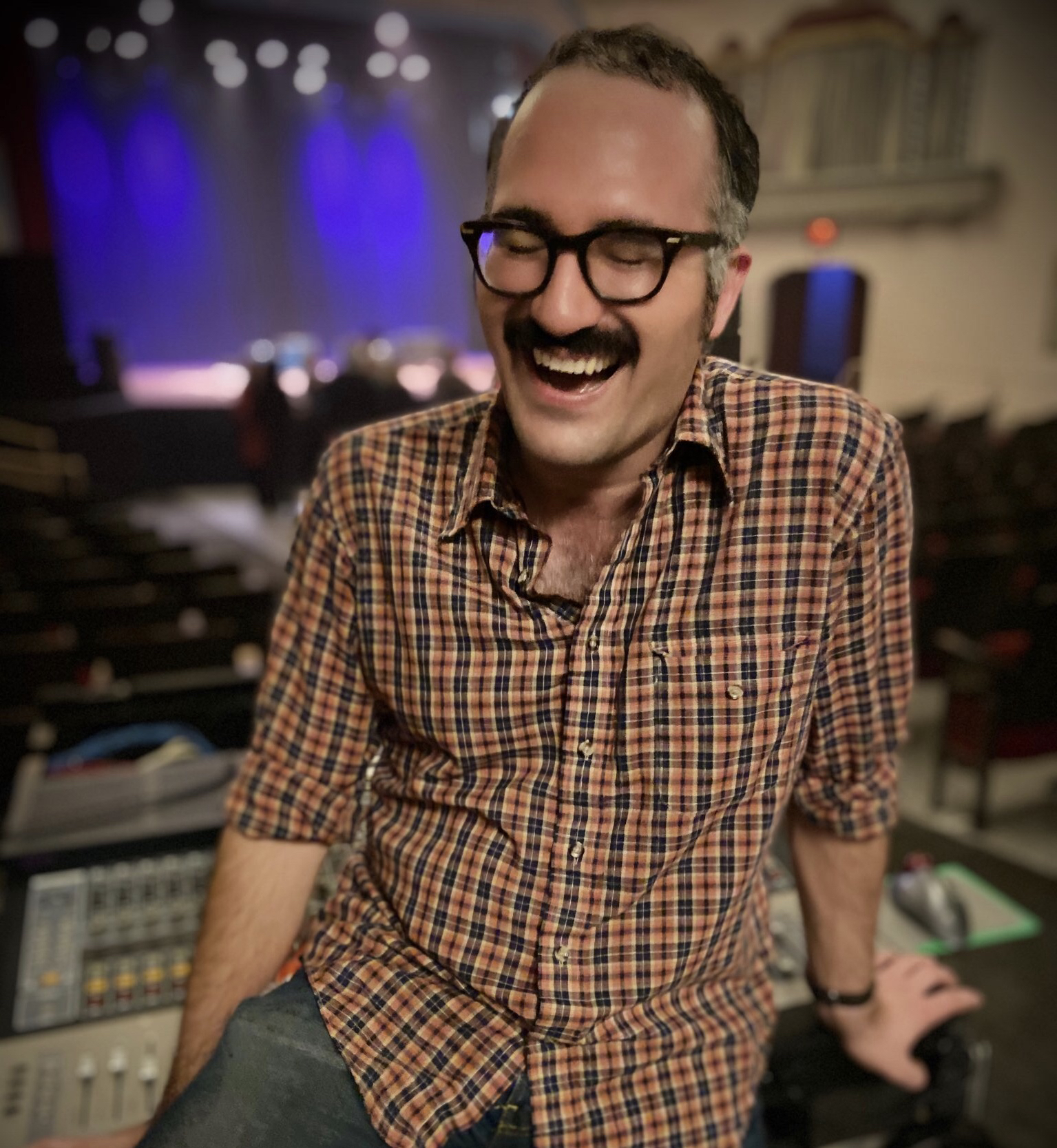
Martín Gonzalez, Audio Engineer at Pushkin Industries – PES 221
Enjoy my magnificent conversation with Martín Gonzalez, audio engineer at Pushkin Industries! He, of course, does a lot of podcast recording and mixing, and also scoring and sound design. He works on various shows including Broken Record, The Last Archive and Into the Zone.
We discussed SO MUCH in this episode including:

- Neumann U87
- Martín’s background: Berklee College of Music, played in bands, engineered Live sound, and much more.
- Home setup: HP monitor with thunderbolt cable (like a docking station)
- ElectroVoice RE20
- Grace preamps
- Dante network
- Pro Tools
- AKG 701 headphones
- iZotope RX — voice de-noise, etc.
- Fabfilter plugins
- Ableton Live
- Soundtoys plugins
- Audio Thing – spring reverb, and one called Wires
- Audio Ease – Altiverb (convolution reverb), speakerphone,
- Descript
- Oeksound soothe2
- Modular synths

Thanks for sharing so much with us, Martín!
All are welcome to comment below.
-
Adjusting a Compressors Release Time and What Effect That Has on the Sound
The faster the release time of a compressor, the more “up front” or “in your face” the audio will sound. The slower the release time of a compressor, the more “pushed back” or “not so in your face” the audio will sound.
How would you describe the difference?
Want to receive the Daily Goody in your email, daily or weekly? Subscribe free here.
And please keep in mind, the Daily Goody is only a tiny little tip, fact or lesson everyday. Please don’t expect any of these posts to be long, earth-shattering masterpieces that instantly answer every single question you can think of and completely transform you into a world class podcast engineer. “Little by little, a little becomes a lot.”
-
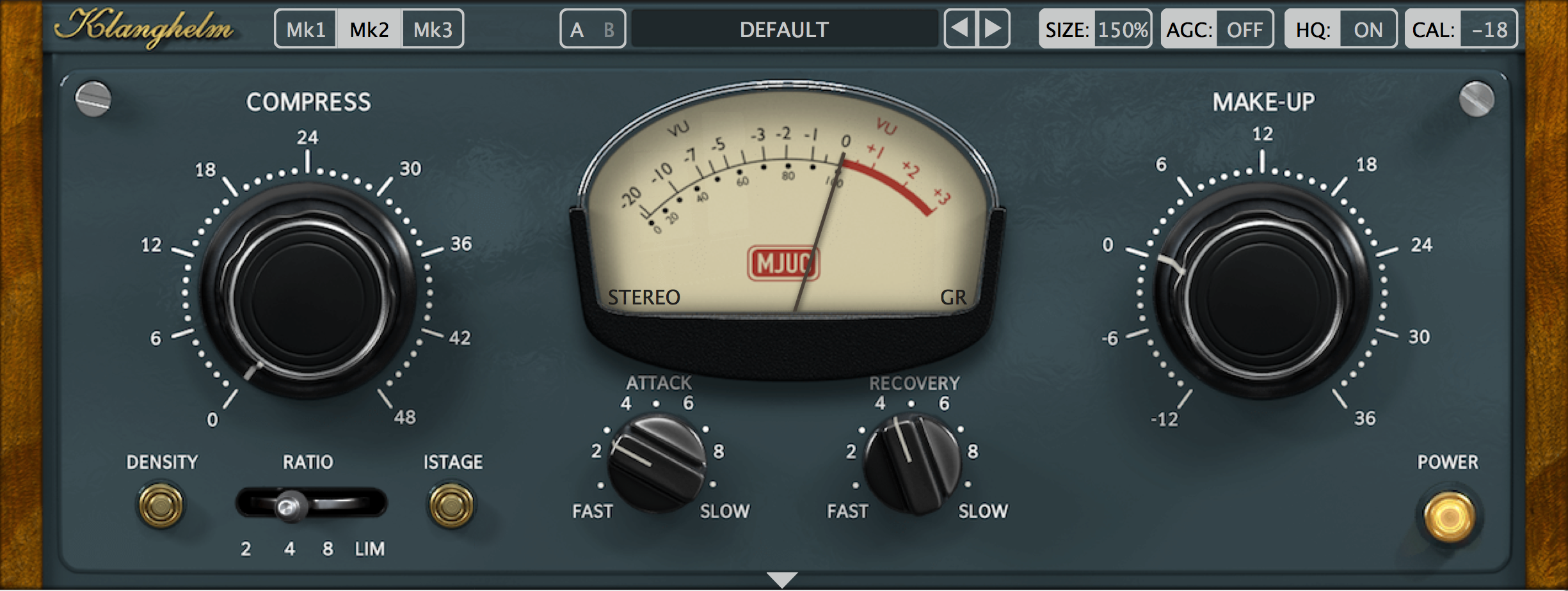
MJUC Compressor Plugin from Klanghelm
MJUC is an inexpensive compressor plugin (around $28.50) which sounds really good and lots of people love it. I bought it a couple months ago and I like it a lot.
I used this plugin on my voice in episode 220 of The Podcast Engineering Show.
And my previous guest Chris Williams uses this plugin, too.
From their website:
MJUC is the most effortful Klanghelm plugin to date. It took almost two years of extensive, dare I say “excessive”, research and development. To create MJUC I’ve researched and analyzed each and every variable-mu* implementation I could get my hands on to get the best of tube compression into a single processor. In order to do the diversity of this compression topology justice, three different models have been built. These are kind of a time travel though the history of tube compression to capture the essence of each generation. Each model has its own dedicated signal path and dedicated control set. If desired you can tweak the overall tone and saturation of each model with the unique TIMBRE and the DRIVE knob. DRIVE controls the load of the input and output transformers as well as the saturation of the tube gain stages, if applicable. The TIMBRE extends MJUC‘s use as a tone shaper.
Want to receive the Daily Goody in your email, daily or weekly? Subscribe free here.
And please keep in mind, the Daily Goody is only a tiny little tip, fact or lesson everyday. Please don’t expect any of these posts to be long, earth-shattering masterpieces that instantly answer every single question you can think of and completely transform you into a world class podcast engineer. “Little by little, a little becomes a lot.”
-
Chris’s Goody Bag – PES 220
I overview 9 recent Daily Goody‘s from Jan. 15 through Feb. 3 (see list below). You can sign up to receive Daily Goody’s in your email every day or a weekly roundup. Sign up here.
Daily Goody posts that I discussed in this episode:
- Podcast Taxonomy
- Fewer Clients at Higher Rates vs. Many Clients at Lower Rates?
- Before Recording, Enable “Do Not Disturb” on Phones and Computers
- What Are Your Main Monitors? Headphones or Speakers? Which Model?
- Argosy Halo Sit/Stand Desk
- Abbey Road RS124 Vintage Tube Compressor from Waves
- Recording With a Dog in the Room
- Ennuicastr: Synchronized Multi-Track Audio and Video Recording on the Web
- Suggestion For Folks Who Don’t Process Their Audio in Post but May Want To:
Other Notes:
- If you ever have questions please reach out!
- The start date for the next PES semester is September 14, 2021
- If you’d like to share this show with any of your podcaster friends, feel free to send them a message saying, “Btw, here’s a show about podcast audio production you may find helpful” with this link: https://podcastengineeringschool.com/subscribe/)
Let me know if you have any questions or need any help with anything,
~Chris -
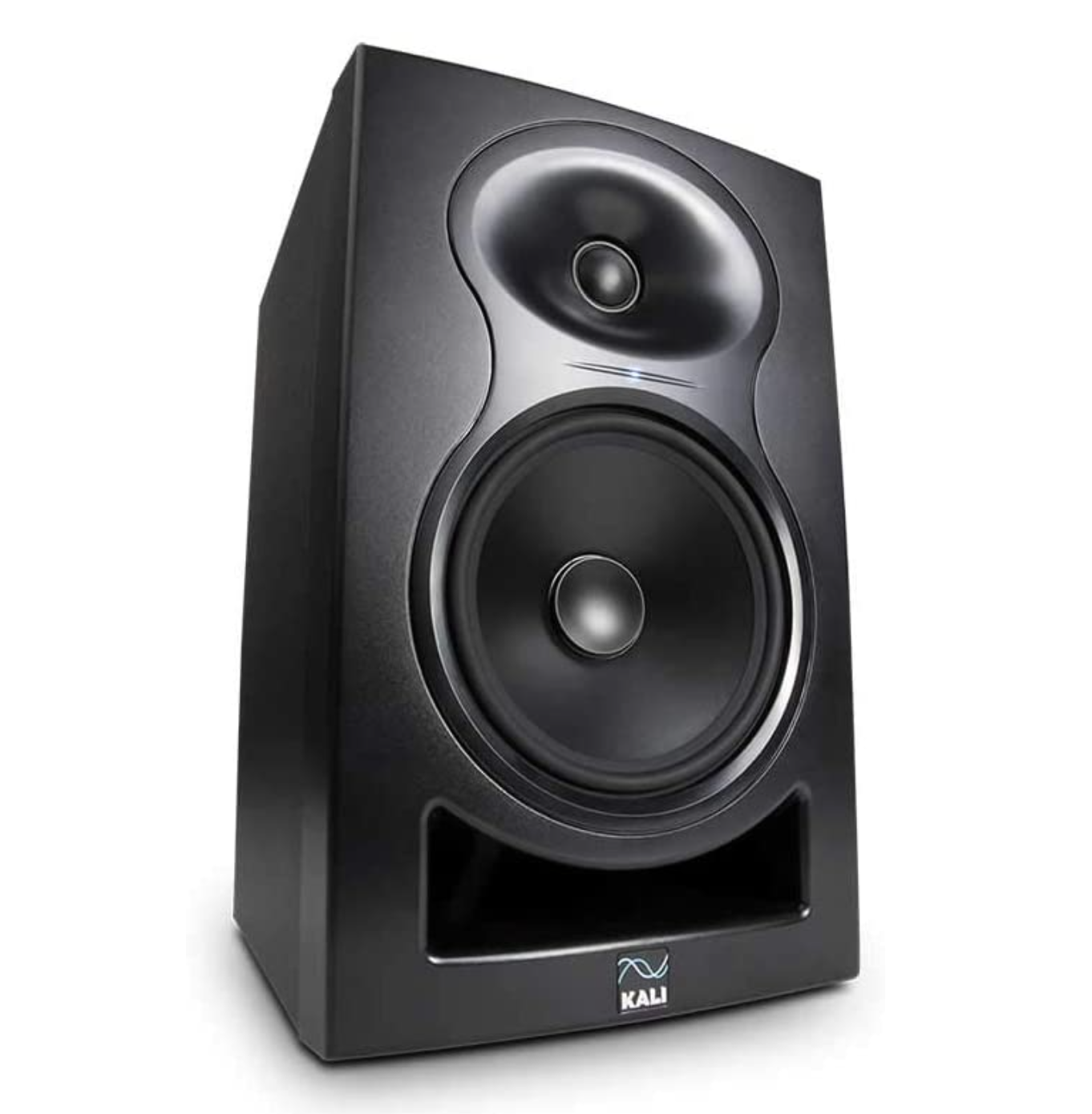
Kali Audio LP-6 Active Near-field Monitors
I recently heard a music studio owner mention that these Kali Audio LP-6 monitors were very good quality for the price. They cost around $300 / pair. NOTE: I haven’t ever heard them.
You can check out in-depth reviews by Sound on Sound and Tape Op.
FYI, back when I did a bunch of research on near-field monitors I found that the JBL LSR305 monitors (discontinued, now they offer JBL 305P MkII‘s) were also very good quality around the $300 / pair price point.
FYI 2, I own the Neumann KH 120 A monitors.
Want to receive the Daily Goody in your email, daily or weekly? Subscribe free here.
And please keep in mind, the Daily Goody is only a tiny little tip, fact or lesson everyday. Please don’t expect any of these posts to be long, earth-shattering masterpieces that instantly answer every single question you can think of and completely transform you into a world class podcast engineer. “Little by little, a little becomes a lot.”
-
Nicest Looking Website-Embeddable Podcast Players?
I’d love to hear your answer to this question in the comments!
Personally I’ve used Blubrry’s PowerPress plugin player and Libsyn’s standard and custom players. FYI, here’s where you can see how Libsyn’s custom player looks, and here’s where you can see how the basic PowerPress player looks.
Also, here’s a great article by the incomparable James Cridland of Podnews titled How to embed a podcast player into your website and it shows examples of players from Apple, Spotify, Fusebox, Listen Notes, RadioPublic, Castbox, Podfriend, and Podkite.
Want to receive the Daily Goody in your email, daily or weekly? Subscribe free here.
And please keep in mind, the Daily Goody is only a tiny little tip, fact or lesson everyday. Please don’t expect any of these posts to be long, earth-shattering masterpieces that instantly answer every single question you can think of and completely transform you into a world class podcast engineer. “Little by little, a little becomes a lot.”