Your cart is currently empty!
Author: Chris Curran
-
Edit Out Awkward Silence or Not?
I only leave awkward silence in the episode if it adds to the comedic value of a joke, or if a participant is purposefully using the silence to build tension, etc.
But if it helps the pacing of the episode to remove some awkward silence I will do that. But I won’t remove too much, because if you remove too much silence you will “over-correct” and the transition may sound unnaturally abrupt, which is also not good.
Of course, every time you make an edit you should always listen back to your edit and verify that it sounds completely natural.
*How do you handle awkward silence?
Want to receive the Daily Goody in your email, daily or weekly? Subscribe free here.
And please keep in mind, the Daily Goody is only a tiny little tip, fact or lesson everyday. Please don’t expect any of these posts to be long, earth-shattering masterpieces that instantly answer every single question you can think of and completely transform you into a world class podcast engineer. “Little by little, a little becomes a lot.”
-

BB N105 Plugin (EQ and Saturation)
I purchased the BB N105 plugin hours after it was released and I tried it immediately. Love at first use 🙂 …but let me be clear – for podcast production this is not a must-have plugin.
It’s a channel strip plugin with EQ, saturation and preamp distortion. And to my ears, the saturation modeling they captured sounds AMAZING! We’ve heard many plugin creators say that their plugin “adds warmth”, but the warmth and thickness that the BB N105 adds sounds legendary (because the Neve 8078 console IS legendary).
From their website:
The BB N105 is a channel strip plugin modeled after the legendary console in Studio A at Blackbird Studio. Designed by KIT Plugins in partnership with John McBride and his team, we crafted a truly musical plugin that evokes emotion and inspires creativity just as the legendary console does for so many great artists.
The Neve 8078 console in Studio A at Blackbird is far from ordinary. After John McBride acquired the console for the studio, it underwent a massive restoration to bring it back to its former glory. The console received a series of modifications from some of the best minds in the audio industry, making it not only unique but arguably the best example of its namesake ever to exist.
We carefully examined the console’s legendary channel, from factory schematics to studying the way top producers and engineers use the console to better understand what made it so special. Our engineers carefully sampled the channel taking into account all of the factors – equalization, saturation, noise, distortion, depth and width and musicality. Our mission was to create a plugin that truly embodied the sound of recording in Studio A. To do this we sampled the channel in the console running through master bus B, and captured the samples using John’s favorite A/D converters. We truly believe we have captured the sound of this Neve 8078 in all it’s glory!
Want to receive the Daily Goody in your email, daily or weekly? Subscribe free here.
And please keep in mind, the Daily Goody is only a tiny little tip, fact or lesson everyday. Please don’t expect any of these posts to be long, earth-shattering masterpieces that instantly answer every single question you can think of and completely transform you into a world class podcast engineer. “Little by little, a little becomes a lot.”
-
Be Delicate When De-essing
If you use a de-esser too aggressively (and remove TOO much sibilance) you will destroy the clarity and naturalness of the person’s voice.
I suggest de-essing carefully and be ultra-sure not to overdo it. Simply take the edge off the sibilance instead of trying to remove too much.
Question: On a scale of 1-10 how comfortable are you using de-essers?
Want to receive the Daily Goody in your email, daily or weekly? Subscribe free here.
And please keep in mind, the Daily Goody is only a tiny little tip, fact or lesson everyday. Please don’t expect any of these posts to be long, earth-shattering masterpieces that instantly answer every single question you can think of and completely transform you into a world class podcast engineer. “Little by little, a little becomes a lot.”
-
I Held an ATR2100USB in My Hand This Whole Episode
I recorded the most recent episode of The Mystic Show immediately after livestreaming a meditation session. In the meditation room I held my ATR2100USB in my hand for my entire 13 minute monologue. Of course I was careful to hold it in the same position the entire time. You can hear the audio here on episode 195 of The Mystic Show.
What do you think of the sound?
Want to receive the Daily Goody in your email, daily or weekly? Subscribe free here.
And please keep in mind, the Daily Goody is only a tiny little tip, fact or lesson everyday. Please don’t expect any of these posts to be long, earth-shattering masterpieces that instantly answer every single question you can think of and completely transform you into a world class podcast engineer. “Little by little, a little becomes a lot.”
-
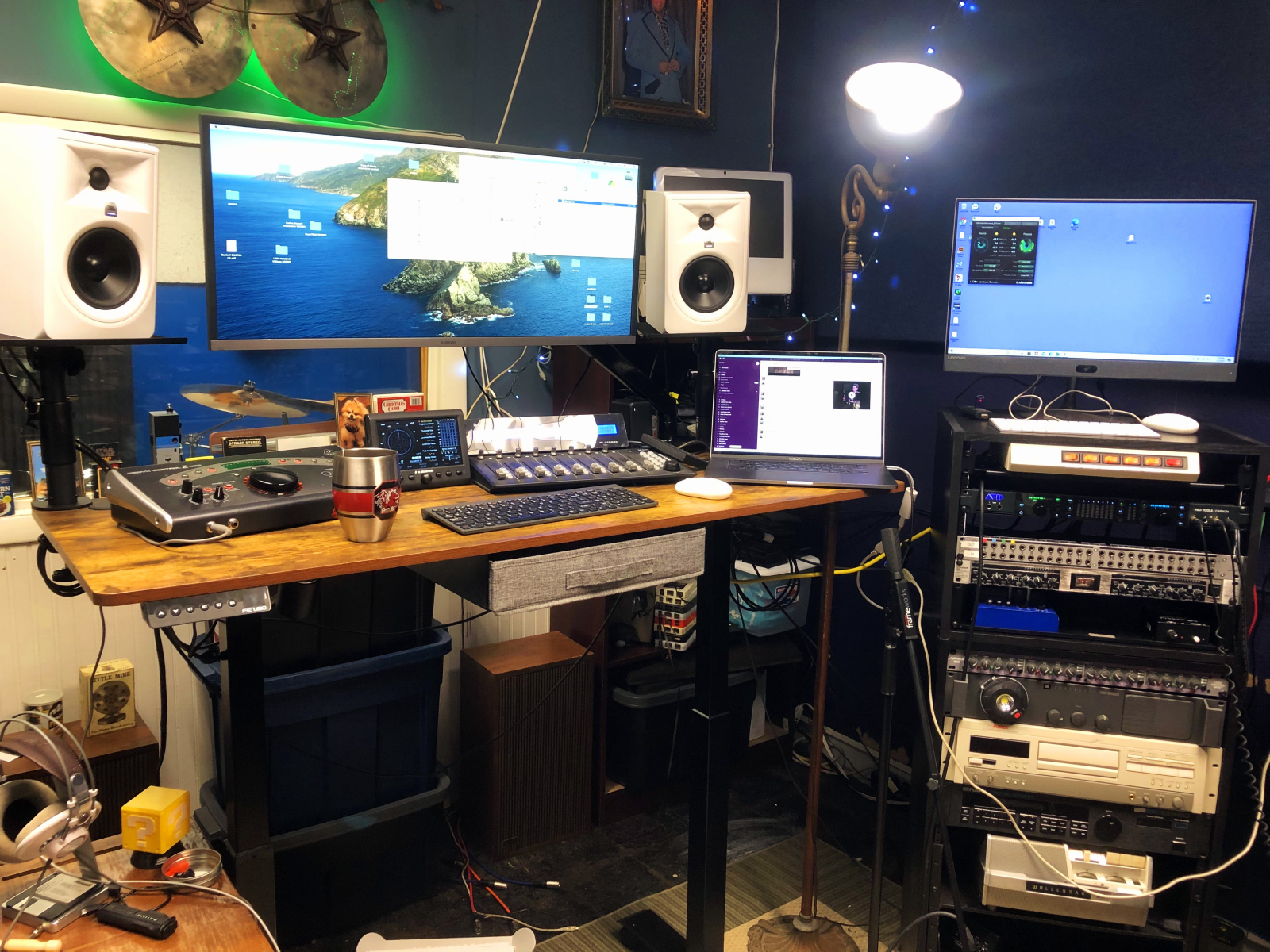
Jason Gambrell, Technical Director for Pushkin Industries (Revisionist History, Against the Rules, Broken Record and more) – PES 219
I had a top-notch chat with Jason Gambrell, Technical Director for Pushkin Industries. Jason works on several/many Pushkin shows. We covered his podcast audio production in great depth. You’ll learn a lot in this episode.
We discussed SO MUCH in this episode including:

TC Electronic Clarity M Loudness Meter - RE20
- SM7b
- Austrian Audio OC18
- MixPre-3, NoiseAssist
- Pro Tools Carbon Interface
- AVS technology
- MacBook Pro 2.6GHz i7
- ICON Platform M+ Controller (USB, 8 channels, can control faders, arm tracks, transport, zoom in and out, and MOSTLY Jason uses it for writing automation on the score track, sound fx and voices, etc.
- AKG 701 Headphones (open back)
- JBL monitors
- Malcolm’s studio setup in Hudson, NY – 3 hours North of NYC (8 channel Grace preamps, 5 RE20’s, U87 for voiceovers, and wired with Dante – an “audio over IP language” using ethernet cables)
- iZotope RX8 and Ozone
- FabFilter Pro L-2 — *there’s a setting called “podcasting” under “safe”
- Fabfilter Pro Q-3
- TC Electronic Clarity M Loudness Meter — standalone screen and plugin with timed graph, circular graph, etc.
- Gain vs volume
- Master fader: Pro L-2, Clarity M
- Neutron 3 — give a shape to a hosts voice, dynamic compression, sculptor – automated dynamic compression?
- Uses level automation all the time for mumbles, etc. Gain which goes into the plugins instead of adjusting fader levels.
- Pro Tools 2021
- RX Voice De-noise
- Stereo mixes – open up mixes with a bit of panning
- Publishes MP3’s in Stereo at 192kbps
- Uncompressed mixes in stereo at 24 bit 48 kHz
- Megaphone for hosting, dynamic ad insertion, etc.
- Playing in Punk rock bands
- Next purchase? Hardware compressor!

Jason Gambrell, Technical Director for Pushkin Industries Thanks for sharing so much with us, Jason!
All are welcome to comment below.
-

Steinberg WaveLab (Mastering Software)
Steinberg WaveLab is mastering software used mostly for music production but some podcast producers/editors are using it too!
There’s an “Elements” version available for $99 (which Jason Sheesley uses!), and the full version is available for $479.99.
Check out all the features on its webpage here 😉
Have you tried this software yet?
Want to receive the Daily Goody in your email, daily or weekly? Subscribe free here.
And please keep in mind, the Daily Goody is only a tiny little tip, fact or lesson everyday. Please don’t expect any of these posts to be long, earth-shattering masterpieces that instantly answer every single question you can think of and completely transform you into a world class podcast engineer. “Little by little, a little becomes a lot.”
-
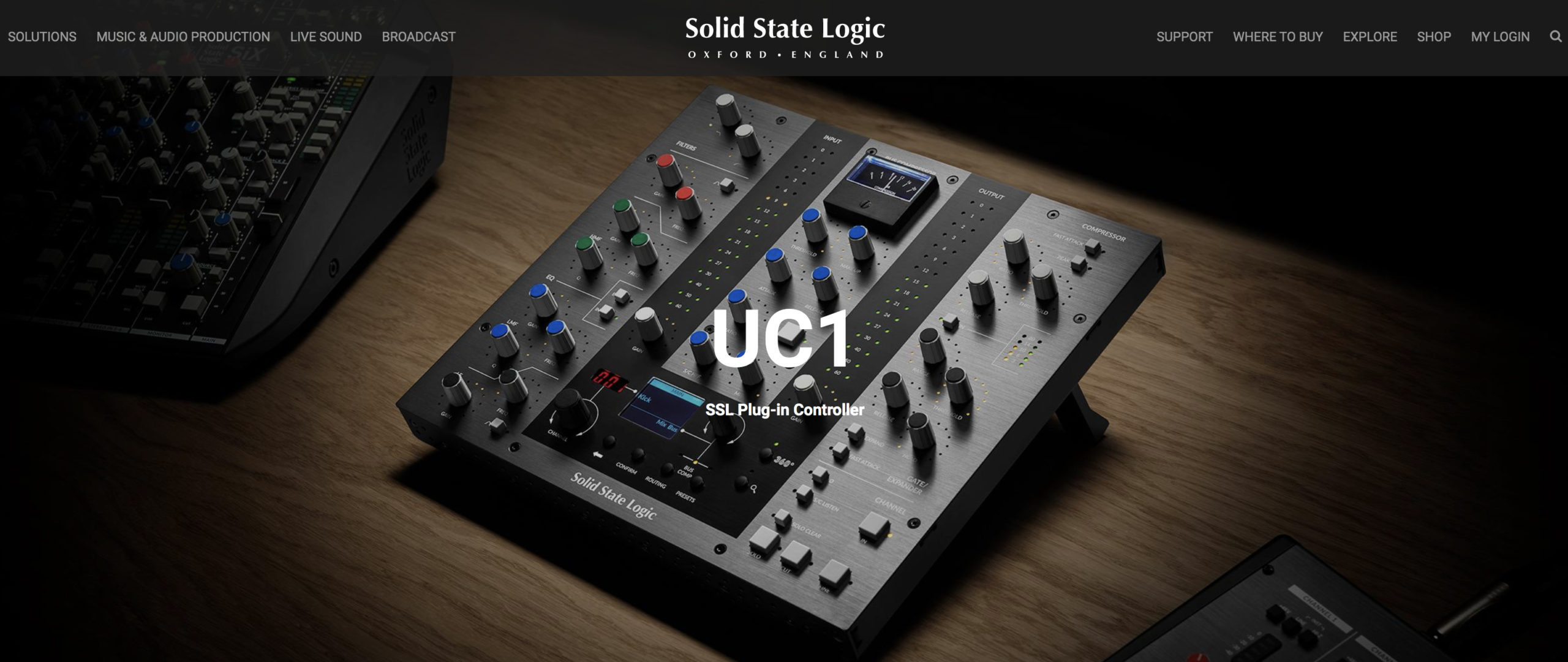
SSL UC1 Hardware Plug-in Controller
I’d love to try this SSL UC1 controller! There’s nothing like twisting physical knobs when dialing-in audio settings 😉
From their website:
SSL hardware for your SSL software
UC1 is a hardware plug-in controller like no other. Dedicated knob-per-function Channel EQ and Dynamics controls, centre section featuring full Bus Compressor controls and authentic moving-coil gain reduction meter combine to offer the most creative, intuitive, and ultimately effective way of controlling the new SSL Native Channel Strip 2 and Bus Compressor 2 plug-ins within your DAW session.
SSL production tools are the benchmark for studio ergonomics and workflow. UC1 draws on decades of analogue and digital console design to develop an intelligent and deeply integrated SSL plug-in control surface that lets you focus on your production goals and not the process.
UC1’s layout of encoders, switches and colour groupings offer professional SSL console ergonomics seamlessly integrated with our most advanced Channel Strip and Bus Compressor plug-ins to date. Multiple parameters can be controlled simultaneously and precisely, equipping you with a production tool that nurtures muscle memory, provides unmatched sonic flexibility and inspires operator confidence. To expand your hybrid workflow further, accompany with UF8 Advanced DAW Controller.
Would you like to try this?
Want to receive the Daily Goody in your email, daily or weekly? Subscribe free here.
And please keep in mind, the Daily Goody is only a tiny little tip, fact or lesson everyday. Please don’t expect any of these posts to be long, earth-shattering masterpieces that instantly answer every single question you can think of and completely transform you into a world class podcast engineer. “Little by little, a little becomes a lot.”
-
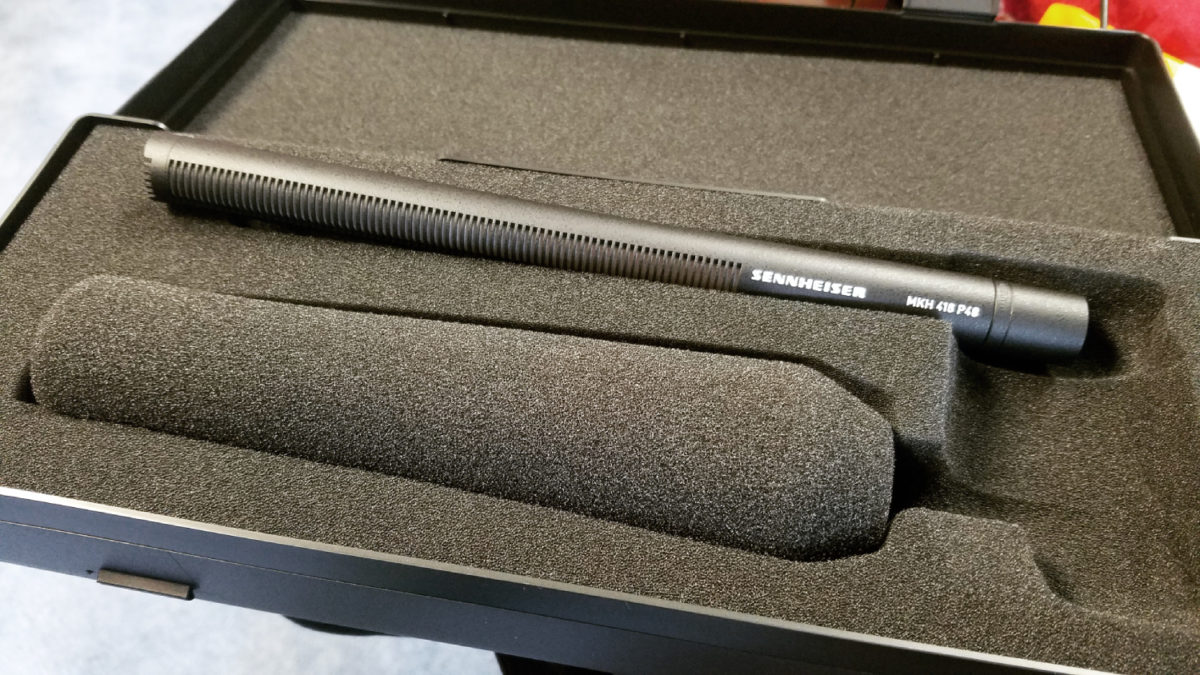
Sennheiser MKH 416 – Short Shotgun Interference Tube Microphone
I purchased my MKH 416 a couple years ago and it’s one of the best sounding microphones I’ve ever heard. You might expect it to sound great due to it’s $1,000 price tag. I compared it to my Audio-Technica AT8035, a comparable microphone which costs around $269, and the 416 BLEW AWAY the 8035! I expected the 416 to sound better but it makes the 8035 sound very lacking.
From their website:
The venerable MKH 416 is a compact pressure-gradient microphone with short interference tube, highly immune to humidity due to its RF condenser design. Featuring high directivity, low self noise, high consonant articulation and feedback rejection, the MKH 416 can handle difficult exterior filming and reporting conditions without any difficulty. Supercardioid/lobar pattern, matte black finish, supplied with the MZW415 windscreen.
- Pressure gradient receiver with short interference tube
- Hypercardioid at low and medium frequency
- Above 2kHz approaches lobar pattern
Have you tried this microphone?
Want to receive the Daily Goody in your email, daily or weekly? Subscribe free here.
And please keep in mind, the Daily Goody is only a tiny little tip, fact or lesson everyday. Please don’t expect any of these posts to be long, earth-shattering masterpieces that instantly answer every single question you can think of and completely transform you into a world class podcast engineer. “Little by little, a little becomes a lot.”
-
Perception of Space
When producing music, engineers are able create a kind-of 3D experience for listeners using a combination of panning (placing different instruments/elements in different positions across the Left-Right spectrum) and reverb (placing different instruments/elements at different distances in the Near/Far spectrum) as well as other EQ tricks, textures and movement.
Some of these same tactics can be used in podcast production to create a deeper listening experience by separating different participants in the stereo spectrum, creating immersive 3D sounding intro’s and outro’s, and incorporating other sound effects and music.
What kinds of “perception” tricks do you use in your production?
Want to receive the Daily Goody in your email, daily or weekly? Subscribe free here.
And please keep in mind, the Daily Goody is only a tiny little tip, fact or lesson everyday. Please don’t expect any of these posts to be long, earth-shattering masterpieces that instantly answer every single question you can think of and completely transform you into a world class podcast engineer. “Little by little, a little becomes a lot.”
-
Into the Goody Bag – PES 218
I overview 9 recent Daily Goody‘s from Dec. 25 – Jan. 13 (see list below). You can sign up to receive Daily Goody’s in your email every day or a weekly roundup. Sign up here.
Daily Goody posts that I discussed in this episode:
- Descript’s NEW Transcription Glossary
- The Sound in the Game “Among Us”
- Managing the Expectations of Your Clients
- Special: Your Blunt Pep Talk for 2021
- Zoom PodTrak P4
- Level Magic by Flux Jünger
- Be Aware: Some Earbuds Feed Back Within Themselves
- 32 Bit Floating Point Explained
- Being Close To the Mic but Still Not Sounding “Close Enough”
- Low-mid Fullness vs. Muddiness
Other Notes:
- If you ever have questions please reach out!
- The start date for the next PES semester is June 29, 2021
- If you’d like to share this show with any of your podcaster friends, feel free to send them a message saying, “Btw, here’s a show about podcast audio production you may find helpful” with this link: https://podcastengineeringschool.com/subscribe/
Let me know if you have any questions or need any help with anything,
~Chris -
Up for a “New Client Challenge”?
Would you love to sign up new podcast production/editing clients within the next month? If so, our laser focused course may be helpful to you.
It’s called Getting New Clients at Higher Rates — and as soon as you enroll you can start watching the video lessons and preparing for a new era in your podcast production business.
I believe in you — I believe that if you focus on growing your business and you put in enough intelligent focused time and effort, you can create a business for yourself that will be more profitable than you can imagine right now.
If you’re ready, let’s GO!
Want to receive the Daily Goody in your email, daily or weekly? Subscribe free here.
And please keep in mind, the Daily Goody is only a tiny little tip, fact or lesson everyday. Please don’t expect any of these posts to be long, earth-shattering masterpieces that instantly answer every single question you can think of and completely transform you into a world class podcast engineer. “Little by little, a little becomes a lot.”
-
Do You “Cheat” and Publish Your Episodes Louder Than the Unofficial Loudness Standards?? I Do.
The unofficial loudness standards for podcast episodes is -19 LUFS for mono episodes and -16 LUFS for stereo episodes.
But some folks publish their episodes a bit louder than that because of……reasons.
I publish episodes at about 0.4 LUFS louder than the unofficial standards because I use more compression than average and therefore, in general, the peaks of my audio don’t peak as high as most podcasts, and therefore I nudge my level up a bit to closer match the average peak level and momentary peak loudness of most podcasts. If I keep my audio at the unofficial standard level it can actually sound LOWER in volume than the average podcast at the same LUFS level, but of course the quieter parts of my audio are substantially louder and more audible than the quieter parts of average podcast audio.
What about you – are you determined to win the Loudness Wars with your audio?!?! hehe… I know Brad from The Cinema Guys is 😉
Want to receive the Daily Goody in your email, daily or weekly? Subscribe free here.
And please keep in mind, the Daily Goody is only a tiny little tip, fact or lesson everyday. Please don’t expect any of these posts to be long, earth-shattering masterpieces that instantly answer every single question you can think of and completely transform you into a world class podcast engineer. “Little by little, a little becomes a lot.”
-
Here’s When I DON’T Edit Out a Word Mispronounced Then Repeated Correctly
People mispronounce words all the time. Usually they immediately repeat the word correctly and proceed as if nothing happened. These mispronunciations are easy to edit out so that the listener doesn’t even know that a mispronunciation ever happened.
But here’s when I DON’T edit out a mispronunciation: When someone mispronounces a word and then laughs at their own mispronunciation, and then continues laughing WHILE pronouncing the word again correctly. I do not edit that section at all because the edited audio would sound extremely unnatural and jarring to the listener — the first part of a sentence spoken in a normal tone of voice and the second part of the sentence abruptly transforms into a laughing person — and listeners would have no idea why the laughing is happening. This puzzles people, actually. Not good, because when people are confused they “tune out” (and sometimes turn off the podcast).
What is your approach to handling these situations?
Want to receive the Daily Goody in your email, daily or weekly? Subscribe free here.
And please keep in mind, the Daily Goody is only a tiny little tip, fact or lesson everyday. Please don’t expect any of these posts to be long, earth-shattering masterpieces that instantly answer every single question you can think of and completely transform you into a world class podcast engineer. “Little by little, a little becomes a lot.”
-
Stripping Audio From Video Livestreams To Use as Audio Podcast Episodes
In terms of leveraging content into other forms of content this strategy makes total sense, but sometimes the raw audio recording will need more processing before it’s good enough quality to publish as an audio podcast episode.
If, during recording, the recording levels (microphone gain) of various participants is substantially different from each other and you don’t remedy that before publishing, the audio-only listeners experience will not be good or pleasurable because they’ll continually need to adjust their listening volume, aka riding the volume knob. And by the way, after a few minutes of having to ride their own volume level MOST listeners will just turn off the episode and some may never return to listen to the show again.
Another issue can be dynamic range that’s too large, which is when participants speak and/or laugh very loudly at times and then speak and/or trail off super quietly at other times. Good audio production remedies these extremes.
And never forget, you’ll confuse audio-only listeners if you’ve shown and commented on images or video in the original video Livestream, because the visuals are not visible on an audio podcast.
That’s 3 potential issues. Can you think of any more? Comment below!
Want to receive the Daily Goody in your email, daily or weekly? Subscribe free here.
And please keep in mind, the Daily Goody is only a tiny little tip, fact or lesson everyday. Please don’t expect any of these posts to be long, earth-shattering masterpieces that instantly answer every single question you can think of and completely transform you into a world class podcast engineer. “Little by little, a little becomes a lot.”
-
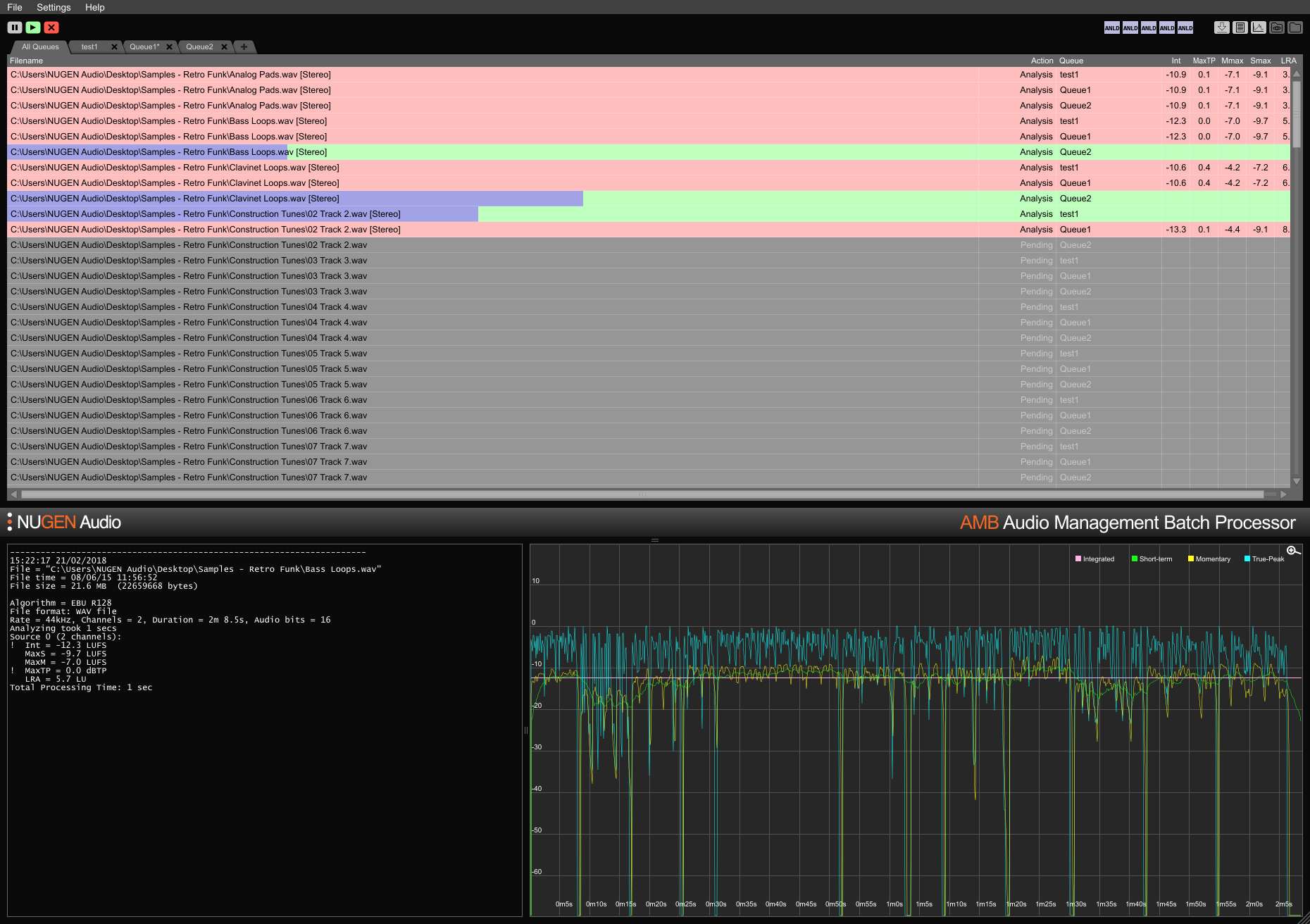
NUGEN AMB: Audio Management Batch Processor
I haven’t tried NUGEN AMB, but someone recently mentioned that you can use it to dial in integrated loudness, momentary loudness, max short term AND loudness range!
I believe that iZotope RX allows you to dial in most of these same specifications but not all of them.
Have you used NUGEN AMB?
Want to receive the Daily Goody in your email, daily or weekly? Subscribe free here.
And please keep in mind, the Daily Goody is only a tiny little tip, fact or lesson everyday. Please don’t expect any of these posts to be long, earth-shattering masterpieces that instantly answer every single question you can think of and completely transform you into a world class podcast engineer. “Little by little, a little becomes a lot.”
-
Measuring the Intelligibility of Emergency Announcements in Public Areas
I was recently told about this interesting topic!
The intelligibility of an emergency announcement in a public area can be crucial for those present. This applies in particular to train stations and airports, congress and shopping centers, stadiums, lecture halls and classrooms, etc.
In order to ensure good speech intelligibility, an objective measurement process is necessary that delivers relevant and reproducible results. Measuring the Speech Transmission Index (STI) is such a process.
More details HERE!
Want to receive the Daily Goody in your email, daily or weekly? Subscribe free here.
And please keep in mind, the Daily Goody is only a tiny little tip, fact or lesson everyday. Please don’t expect any of these posts to be long, earth-shattering masterpieces that instantly answer every single question you can think of and completely transform you into a world class podcast engineer. “Little by little, a little becomes a lot.”
-

Dallas Taylor, Host and Creator of Twenty Thousand Hertz – PES 217
My guest is Dallas Taylor, host and creator of Twenty Thousand Hertz – an exceptional podcast about sound. He is also the Creative Director of Defacto Sound where he has led thousands of high-profile projects ranging from blockbuster trailers and advertising campaigns to Sundance award-winning films and major television series. Follow on Twitter: Dallas Taylor, Twenty Thousand Hertz, Defacto Sound.
FYI, I really enjoyed the episode of Twenty Thousand Hertz titled Silence where Dallas experiences pure silence for himself thanks to a special room called an anechoic chamber!
We discussed SO MUCH in this episode including:
- His studio has acoustic panels and lots of foam, etc.
- Shure SM7b microphone
- Yellowtec boom arm
- Argosy console desk
- Sound Devices MixPre-6
- He has writers on staff
- Uses Rev.com for transcription
- Sound design starts with the script
- Table reads with his team
- He’s very cognizant of emotional dynamics of episodes
- Start episodes with a small thing that arouses curiosity
- Every 15-30 seconds he tries to have some kind of sonic change to keep the listeners attention
- Early in his career he worked on foley for films
- Tweak sounds during editing? Yes! Tons.
- His sound designer Soren uses Pro Tools with lots of plugins, etc.
- iZotope software
- Has many sound FX libraries and music beds, etc
- Sound Toys plugins
- Limiters
- Compressors
- EQ’s
- Final MP3 files are between 160-320 kbps!
- Megaphone for hosting – dynamic ad insertion, etc.
- He sells his own ads
Thanks for sharing so much with us, Dallas!
All are welcome to comment below.
-
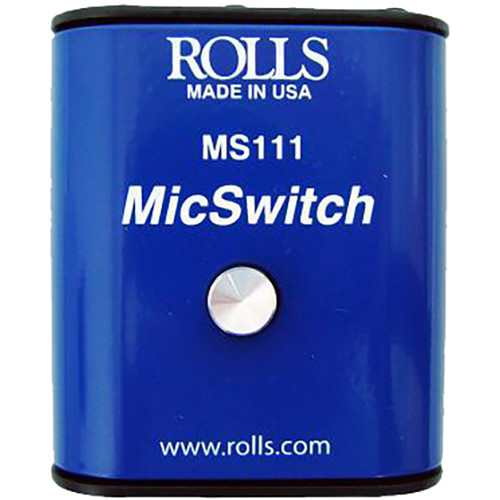
Rolls MS111 Mic Switch – Latching or Momentary Microphone Mute Switch
I bought the Rolls MS111 Mic Switch years ago and used it for a while and liked it. FYI, devices like these are also commonly known as “cough buttons.”
It works very well, but be aware that it doesn’t mute the signal 100% – it reduces the signal around 40-50 dB, so even with the switch engaged if you speak loudly into the mic a tiny bit of your voice will come through.
Have you ever used a cough button?
Want to receive the Daily Goody in your email, daily or weekly? Subscribe free here.
And please keep in mind, the Daily Goody is only a tiny little tip, fact or lesson everyday. Please don’t expect any of these posts to be long, earth-shattering masterpieces that instantly answer every single question you can think of and completely transform you into a world class podcast engineer. “Little by little, a little becomes a lot.”
-
Protecting Your Ears When Mowing the Lawn, etc.
I always wear earplugs when I mow the lawn because lawnmowers are quite loud, and any loud sound over an extended period of time can affect your hearing.
Same goes for playing the drums or guitar at loud levels. Same goes for live music concerts or listening to music at loud levels (in your car, on headphones, etc). Same goes for jackhammering or firing guns. Same goes for loud husbands or wives 😉 hehe
How well do you take care of your ears?
Want to receive the Daily Goody in your email, daily or weekly? Subscribe free here.
And please keep in mind, the Daily Goody is only a tiny little tip, fact or lesson everyday. Please don’t expect any of these posts to be long, earth-shattering masterpieces that instantly answer every single question you can think of and completely transform you into a world class podcast engineer. “Little by little, a little becomes a lot.”